
Coil Binding vs. Comb Binding for Durability: The 2026 Professional Guide
May 22nd 2026

A professional manual that sheds pages after three months isn't just a nuisance; it's a direct hit to your brand's credibility. When you're weighing coil binding vs comb binding for durability, the decision rests on how the document will be handled and how long it must survive the daily grind. While plastic combs offer affordability and easy editing, they often fail under the mechanical stress of high-cycle use where pages are constantly turned. Coil binding offers a more permanent, resilient structure that prevents the cheap look of cracked spines and loose sheets.
You likely want a document that looks as crisp on day 365 as it did on day one. We understand that a document's assembly reflects the quality of the work contained within. This guide settles the durability debate by comparing the mechanical strength and professional resilience of these two methods. We'll examine the impact of 2026 environmental regulations like California's SB 343 and compare the tactile performance of a GBC CombBind finish against a heavy-duty Akiles or Rhin-O-Tuff coil assembly. You'll discover which method provides the 12 month longevity your high-volume projects require.
Key Takeaways
- Understand how to define durability by measuring a spine's resistance to deformation and its ability to prevent page detachment over time.
- Analyze the mechanical "hinge" effect to see how coil binding vs comb binding for durability impacts the lifespan of frequently handled manuals.
- Evaluate the UV resistance and chemical resilience of PVC and plastic supplies to ensure your documents don't become brittle or discolored.
- Distinguish between "High-Cycle" and "Low-Cycle" documents to align your binding choice with the intended lifespan of your project.
- Select professional-grade hardware like the Akiles CoilMac-M or GBC CombBind C800pro based on a structured framework for long-term document resilience.
Understanding the Basics: What Defines Binding Durability?
Durability isn't just a marketing buzzword; it's a technical requirement for any document intended to survive a professional environment. We define durability as the mechanical ability of a spine to resist permanent deformation while preventing page detachment. When you're evaluating coil binding vs comb binding for durability, you must look at how the binding element interacts with the paper under physical stress. Since Custom Binding Products opened in 1988, San Diego businesses have relied on these two primary methods to secure their most critical data. This structural comparison is essential when choosing coil binding vs comb binding for durability in high-traffic environments.
A critical factor in long-term resilience is "memory." This refers to a material's capacity to return to its original shape after being flexed or compressed. High-quality plastic components maintain this shape through thousands of cycles, ensuring the document doesn't look crushed or warped after being stored in a briefcase or stacked under heavy manuals. Understanding these Bookbinding methods is the first step in ensuring your assembly reflects the quality of the work contained within. If a spine loses its memory, the professional image of the document fails along with the hardware. Every tactile interaction with the spine serves as a recurring marker of a commitment to quality.
The Anatomy of a Plastic Comb Spine
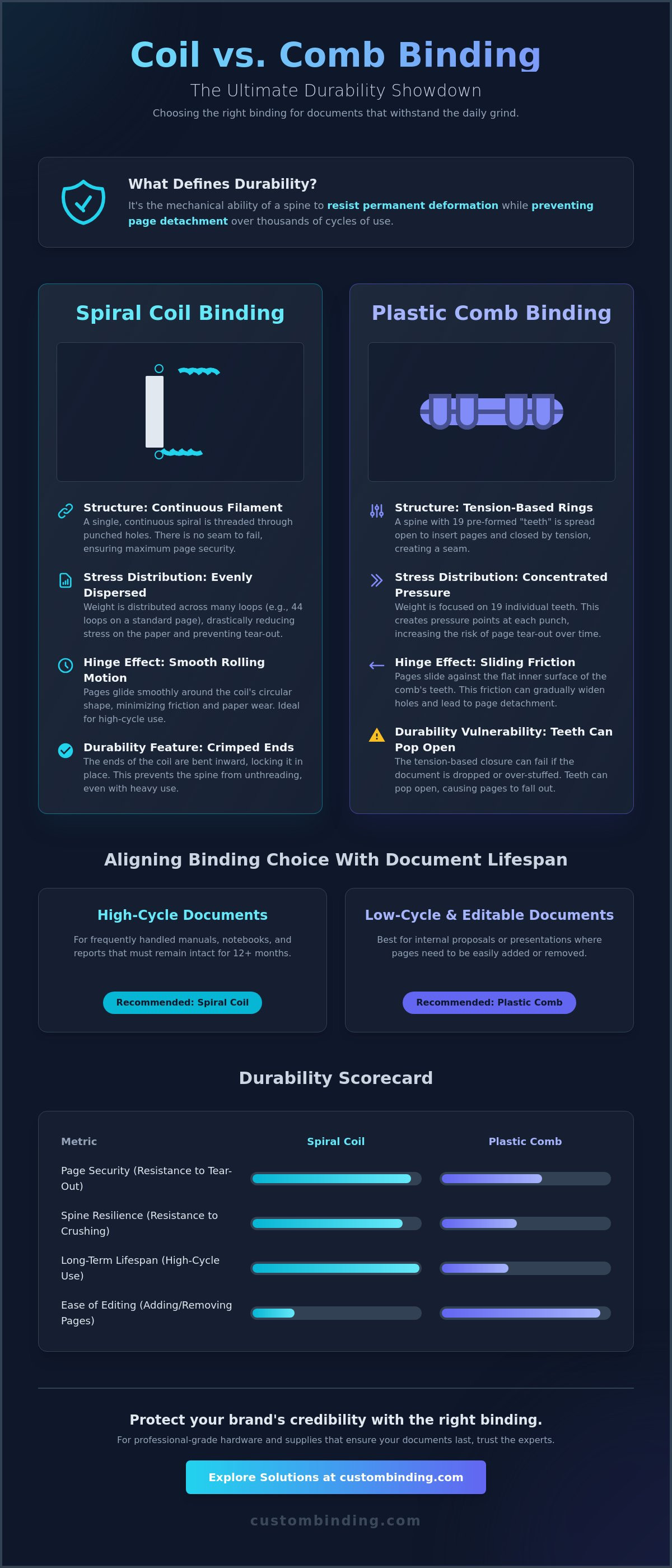
Plastic comb binding utilizes a 19-ring system that relies on tension-based closure to hold pages in place. Each tooth is pre-formed into a circular shape and must be spread open by a machine to insert the paper. The durability of this system depends heavily on the tooth thickness. Thicker teeth provide better "spring-back" quality, which helps the spine maintain its form. However, combs have inherent vulnerability points. Because the spine isn't a closed loop, the teeth can "pop" open if the document is dropped or subjected to excessive internal pressure. This makes them an excellent choice for documents that require frequent page updates, but less ideal for items facing extreme mechanical stress.
The Engineering of Spiral Coil Binding
Spiral coil binding uses a continuous filament design, typically following a 4:1 pitch, which means four holes are punched per inch of paper. This engineering choice is inherently more secure because there is no seam. The coil winds through the document like a screw, distributing the weight of the paper evenly across the entire length of the spine. For maximum structural security, the process requires end-crimping. By using specialized pliers or an integrated crimping unit, the tip of the plastic is bent inward. This locks the coil in place and prevents it from unthreading during use. Without a seam to fail or teeth to pull open, the spiral remains the superior choice for manuals that must withstand heavy daily handling without losing pages.
Mechanical Durability: Coil vs. Comb Stress Tests
Mechanical durability is best measured by how a document responds to repetitive physical strain. Consider a standard 100-page report. In a comb-bound document, the weight of those pages hangs on 19 individual plastic teeth. This creates concentrated pressure points at each rectangular punch. Conversely, a coil-bound document distributes that same weight across 44 loops. This increased surface area significantly reduces the stress on any single point of the paper. When analyzing coil binding vs comb binding for durability, this distribution of mass is the primary reason coils resist page-tearing far better than combs during heavy transport.
The "hinge" effect also plays a vital role in long-term resilience. Every time you turn a page, friction occurs between the paper and the binding element. Plastic combs create a sliding friction against a flat surface, which can gradually widen the punched holes. Spiral coils utilize a rolling motion; the page glides around the circular filament with minimal resistance. For organizations following strict library binding durability guidelines, minimizing this abrasive wear is essential for document preservation. If your manuals face high-cycle use, choosing a high-quality Plastic Spiral Binding Coil ensures the document remains intact through hundreds of sessions.
Material memory is tested most aggressively during the "Crush Test." If a document is stepped on or compressed in a heavy stack, the binding must recover its shape to remain functional. High-grade plastic coils are engineered to be flexible; they can be flattened completely and will immediately return to their original circular profile. Plastic combs, however, rely on a specific tension-based curve. Once that curve is over-extended or crushed, the teeth often remain warped or pop out of their housing, leaving the document's pages unsecured.
Page Pull-Out Strength and Hole Geometry
The geometry of the punch determines the "tear-out" force required to accidentally remove a page. Comb binding uses 19 large, rectangular holes. These sharp corners act as stress concentrators; once a small tear begins at a corner, it moves quickly through the margin. Coil binding uses 44 round or oval holes per 11-inch edge. Round holes distribute tension evenly across the entire circumference of the punch. Because there are more holes per inch (the 4:1 pitch), the total paper-to-plastic contact area is higher. This makes it nearly impossible to pull a page out of a coil-bound book without destroying the paper margin entirely.
360-Degree Rotation and Spine Fatigue
Functionality directly impacts mechanical fatigue. Coil binding allows a document to fold back on itself a full 360 degrees. This creates a flat writing surface and prevents the spine from being twisted or torqued during use. Comb binding is limited to a 180-degree opening. When users attempt to fold a comb-bound book back to save space, they place immense leverage on the outer pages and the plastic spine itself. Over 500+ cycles, this stress causes the teeth of a comb to lose their tension or snap. When evaluating coil binding vs comb binding for durability, the ability to rotate 360 degrees is a significant predictor of a document's professional lifespan.
Real-World Longevity: Choosing Based on Document Lifespan
Choosing the right binding is a strategic decision based on the document's intended utility. We categorize documents into "High-Cycle" or "Low-Cycle" to determine the necessary mechanical strength. High-cycle documents, such as technical manuals or safety guides, undergo constant page turning and transport. Low-cycle documents, like annual reports or quarterly archives, spend most of their life on a shelf. When evaluating coil binding vs comb binding for durability, the frequency of use is often the deciding factor in whether a spine maintains its professional integrity over a 12 month period.
Page thickness also dictates how a binding element ages. Heavy 80lb cover stock or laminated pages exert more leverage on the spine than standard 20lb bond paper. A thicker "mil" count in the paper requires a binding method that can accommodate the increased weight without sagging. For large projects, both systems handle significant volume; plastic combs can secure documents up to 2 inches thick, while spiral coils typically cap at 400 sheets. According to the Columbia University Print binding guide, coil binding is particularly resilient for documents that require frequent handling and long-term survival in rigorous environments.
High-Traffic Manuals vs. Internal Reports
Technical manuals and field guides demand the 360-degree flexibility that only a continuous spiral can provide. This allows a user to fold the document flat on a workbench or desk without straining the paper's edge. A San Diego training facility recently improved their document replacement cycle by switching from combs to coils for their primary instruction booklets. They found that the ability to flip pages completely back reduced the leverage that typically causes holes to tear. While comb binding remains a viable, cost-effective choice for internal reports that stay flat on a desk, it lacks the ruggedness needed for mobile or high-traffic use.
The Impact of Frequent Page Updates
The primary advantage of a plastic comb is its "editability." You can open the spine, swap a page, and close it again using a machine like the GBC CombBind C800pro. However, every time you open a comb, the plastic teeth experience microscopic fatigue. Over multiple update cycles, the material's "memory" weakens, and the spine may no longer snap shut with the same tension. Coil binding is a "one-and-done" solution. To update a coil-bound book, you must cut the existing coil and re-bind the document with a new one. This permanent nature is exactly why San Diego legal and medical offices prioritize coils for archival purposes; it ensures the document remains a tamper-evident, cohesive unit for years.
Material Resilience: How Plastic and PVC Hold Up
The chemical composition of your binding supplies is just as critical as the mechanical design. Most modern binding elements are manufactured from Polyvinyl Chloride (PVC), but the grade of that PVC varies significantly between manufacturers. When comparing coil binding vs comb binding for durability, the primary chemical differentiator is the use of plasticizers. These additives determine the material's flexibility. Coils require a higher concentration of plasticizers to maintain their spring-like "memory," while combs are engineered for rigidity to keep their 19 rings under constant tension. Over time, UV exposure from the intense California sun can leach these plasticizers out, making lower-quality spines brittle and prone to cracking.
San Diego's unique coastal environment introduces specific challenges for document storage. Salt-laden air is naturally corrosive to metal, but it also impacts certain polymers. While plastic is immune to rust, high humidity levels can cause cheaper, non-stabilized plastic combs to soften slightly. This softening reduces the tension of the teeth, which may lead to "comb-pop" where the spine fails to hold the page weight. In contrast, high-quality spiral coils maintain their structural integrity across a wider range of environmental conditions, making them the preferred choice for documents stored in non-climate-controlled warehouses or field offices.
Humidity and Temperature Resistance
Fluctuating temperatures in Southern California can cause thermal expansion in binding materials. Cheaper plastic combs often lose their "spring-back" capability if stored in a hot vehicle or near a sunny window. This leads to permanent deformation of the teeth. Professional-grade supplies from Custom Binding Products utilize stabilized polymers that are tested against these temperature thresholds. These materials ensure that your coil binding vs comb binding for durability assessment remains positive, regardless of whether your documents are in a cooled office or a humid transit van. High-quality PVC coils are particularly resistant to warping, maintaining their 4:1 pitch alignment even after years of storage.
Chemical Resistance and "Crush" Memory
In medical, laboratory, or industrial settings, documents frequently come into contact with harsh cleaning agents or isopropyl alcohol. Lower-grade plastics can become "cloudy" or lose their structural bond when exposed to these chemicals. Professional binding plastics are designed to resist this chemical degradation. Another vital factor is "crush memory." If a coil-bound manual is stepped on or compressed by heavy equipment, the coil's spiral geometry allows it to flatten and then immediately return to its original shape. Comb binding lacks this resilience; once a comb is crushed, the plastic usually creases or snaps. For environments where physical impact is likely, you should invest in Twin Loop Binding Wire or high-density spiral coils to ensure the document remains functional after an accident.
Secure your next high-volume project with professional-grade Plastic Spiral Binding Coils to ensure your documents survive the most demanding environments.
Implementation: Selecting the Right System for Your San Diego Office
Selecting a binding system requires a clear understanding of your document's lifecycle. In a busy professional environment, the hardware you choose dictates the mechanical limits of your output. If your team produces high-cycle manuals that must endure a year of constant flipping, the hardware must handle the precision of a 4:1 pitch punch. When weighing coil binding vs comb binding for durability, consider the long-term presentation of your brand. A document that loses its spine within three months reflects poorly on the quality of the work inside. Choosing the correct system ensures your assembly remains a tool for professional storytelling rather than a maintenance burden.
Equipment Investment vs. Long-Term Supply Costs
Balancing initial capital expenditure with recurring supply costs is a standard business calculation. Machines like the Akiles CoilMac-M are engineered for high-volume coil production, providing the structural security required for permanent archives. Alternatively, the GBC CombBind C800pro offers efficiency for documents requiring frequent updates. However, you must calculate the "cost of failure." Re-binding a document that has fallen apart costs more in labor and materials than investing in a more resilient system from the start. Audit your office usage by identifying how many manuals are discarded due to spine failure. This data often justifies the transition to heavy-duty equipment like the Rhin-O-Tuff Onyx HD7700 or the Tamerica Optimus-450 for maximum longevity.
Professional Finishing Services and Support
High-quality hardware only performs as well as the materials fed into it. Using high-grade plastic coil binding supplies ensures that the mechanical memory of the spine remains intact through thousands of cycles. Custom Binding Products supports San Diego offices by providing reliable supply logistics and equipment maintenance, removing the friction from your production process. This local partnership ensures your equipment stays operational; it prevents downtime during critical project deadlines. Whether you are using Regency Composition Covers for a premium feel or clear acetate for visibility, the underlying binding must be the steady hand that holds it all together.
Before finalizing your decision, use this checklist to audit your requirements:
- Will the document be handled daily or stored on a shelf for long periods?
- Is 360-degree rotation required for the user's ease of use?
- Do the pages need to be updated or replaced frequently throughout the year?
- Will the document be exposed to high humidity or non-climate-controlled storage?
- Does the tactile feel of the binding align with your brand's professional identity?
The "Golden Rule" of binding longevity is simple: Match the mechanical interaction of the spine to the actual physical behavior of the end user. If the user will fold the book back to save space, choose coil. If they will only lay it flat and occasionally add pages, choose comb. By aligning the system to the user's habits, you ensure your professional presentation remains resilient and impressive for the duration of its intended use.
Invest in the Resilience of Your Professional Presentation
Refining the choice between coil binding vs comb binding for durability comes down to the mechanical interaction between your user and the document. If your project demands 360-degree flexibility and the ability to withstand heavy daily handling, the continuous spiral design of a plastic coil is the superior investment. For documents that require frequent page updates and will primarily remain flat on a desk, the traditional plastic comb remains a functional, cost-effective solution. Both methods rely on the quality of the stabilized PVC to resist the environmental challenges of the San Diego coast.
Since 1988, we've acted as a partner in the success of local businesses by providing the tools needed for a polished, professional presentation. Whether you require the high-cycle resilience of an Akiles CoilMac-M or the efficiency of a GBC CombBind system, the quality of your assembly is a direct reflection of your work's value. We provide the technical expertise and reliable supplies you need to remove the friction from your finishing process.
Browse Professional Binding Equipment & Supplies at Custom Binding Products to access wholesale pricing on high-durability PVC coils and combs alongside expert on-site repair services. Invest in the mechanical strength your reputation deserves and ensure your documents stand the test of time.
Frequently Asked Questions
Is coil binding more durable than comb binding for thick documents?
Coil binding is consistently more durable for thick documents because it distributes page weight across 44 loops rather than 19 teeth. This increased contact area prevents the "page-sag" often seen in large comb-bound books. When analyzing coil binding vs comb binding for durability, the continuous loop of a spiral coil ensures that pages remain locked in place even if the document is dropped or subjected to significant torque during transport.
Can I reuse plastic combs if the document is no longer needed?
You can reuse plastic combs if they haven't been subjected to excessive heat or mechanical strain. However, the plastic teeth experience fatigue each time they're spread open by a machine. Over multiple cycles, the spine loses its "memory" and may fail to close with the tension required to keep pages secure. For critical presentations, always use a fresh spine to ensure a polished look and reliable page retention.
Do coil binding spines crack in cold or hot weather?
Professional-grade PVC coils are engineered to remain flexible across a wide temperature range and won't typically crack in standard office or field conditions. Lower-quality plastics may become brittle in extreme cold or soften in high heat, but high-quality supplies utilize stabilized polymers. These materials are specifically designed to maintain their shape and resilience in the varied climates of Southern California, from coastal humidity to inland heat.
Which binding method is better for documents that need to be mailed?
Coil binding is the preferred choice for documents that must survive the mailing process. The continuous spiral filament is crush-resistant and cannot "pop" open inside an envelope like a plastic comb might. Because a coil-bound book can be flattened and immediately return to its original shape, it maintains its structural integrity despite the mechanical pressure of automated postal sorting equipment used in 2026.
How many pages can a standard 2-inch comb spine securely hold?
A standard 2-inch plastic comb spine can securely accommodate up to 425 sheets of 20lb paper. This capacity exceeds the 400-sheet limit typically found with large-diameter spiral coils. Because comb binding can hold the largest document volumes, it remains a popular choice for thick internal reports or technical documentation that stays flat on a desk rather than being folded back or carried in the field.
Does the shape of the punched hole (round vs. oval) affect coil durability?
Oval holes are generally considered more durable for coil-bound documents because they allow the pages to turn with less friction. The slightly elongated shape provides more "play" for the coil, which reduces the stress on the paper's edge during high-cycle use. While round holes are standard, oval punches are a professional choice for thicker manuals where ease of page-turning is essential for the document's long-term survival.
What is the most durable binding method for a San Diego business on a budget?
Comb binding is the most budget-friendly option for San Diego firms, with plastic spines typically costing between $0.10 and $0.50. However, when evaluating coil binding vs comb binding for durability, coil remains the more resilient investment for documents facing daily handling. While a comb system saves on initial supply costs, the mechanical integrity of a spiral coil prevents the need for frequent re-binding of high-traffic training manuals.
Can I convert a comb-bound document to coil binding later?
You cannot directly convert a comb-bound document to coil because the punch patterns are incompatible. Comb binding utilizes 19 rectangular holes, whereas coil binding requires a series of round or oval holes at a 4:1 or 5:1 pitch. To switch methods, you would need to trim the existing margin and re-punch the pages, which may compromise the document's professional appearance and reduce the inner margin width.