
Laminating Supplies for Restaurant Menus in San Diego: A 2026 Professional Guide
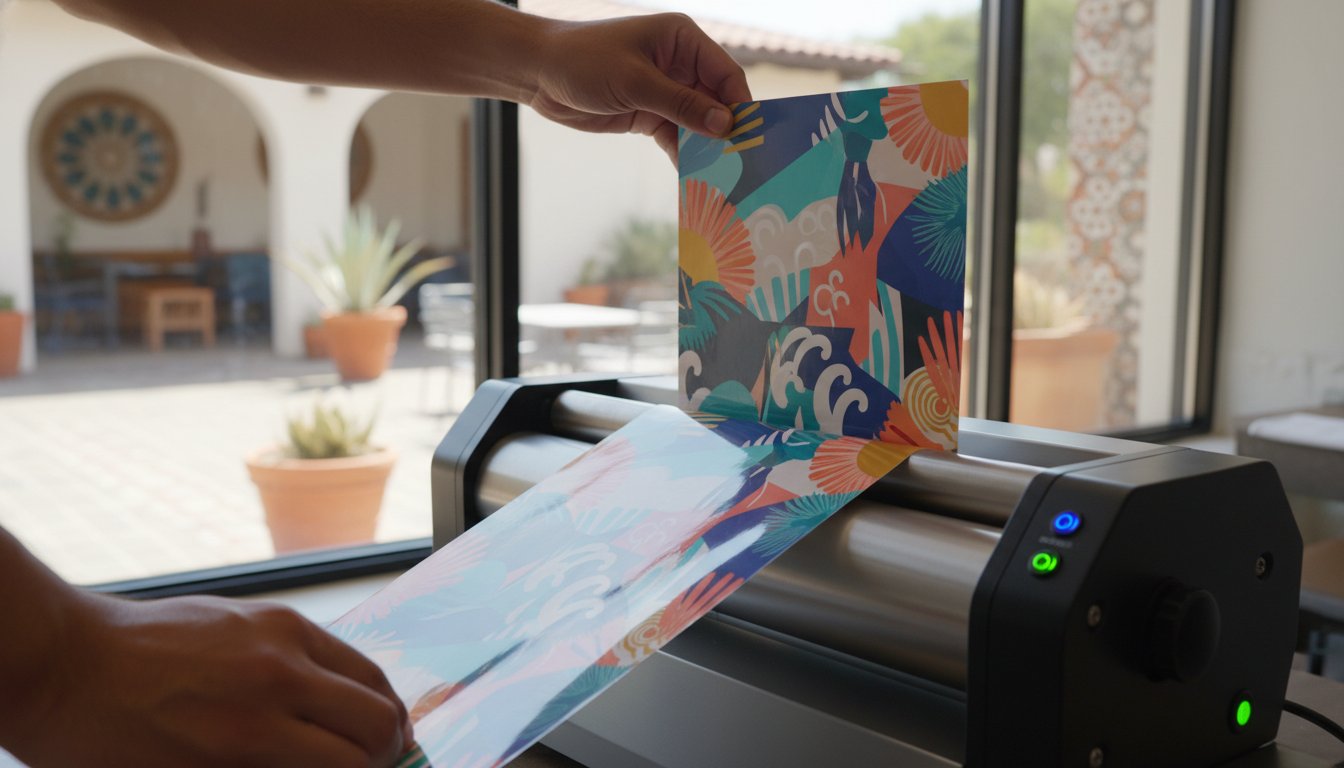
A menu that peels at the edges or shows visible stains tells your guests more about your kitchen's standards than you might think. In a busy San Diego dining room, your menu is the most handled object in the building. It's frustrating to watch high-quality prints succumb to moisture or heavy wear within days. Finding the right laminating supplies for restaurant menus San Diego doesn't just protect your paper; it safeguards your brand's reputation for excellence.
We understand that you need a solution that balances a professional tactile feel with the rugged durability required for high-traffic environments. This guide identifies the specific materials and equipment, such as professional-grade roll laminating film and heavy-duty pouches, that will keep your presentation crisp for months. You'll also learn how to manage the July 1, 2026, California allergen disclosure requirements by bringing your production in-house for faster updates. We will examine the best tools for the job, including the Akiles ProLam systems and Rhin-O-Tuff equipment, to ensure your menus remain a point of pride rather than a source of waste. From choosing the correct mil thickness to selecting precision trimmers, we provide the technical clarity you need to produce professional results every time.
Key Takeaways
- Learn how high-quality lamination enables medical-grade sanitation, ensuring your menus remain hygienic and durable in high-traffic environments.
- Identify the correct film thickness for your menu design, whether you need the flexibility of 5 mil for trifolds or the rigidity of 10 mil for single sheets.
- Compare the operational benefits of laminating pouches for small cafes against the high-volume efficiency of roll laminating film for larger franchises.
- Understand how selecting professional-grade laminating supplies for restaurant menus San Diego prevents the peeling and staining typical of low-quality big-box store alternatives.
- Discover how to equip your in-house station with essential tools, such as Dahle professional rolling trimmers, to achieve a polished and precise finish.
The Role of High-Quality Menu Lamination in San Diego Hospitality
San Diego's restaurant scene demands equipment that can keep pace with high-turnover crowds and coastal humidity. From the busy boardwalks of Mission Beach to the upscale bistros of La Jolla, menus face constant handling by hundreds of guests each week. Standard paper or low-quality films often fail within days, leading to frayed edges and unsightly stains. Investing in professional laminating supplies for restaurant menus San Diego provides a necessary barrier against the daily grind of a high-volume environment. Professional-grade materials don't just protect the paper; they preserve the integrity of your brand's primary physical touchpoint.
The process of lamination applies a protective plastic layer to your printed materials, but not all films are created equal. Consumer-level office laminates lack the industrial adhesive strength required for the constant cleaning cycles of a restaurant. Professional supplies utilize specific thermal bonding processes to create a permanent seal. This ensures the layers won't delaminate when exposed to the heat of a busy kitchen or the moisture of an outdoor patio. Consider these key differences when selecting your materials:
- Adhesive Strength: Industrial films use high-tack resins that bond deeply into the paper fibers.
- Optical Clarity: Professional grade supplies prevent the "milky" or hazy appearance common in cheap alternatives.
- Heat Resistance: Restaurant-grade laminates won't soften or warp when placed near heat lamps or warm plates.
Meeting San Diego Health and Safety Standards
San Diego dining establishments must prioritize hygiene to meet strict local health standards. Paper is naturally porous, which allows it to trap oils, moisture, and bacteria. Applying a heavy-duty 10 mil lamination creates a completely sealed, waterproof edge that prevents liquids from seeping into the core. This non-porous surface enables your staff to perform thorough cleaning between guests using standard sanitizing solutions. Always finish your menus by rounding the corners with a dedicated trimmer. Sharp 90-degree angles on thick laminate can cause skin scratches and provide a point of failure where the film might begin to lift.
Aesthetic Impact on Restaurant Branding
The physical weight of a menu influences a guest's perception of your brand's value. Flimsy or curling menus suggest a casual or temporary experience. In contrast, a rigid sheet feels substantial and intentional, signaling quality before a single dish is served. High-quality film also enhances color saturation, which makes food photography appear more vivid and appetizing. For specialty offerings like wine lists, using clear acetate covers provides a premium, book-like feel. This protects the inner pages while offering a sophisticated tactile experience. Match the rigidity of your laminating supplies for restaurant menus San Diego to your restaurant’s specific vibe to ensure your presentation reflects your culinary standards.
Choosing the Right Laminating Supplies: Film Thickness and Finishes
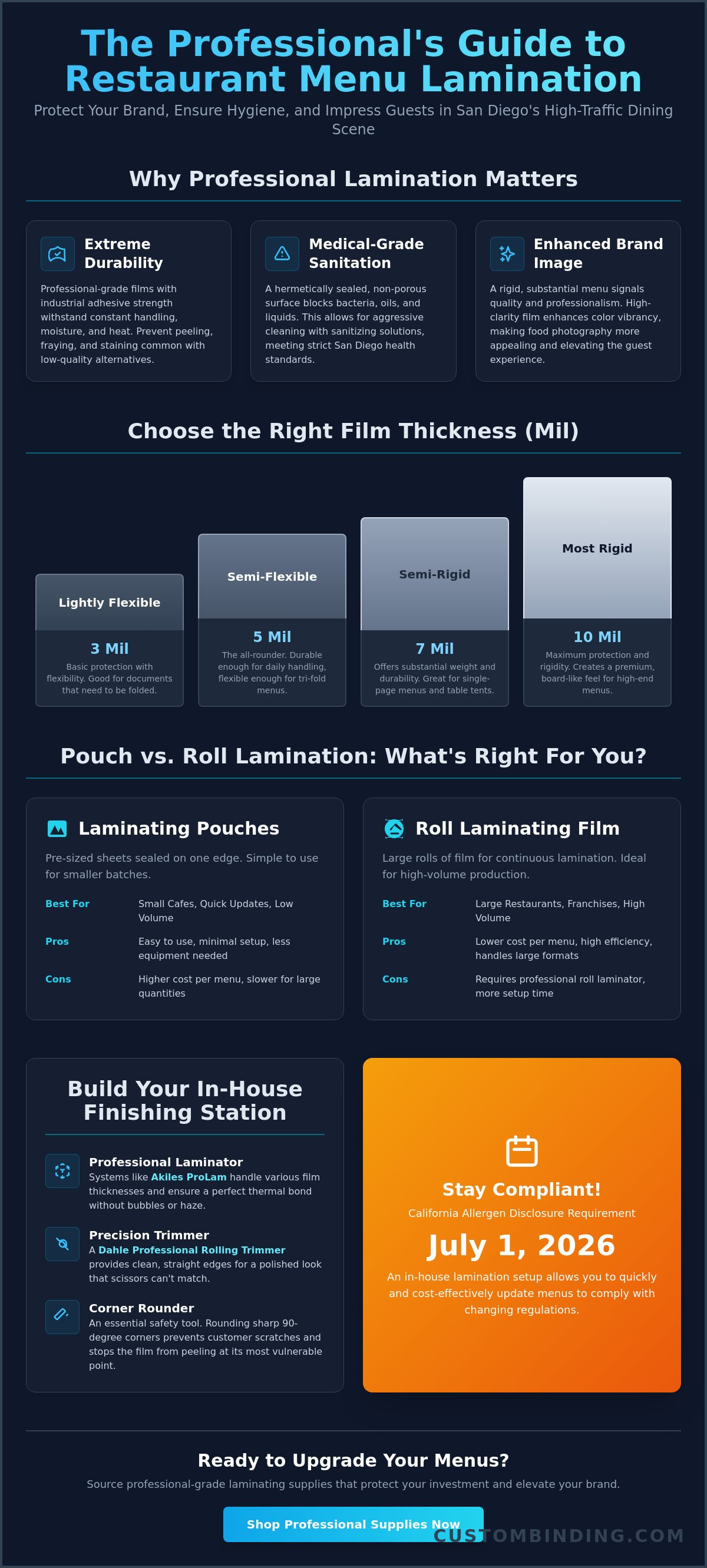
Selecting the proper thickness is the most technical decision you'll make when sourcing laminating supplies for restaurant menus San Diego. Thickness is measured in "mils," where one mil equals one-thousandth of an inch. While 1.5 mil film is common for basic office documents, it lacks the structural integrity required for a hospitality environment. For professional menus, the industry standard typically ranges from 3 mil to 10 mil. Choosing the wrong grade leads to menus that either feel flimsy or fail to fit into your existing laminating equipment.
Maintaining a non-porous surface is a vital part of a restaurant's hygiene protocol. According to the HACCP Principles & Application Guidelines, managing high-touch surfaces is a critical step in preventing cross-contamination. Thermal lamination creates a hermetic seal around the paper, allowing for aggressive sanitization that untreated paper menus simply can't survive. This heat-activated process ensures the adhesive bonds deeply into the paper fibers, preventing the edges from lifting even after hundreds of wipe-downs with industrial cleaners.
Finish selection depends entirely on your venue's lighting and atmosphere. Gloss finishes are excellent for dimly lit dining rooms because they reflect available light and make food photography appear more vibrant. However, for San Diego's abundant outdoor seating, a matte or satin finish is often superior. These finishes diffuse sunlight and eliminate the harsh glare that makes a menu unreadable on a bright patio. If you're looking to upgrade your current inventory, you can browse our professional laminating pouches to find the perfect finish for your brand.
3 Mil vs. 10 Mil: Finding the Balance Between Flexibility and Rigidity
3 mil film provides enough flexibility for items that need to be folded, such as tri-fold "to-go" menus or daily specials that change frequently. It offers a light protective layer without adding excessive bulk. On the other end of the spectrum, 10 mil lamination creates a rigid, "credit card" feel. This is the gold standard for permanent dinner menus that stay on the table for months. Before ordering, verify that your machine, such as a Tamerica or Akiles model, is rated for 10 mil pouches to avoid jams or insufficient bonding.
Gloss vs. Matte Finishes for Restaurant Lighting
Gloss lamination is the most common choice for its ability to enhance ink saturation and provide a polished look that appeals to the eye. For high-end boutique eateries, the "Soft Touch" or velvet finish is a growing trend. This specialty matte film provides a unique tactile experience that feels luxurious to the touch. It rejects fingerprints better than gloss, keeping your presentation pristine even during a busy Friday night shift. Match your finish to your lighting to ensure every guest can read your offerings without strain.
Pouch vs. Roll Lamination: Which is Best for Your Menu Volume?
Determining the right production method depends on your weekly output and the variety of menu sizes you offer. For many independent San Diego cafes, the simplicity of a pouch system is the most efficient choice. However, as your volume grows or your menu dimensions become more complex, transitioning to roll film becomes a strategic necessity. Selecting the appropriate laminating supplies for restaurant menus San Diego requires a balance between initial equipment investment and long-term material costs. Both methods provide the professional finish guests expect, but they serve very different operational scales.
A cost-per-unit analysis often reveals that while roll film has a lower price point per square foot, pouches save significant labor time for small batches. If you're updating a seasonal specials board or a limited drink list, the speed of prepping a few pouches outweighs the setup time of a roll laminator. For high-volume franchises or restaurants with large-format 11x17 and 12x18 menus, roll lamination is far more economical. It allows for continuous feeding, which drastically reduces the time spent on finishing tasks during a busy production run.
Pouch Laminating for Smaller Menus and Specials
Pouch machines are favored for their ease of use. They require almost no specialized training, making them perfect for environments where multiple staff members might handle menu updates. Using high-quality Laminating Pouches ensures a consistent border and pre-sealed edges, which provide maximum protection against liquids. For restaurants that demand heavy-duty performance, we recommend the Tamerica Optimus-450. It's a robust machine designed to handle thicker pouch grades without overheating, ensuring every menu comes out flat and perfectly bonded.
Roll Laminating for High-Volume and Large-Format Menus
When you need to produce hundreds of menus in a single afternoon, roll lamination is the superior choice. This method uses Roll Laminating Film to provide a continuous protective layer, which is ideal for large-format menus that exceed standard pouch sizes. You can easily trim roll film to fit non-standard dimensions, offering a level of customization that pouches can't match. Buying wholesale film rolls also helps manage long-term supply costs. This system is a reliable partner for San Diego establishments that require frequent, large-scale menu refreshes while maintaining a strict professional aesthetic.
Sourcing Local: Why San Diego Restaurants Choose Professional Supplies
Sourcing your laminating supplies for restaurant menus San Diego from a specialist prevents the common pitfalls associated with generic retail products. Big-box store supplies typically feature thin films and lower-quality adhesives that fail under the rigorous demands of a commercial kitchen. These consumer-grade materials often result in a "cloudy" finish that obscures your menu's text and dulls your brand's vibrant colors. By selecting industrial-grade brands like Rhin-O-Tuff and Akiles, you ensure a crystal-clear bond that remains stable even with constant handling. Professional supplies use high-tack resins designed to adhere to various ink types and paper weights, providing a reliable seal that prevents moisture from seeping into the edges.
Relying on a local specialist also eliminates the uncertainty of online ordering. When you purchase professional-grade Laminating Pouches or Roll Laminating Film, you're investing in materials tested for high-volume use. Low-quality adhesives found in discount supplies often "gas out," creating tiny bubbles or a hazy appearance that makes a menu look aged and unhygienic. Professional-grade films are engineered to maintain their optical clarity over hundreds of cleaning cycles, ensuring your food photography remains as appetizing on day sixty as it was on day one.
The Custom Binding Products Advantage in San Diego
We provide expert advice to help you match specific film types to your unique paper stock and ink coverage. This technical precision prevents the delamination issues that often plague DIY projects using substandard materials. Since our founding in 1988, we've focused on delivering professional finishing solutions tailored to the local hospitality industry. If you face an urgent menu reprint before a busy weekend rush, our same-day pickup options ensure your dining room remains fully operational. Visit custombinding.com to explore our full inventory of professional-grade supplies and equipment.
Local Support and Same-Day Availability
Nothing replaces the value of seeing and feeling material samples before committing to a bulk order. Our San Diego location allows you to experience the tactile difference between various finishes firsthand, helping you make an informed decision for your brand. If you encounter technical issues like "silvering" or bubbles in your lamination, our local experts are available to help you troubleshoot your equipment settings immediately. We offer equipment demos for industrial machines like the Akiles CoilMac-M and Rhin-O-Tuff Onyx HD7700 so you can verify performance before you buy. Having a local partner for restocking means you never have to wait for shipping when your supply of essential materials runs low.
Setting Up Your In-House Menu Finishing Station
Establishing a dedicated production area ensures that every menu your guest touches meets a consistent professional standard. A disorganized workspace leads to misaligned film and wasted materials. When organizing your finishing station, prioritize a flat, clean surface that allows for smooth feeding into your machine. The choice between a pouch or roll system often depends on your available footprint. While a compact unit like the Tamerica Optimus-450 fits onto a standard office desk, high-volume roll systems require a larger table to manage the output effectively. Selecting the right laminating supplies for restaurant menus San Diego is only half the battle; the physical setup determines the precision of the final result.
Standardizing your workflow prevents the slight variations that can make a stack of menus look unprofessional. Train your staff to follow a specific sequence: print, laminate, trim, and round. This methodical approach ensures that every menu has the same border width and tactile feel. By keeping your supplies, such as 10 mil pouches and clear acetate covers, in a climate-controlled area, you avoid the common issues of adhesive degradation or paper curling before the lamination process even begins. Organized storage also protects your investment from the dust and grease common in restaurant environments.
Essential Equipment for Professional Results
A Dahle Professional Rolling Trimmer is an indispensable tool for any restaurant producing menus in-house. These trimmers provide a burr-free, straight edge that generic office cutters simply can't replicate. Precision is critical when working with thicker laminates, as even a millimeter of misalignment can cause the edges to peel over time. Additionally, a dedicated corner rounder is essential for extending the life of your menus. By removing sharp 90-degree angles, you prevent the laminate from snagging and lifting during daily wipe-downs. Ensure your chosen machine is robust enough to process 10 mil pouches without jamming, which maintains a steady production rhythm.
Maintaining Your Equipment for Long-Term Success
Regular maintenance is the most effective way to protect your investment and avoid expensive supply waste. Adhesive buildup on rollers is the primary cause of "wrap-arounds" and surface scratches on your finished menus. Clean your rollers frequently using manufacturer-approved cleaning sheets or cloths to keep the heat distribution even. If you notice persistent issues like roller flat spots or electrical fluctuations, it's likely time for professional laminator repair in San Diego. Proper storage of your laminating film is also critical. Keep rolls and pouches away from high-humidity areas like the kitchen to prevent "tunneling" or moisture damage that compromises the adhesive's clarity. A well-maintained station ensures your menus remain a reliable asset for your brand’s storytelling.
Elevate Your Restaurant's Professional Presentation
Protecting your menus is an investment in your brand's reputation and operational hygiene. By selecting the correct mil thickness and finish for your specific venue, you ensure your presentation remains crisp despite heavy daily use. Transitioning to an in-house finishing station with industrial-grade tools provides the control needed for consistent, high-quality results. Finding reliable laminating supplies for restaurant menus San Diego shouldn't be a matter of trial and error; it's about choosing the right partner for your professional success.
Since 1988, we've served as a dedicated specialist for local establishments. As an authorized dealer for Akiles, Rhin-O-Tuff, and Tamerica, we offer the technical expertise and high-performance materials your business deserves. Our local on-site repair and technical support ensure your equipment stays in peak condition so you can focus on delivering an exceptional guest experience. Browse Our Professional Menu Laminating Supplies to equip your business with the tools needed for lasting durability. We look forward to helping you refine your presentation and protect your brand for years to come.
Frequently Asked Questions
Is it better to laminate menus or use synthetic paper for my San Diego restaurant?
Lamination is generally superior for high-traffic San Diego environments because it provides a rigid, non-porous barrier that synthetic paper lacks. While synthetic paper is water-resistant, it remains vulnerable to oils and can stain over time in a busy kitchen. Lamination allows for medical-grade cleaning and offers a substantial, premium feel that reinforces your brand's quality. It's the most reliable way to ensure your menus survive hundreds of guest interactions without showing wear.
What is the best laminating thickness for a standard dinner menu?
10 mil thickness is the industry standard for dinner menus that require maximum rigidity and a "credit card" feel. This thickness prevents the paper from bending or curling and ensures the menu stays flat on the table. To achieve the best results, always use professional-grade laminating supplies for restaurant menus San Diego to avoid the optical haziness often found in consumer-level products. This high-density film provides the durability needed for permanent menu items.
Can I use a home office laminator for heavy 10 mil restaurant pouches?
No, most home office laminators don't have the heating elements or roller pressure required to bond 10 mil pouches. Attempting to use heavy restaurant pouches in consumer machines usually results in incomplete seals or internal jams that can ruin your equipment. You need a professional machine, such as the Tamerica Optimus-450, which is specifically engineered to handle high-density pouches. These industrial units maintain consistent heat for a perfect, crystal-clear bond every time.
How do I prevent my menus from peeling or bubbling at the edges?
Ensure you leave at least a 1/8-inch laminate border around the paper to create a permanent, waterproof seal. Bubbling is typically caused by using low-quality adhesive or incorrect temperature settings on your machine. Using a Dahle Professional Rolling Trimmer ensures a clean, straight cut that doesn't stress the adhesive bond. Always finish your menus with a corner rounder to prevent sharp edges from catching and lifting during daily cleaning cycles.
Where can I buy wholesale laminating film rolls in San Diego?
You can source professional-grade roll laminating film directly from our local San Diego facility for high-volume production. Buying wholesale allows you to manage long-term supply costs while ensuring you have high-tack, industrial-strength film ready for large menu refreshes. We provide local support to help you select the right film width and mil thickness for your specific equipment. This ensures your in-house production remains efficient and cost-effective throughout the year.
What is the difference between gloss and matte lamination for menu readability?
Gloss lamination enhances color saturation and is ideal for dimly lit interior dining rooms where you want food photography to pop. Matte lamination diffuses light and is the preferred choice for San Diego's outdoor patios to eliminate harsh sun glare. Choosing the right finish depends on your venue's lighting environment. Proper selection ensures that your guests can read your offerings comfortably without struggling against reflections or dull colors.
How many mil thick should a trifold menu be to still fold properly?
5 mil thickness is the ideal limit for trifold menus that need to be folded without cracking the laminate or the paper. Anything thicker than 5 mil becomes too rigid to maintain a clean crease, which can lead to the laminate lifting at the fold line. If your menu design requires multiple folds, 5 mil provides the necessary protection while remaining flexible. For a professional result, ensure your paper is scored correctly before applying the film.
Does Custom Binding Products offer on-site repair if my laminator breaks?
Yes, we provide local on-site repair and technical support throughout San Diego for the professional equipment we sell. As an authorized dealer for industrial brands like Akiles and Rhin-O-Tuff, our specialists can troubleshoot and repair your machinery to minimize operational downtime. This local support is a critical advantage when you rely on your laminating supplies for restaurant menus San Diego to keep your presentation current and professional.
Recent Posts
-
Upgrading Your Office Binding System: The 2026 Professional Guide
Did you know that switching from a manual punch to an electric binding machine can save your team …Jun 27th 2026 -
Professional Wire Binding Supplies in San Diego: Your 2026 Essential Guide
Imagine handing a potential client a thick, high-value report, only for the pages to snag because …Jun 26th 2026 -
Best Binding Method for Professional Reports: A 2026 Executive Guide
The physical feel of your document often speaks louder than the data on the page. In a high-stakes …Jun 25th 2026