

How to Get Professional Binding Results at the Office: The Ultimate 2026 Guide
May 17th 2026
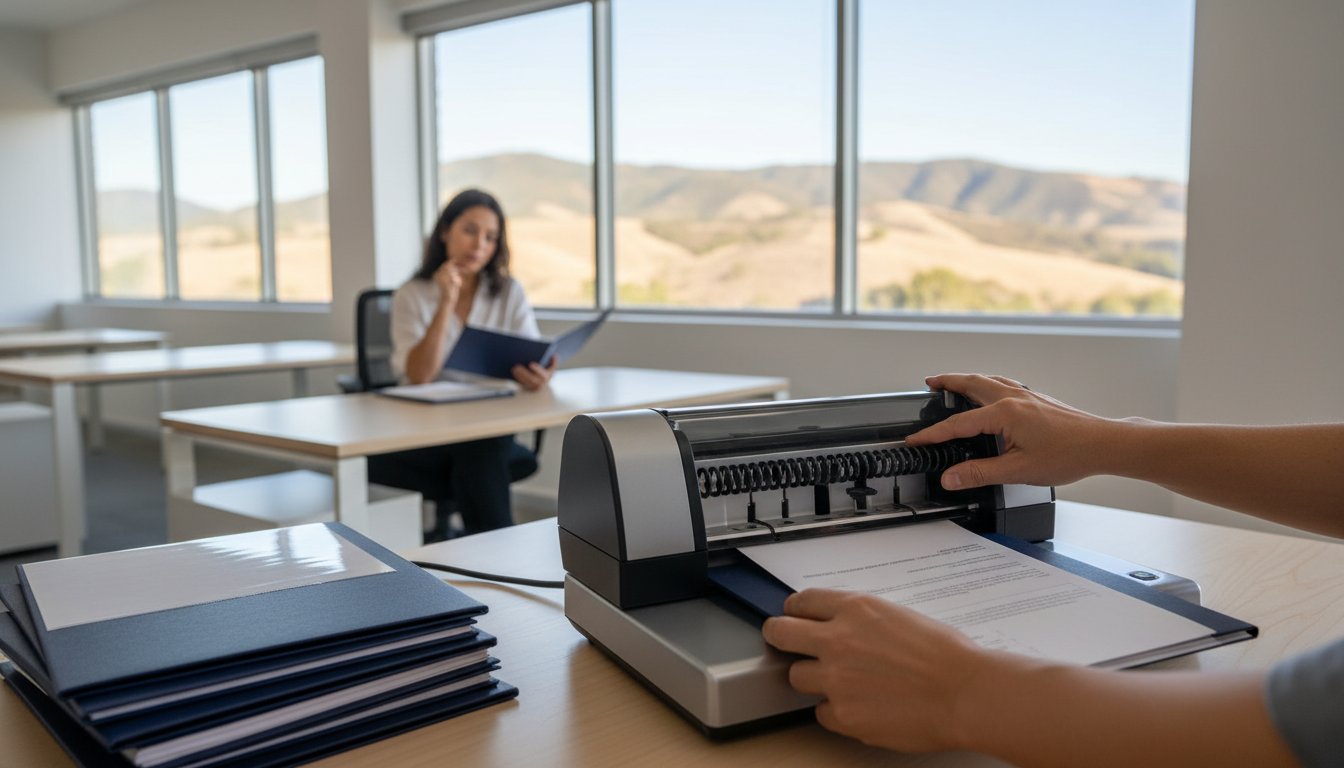
Did you know that 70% of businesses in developed countries now prioritize high-quality organizational tools to drive both productivity and brand perception? It's a clear signal that the physical feel of your documents matters just as much as the data inside them. You've likely experienced the frustration of a high-stakes report looking amateurish because of a "cheap" finish or pages that snag on a poorly aligned coil. Learning how to get professional binding results at the office is no longer a luxury; it's a critical skill for any team that wants their physical presentations to match the quality of their digital work.
We understand that you want sleek, durable reports that impress clients and stand up to frequent handling. This guide transforms your document finishing from a chore into a streamlined, high-output workflow. You'll learn how to select the right equipment, such as the Akiles CoilMac-M or the GBC CombBind C800pro, and which supplies create the best tactile experience. We'll walk through the essential techniques for using Regency Composition Covers and clear acetate to ensure every document you produce reflects the pride in craftsmanship your brand deserves.
Key Takeaways
- Identify the ideal binding method for your specific document needs, ranging from the professional look of twin loop wire to the durability of plastic spiral coils.
- Learn how to get professional binding results at the office by mastering precision workflows like side margin alignment and the critical "Test Punch" rule.
- Elevate the tactile experience of your reports using premium finishing supplies, including Regency Composition covers and clear acetate title page protectors.
- Evaluate high-performance equipment from leading brands like Akiles and Tamerica to ensure your office is equipped for high-volume, professional-grade production.
- Discover how to transform basic printouts into high-impact presentations that reflect the quality and authority of your internal data.
Beyond the Staple: Why In-House Professional Binding Matters
Professional office binding is more than a simple utility. It is a precise combination of mechanical accuracy and high-quality consumables that transforms a standard stack of paper into a durable asset. While a staple might suffice for a quick internal memo, it fails to provide the structural integrity required for high-stakes proposals or long-term reference manuals. Understanding how to get professional binding results at the office begins with recognizing that the physical form of your document is its first pitch. When you move beyond basic fasteners, you signal that the information within is both permanent and valuable.
The difference in durability is striking. Stapled documents often suffer from "corner tear," where the weight of the pages eventually pulls through the metal fastener. In contrast, documents bound with plastic spiral coils or twin loop wire distribute the stress across the entire spine. This allows for frequent handling without the risk of losing pages. For San Diego businesses, the shift to in-house production also offers a significant cost-benefit. By eliminating the high markups and "convenience fees" associated with retail print centers, companies can produce premium reports at a fraction of the external service cost.
The connection between a document's physical structure and its perceived authority is deeply rooted in the history of bookbinding. Just as ancient binders used specific materials to protect and honor the text, modern office professionals use Regency Composition covers and clear acetate to frame their work. This historical precedent reminds us that the tactile experience is an essential part of storytelling and data presentation.
The Psychology of Document Finishing
Weight and texture influence how a reader perceives the value of your data. A report that feels substantial in the hand suggests a high level of "perceived effort." This leads the client to believe that the strategy inside is as robust as the presentation itself. Functionality also plays a psychological role; "lay-flat" binding styles like spiral coils are critical for training materials. If a user has to fight to keep a manual open on their desk, the document becomes a source of friction rather than a helpful tool.
In-House vs. Outsourced: The 2026 Efficiency Metric
In 2026, office efficiency is measured by the minutes saved in a production cycle. Outsourcing your binding tasks means losing hours to logistics and travel. By equipping your workstation with a "workhorse" machine like the Akiles CoilMac-M, you keep sensitive data within your office walls and gain total control over the finishing timeline. This internal capability ensures that last-minute revisions don't result in missed deadlines or compromised quality.
Choosing the Right Binding Style for Your Document’s Purpose
Selecting the appropriate binding style is a strategic decision that affects how a reader navigates your content. If you are wondering how to get professional binding results at the office, you must first match the mechanical style to the document's intended use. A training manual requires different functionality than a board-level proposal. For those new to the process, consulting a beginner's guide to binding can help clarify the basic mechanics before you commit to a specific style and set of supplies.
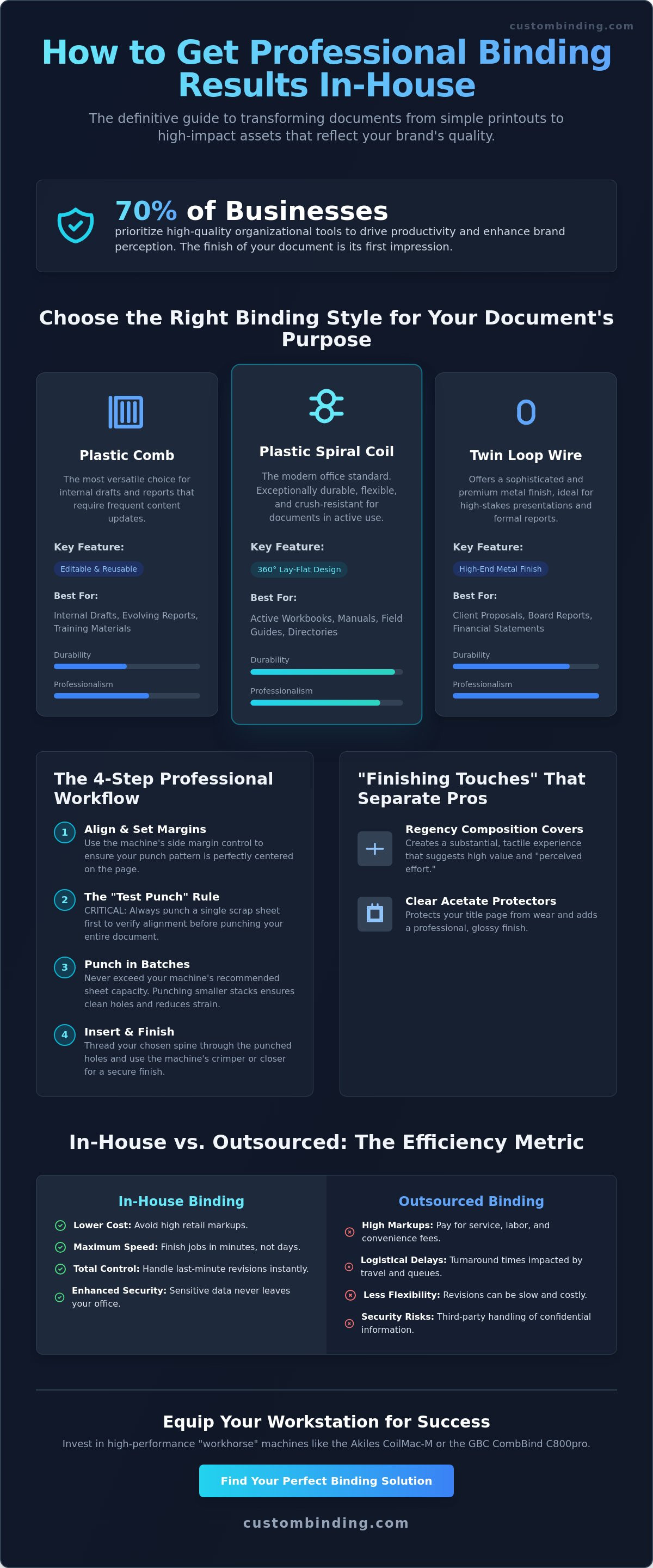
Plastic comb binding remains a versatile choice for internal drafts and reports that require frequent updates. Using a machine like the GBC CombBind C800pro allows you to open the binding, add or remove pages, and close it again without wasting materials. While it lacks the high-end feel of other methods, its utility for evolving documents is unmatched. It's a practical solution for projects in the "working" stage where content isn't yet finalized, but organization is still required for clarity and collaboration.
Plastic Spiral Coil: The Modern Office Standard
Plastic spiral coils are the most durable option for active workbooks and field guides. The primary advantage is the "360-degree flip," which allows the document to fold back on itself for easy note-taking. In San Diego offices, the 4:1 pitch is the most reliable standard. These coils are made of a flexible plastic that maintains its shape even under heavy use. Unlike metal, plastic coils won't bend or snag when tossed into a briefcase or stacked on a desk.
Twin Loop Wire: The Executive Choice
Twin loop wire, often called Wire-O, offers a sophisticated, permanent finish that commands attention in boardrooms. This style is the preferred choice for high-stakes real estate or legal proposals where the aesthetic must reflect a high level of professionalism. The wire comes in two formats: 3:1 pitch for smaller documents and 2:1 pitch for thicker volumes. Always use a dedicated wire closer to ensure the loops are perfectly round, preventing pages from catching during use.
Mastering the nuances of these styles is a key part of learning how to get professional binding results at the office that truly impress your stakeholders. Selecting the right supplies is the next step once you've settled on a style; you can explore premium binding coils and wires to find the perfect match for your next project. By choosing the correct style, you ensure your presentation is not only professional but also perfectly suited to its specific purpose.
The "Finishing Touches" That Separate Pros from Amateurs
While the binding machine provides the mechanical foundation, the supplies you choose dictate the document's final character. The cover alone accounts for approximately 50% of the visual and tactile impact. If you want to know how to get professional binding results at the office, you must look beyond the punch and focus on the finishing materials. A high-quality cover acts as a protective barrier and a frame for your intellectual property; it tells the reader the contents are worth their time before they even open the first page.
For a modern, transparent look, Clear Acetate Covers allow your title page to shine while providing a wipeable, spill-resistant surface. If your goal is a classic, "published book" feel, Regency Composition covers provide a rich, leatherette texture and significant durability. These materials are standard professional binding options that immediately elevate a report's status. One often overlooked pro secret is the use of corner rounding. By applying a small radius cut to the outer corners, you prevent the "dog-eared" look that plagues heavily used documents, ensuring the report looks as fresh on day 30 as it did on day one.
Mastering Cover Selection
Selecting the right thickness for your acetate is a balance of flex and rigidity. A 7 mil cover offers a lightweight feel suitable for internal reports, while a 10 mil cover provides the structural "snap" required for external proposals. If your document includes index tabs, you must use "Oversized" covers. These are slightly wider than standard sheets, ensuring that the tabs don't peek out and get crushed during transport. You can also coordinate your plastic spiral binding coils with your brand colors to create a bespoke, tailored appearance that generic binders simply cannot match.
Paper Weight and Its Impact on Binding
Standard 20lb bond paper often feels flimsy and "cheap" once it's bound. For a truly professional finish, the "Sweet Spot" is usually 24lb or 28lb bright white paper. This higher GSM (grams per square meter) provides a satisfying opacity and a premium hand-feel. When using these thicker stocks, remember to adjust your punch depth on machines like the Rhin-O-Tuff Onyx HD7700. A deeper margin ensures the holes don't tear under the weight of the heavier paper. Mastering these small adjustments is the secret to how to get professional binding results at the office that rival any commercial print shop.
A Step-by-Step Workflow for Perfect Office Binding
Achieving a print-shop finish requires more than just high-end equipment; it demands a disciplined, repeatable workflow. When you master how to get professional binding results at the office, you eliminate the common errors that lead to wasted supplies and frustrated clients. The process begins long before you pull the lever on your punch. It starts with physical alignment and a commitment to precision at every stage of the assembly. A well-organized workspace is the foundation of a high-quality final product.
Always begin with a "Test Punch" using a scrap sheet of the exact same paper stock and covers you intend to use for the final project. This step allows you to verify that the side margin is perfectly centered. This ensures that the holes don't cut off the edge of the page or leave a jagged "half-hole" at the top or bottom. A centered punch is the hallmark of a specialist's work. Once the alignment is locked, proceed with the document in small, manageable lifts to maintain hole integrity and machine longevity.
Precision Punching Techniques
Avoid the temptation to punch at the maximum sheet capacity of your machine. While the Rhin-O-Tuff Onyx HD7700 is a powerful tool, punching at roughly 80% of its rated capacity yields significantly cleaner holes with less burring. This reduces the friction when you eventually thread your plastic spiral binding coils through the document. If your document size is non-standard, use the disengageable dies to deactivate specific punch pins. This prevents unsightly partial holes at the edges of your paper. For long-term maintenance, occasionally punch through a sheet of waxed paper to lubricate the pins and keep the mechanism moving smoothly.
The Art of the Crimp
The final step in coil binding is often where beginners falter. Using specialized coil crimping pliers is essential; manual bending with standard pliers will leave sharp, jagged edges that snag on clothing or other documents. Position the pliers with the red dot facing up and cut at an upward angle. This creates a clean fold that locks the coil in place. For a truly seamless front view, ensure the coil seam is located at the back of the document. This small detail ensures that when a client picks up your report, the first thing they see is a continuous, unbroken spine.
After the crimp is complete, perform a final inspection. Flip every page to check for "page hang," which occurs if the holes are too close to the edge or if the coil diameter is too small for the paper stack. Correcting these issues before delivery is how you maintain a reputation for excellence. If you are ready to upgrade your workspace, view our selection of professional binding machines to find the right fit for your production needs.
Equipping Your Workstation for Long-Term Success
Building a reliable document finishing station is the final step in securing your professional reputation. While the techniques discussed in previous sections ensure quality, the longevity of your output depends on the "workhorse" machinery you select. Brands like Akiles, Rhin-O-Tuff, and Tamerica are engineered to withstand the rigors of a busy environment. Understanding how to get professional binding results at the office involves more than a one-time purchase; it requires a strategic approach to equipment and a well-organized workspace. When your tools are as organized as your data, the entire production process flows with a steady, logical rhythm.
To maximize efficiency, organize a dedicated "Binding Center" in your office. Store your Regency Composition covers, clear acetate, and various sizes of plastic spiral binding coils in labeled, accessible bins; using professional labeling solutions from DymoOnline can help ensure your workstation remains perfectly categorized. This modular setup prevents the friction of searching for supplies during high-pressure deadlines. Transitioning from buying one-off supplies to a recurring inventory strategy also improves your ROI. By maintaining a stock of frequently used materials, you ensure that every report leaving your desk meets the same high standard of tactile excellence.
Selecting the Right Machine for Your Volume
The choice between manual and electric punching often comes down to labor hours. If your team handles more than 20 documents per week, an electric upgrade like the Rhin-O-Tuff Onyx HD7700 pays for itself by reducing physical strain and accelerating the workflow. For offices that need to switch between different binding styles, the Tamerica Optimus-450 offers the versatility required for multi-function environments. "Heavy Duty" isn't just a marketing term; for San Diego legal firms and high-volume departments, it's a requirement for ensuring that your punch pins remain sharp and your margins stay precise over thousands of cycles.
Partnering with a Local Specialist
Purchasing your equipment from a local specialist provides a level of security that big-box retailers can't match. Custom Binding Products has served the San Diego community since 1988, positioning itself as a partner in your professional success rather than just a vendor. This partnership grants you access to on-site repair services, which is critical for minimizing downtime during a major project. When you invest in high-quality machinery, you're also investing in the support system that keeps that machinery running. To see the full range of tools designed to elevate your professional storytelling, view our full catalog of professional binding machines and supplies. By choosing the right partner, you ensure that your office is always equipped to deliver a superior professional outcome.
Elevate Your Professional Identity Through Precision Binding
Mastering how to get professional binding results at the office is a significant investment in your brand’s reputation. By selecting the correct binding style for your document’s specific use case and applying meticulous finishing touches like Regency Composition covers, you transform standard data into a high-impact presentation. Precision at every stage of the workflow, from the initial test punch to the final coil crimp, ensures that your internal reports command the same respect as commercially produced volumes. These small details collectively signal a commitment to quality that readers notice immediately.
As you refine your in-house production, partner with a specialist who understands the mechanical nuances of the craft. Upgrade your office presentations with professional supplies from Custom Binding Products. Serving the San Diego area since 1988, we are an authorized dealer for industry leaders like Akiles, Rhin-O-Tuff, and GBC. Our team provides the on-site equipment repair and technical support necessary to keep your workstation operating at peak efficiency. Take pride in the tactile quality of your work and watch how a polished, durable finish strengthens your professional storytelling.
Frequently Asked Questions
What is the best binding method for a professional-looking report?
Twin loop wire is the premier choice for an executive, high-end presentation. It provides a permanent, sophisticated finish that stays perfectly flat when opened. While plastic spiral coils are excellent for durability, wire binding conveys a level of authority ideal for board-level reports and legal proposals. This style ensures your document looks and feels like a professionally published volume.
Can I bind a document that is over 2 inches thick at the office?
You can bind documents exceeding 2 inches in thickness by using high-capacity plastic combs or large-diameter spiral coils. Plastic combs can typically accommodate up to 2 inch stacks, while specialized coil machines handle even larger volumes. Ensure your punch margin is set deeper for these thicker documents to prevent the pages from tearing under their own weight. This adjustment is vital for maintaining structural integrity.
Do I need a special machine for wire binding vs. coil binding?
Most binding styles require a specific machine because the hole patterns, or pitch, are not interchangeable. A standard coil machine uses a 4:1 pitch, while wire machines typically use 3:1 or 2:1 patterns. If your office needs multiple styles, consider a modular system like the Rhin-O-Tuff Onyx HD7700. This equipment allows you to swap punching dies for different binding types without purchasing multiple machines.
How do I choose the right size coil or wire for my document?
Select a binding element that is approximately 1/8 inch larger than the total thickness of your document stack, including covers. If the coil is too small, the pages won't turn freely; if it's too large, the document will feel loose and unorganized. Using a diameter scale or thickness gauge ensures you achieve the precise fit required for a professional result. This step is essential for a polished tactile experience.
What is the difference between 3:1 and 4:1 pitch in binding?
Pitch refers to the number of holes punched per linear inch of paper. A 4:1 pitch, which is the standard for plastic spiral coils, means there are four holes per inch. A 3:1 pitch is common for twin loop wire and features three holes per inch. Matching the pitch of your supplies to the pitch of your machine's punch is a fundamental part of how to get professional binding results at the office.
How can I fix a binding machine that isn’t punching clean holes?
Start by emptying the waste tray and checking for paper debris stuck in the die assembly. If the pins are dull or sticking, punch through a sheet of waxed paper several times to lubricate the mechanism. For persistent issues, the die may require professional sharpening or replacement to maintain the clean edges necessary for professional results. Regular maintenance prevents burrs and jagged edges from ruining your presentation.
Is it cheaper to bind documents in-house or at a print shop?
Producing documents in-house is significantly more cost-effective for businesses with recurring binding needs. While there is an initial investment in machinery like the Akiles CoilMac-M, the cost per document drops to a fraction of retail print shop fees. You also eliminate the labor costs and time delays associated with transporting sensitive data to an external vendor. In-house production offers total control over your quality and deadlines.
Where can I get binding machine repair in San Diego?
Custom Binding Products provides expert on-site equipment repair and technical support throughout the San Diego area. Our technicians specialize in maintaining brands like GBC, Rhin-O-Tuff, and Tamerica to ensure your production line experiences minimal downtime. Keeping your equipment in top condition is a key part of how to get professional binding results at the office year after year. We act as a partner in your success by ensuring your tools are always ready for use.