
Justifying the Cost of a Commercial Laminator: An ROI Guide for 2026
May 16th 2026
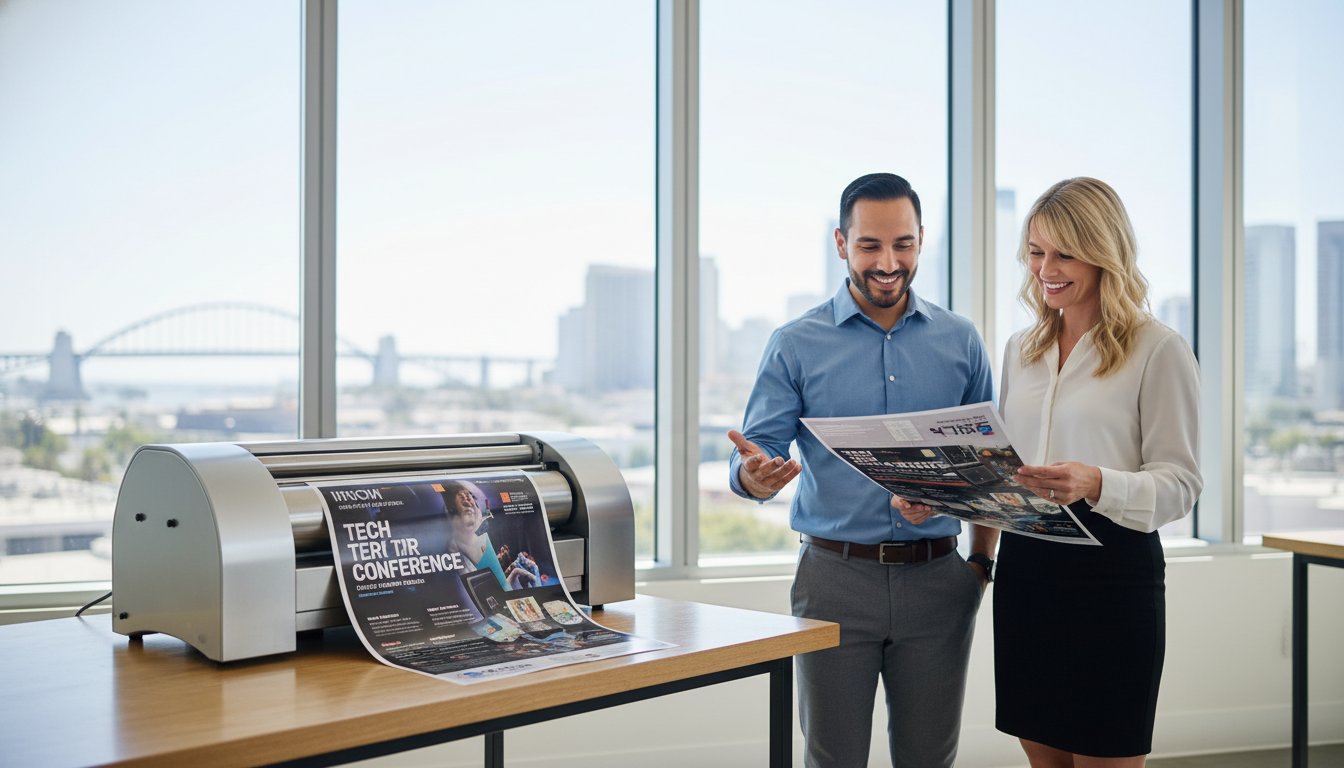
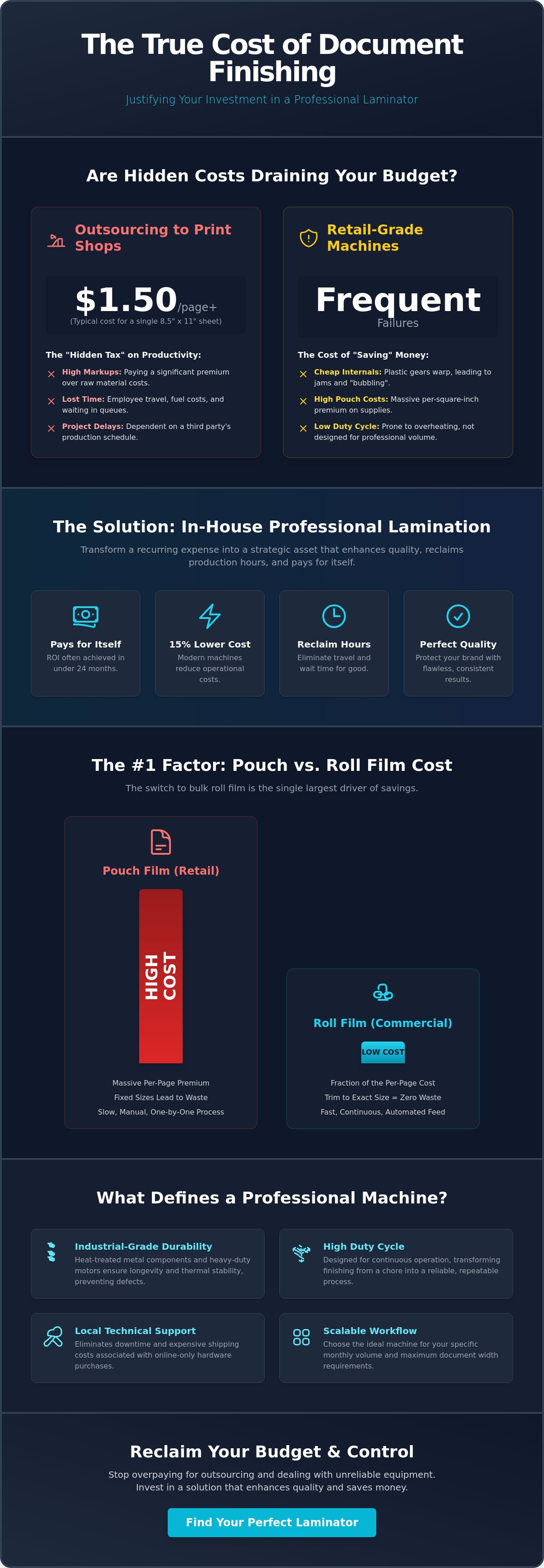
What if your most reliable team member was a piece of equipment that paid for itself in less than twenty-four months? It's a common misconception that professional-grade finishing is a luxury reserved for high-volume print houses. In reality, justifying the cost of a commercial laminator is often a matter of identifying the hidden leaks in your current budget. If you're tired of paying upwards of $1.50 per page at a local shop or dealing with the frequent failures of retail-grade machines, you already know the frustration of an inefficient workflow.
We understand that every capital investment requires a clear path to profitability. You need equipment that reflects the quality of your work while standing up to the rigors of daily use. This guide will show you how to calculate a true return on investment by comparing outsourcing fees against the durability and speed of in-house production. We'll also explore how modern, energy-efficient machines reduce operational costs by 15% and help you navigate new environmental standards like California's AB 1817. By the end, you'll have the financial data and the confidence to upgrade your professional presentation.
Key Takeaways
- Identify the "hidden tax" of retail-grade equipment and understand how the superior duty cycles of professional hardware reduce frequent replacement costs.
- Quantify your potential savings by contrasting local outsourcing fees with the significantly lower per-page cost of roll laminating film.
- Master a structured framework for justifying the cost of a commercial laminator that factors in both direct material savings and reclaimed production hours.
- Determine the ideal machine for your specific workflow by auditing your monthly square footage and maximum document width requirements.
- Recognize the importance of local technical support in San Diego to eliminate the downtime and shipping expenses associated with online-only hardware purchases.
The Financial Reality of Professional Document Finishing
Many organizations fall into the trap of purchasing "big box" store equipment to save on initial capital. This decision often introduces a "hidden tax" on the business that isn't immediately visible on a balance sheet. Frequent equipment failure and the high price of individual laminating pouches quickly erode any perceived savings. When you're justifying the cost of a commercial laminator, you must look beyond the sticker price and analyze the total cost of ownership. Cheap units fail. They fail often. Often, they fail at the exact moment a high-stakes presentation is due, leading to rushed outsourcing or, worse, ruined original documents that can't be replaced.
A business outgrows a desktop pouch unit the moment their project volume causes the machine to overheat or when the aesthetic quality begins to fluctuate. If your team spends more time troubleshooting jams than finishing projects, the "saving" has already vanished. Professional-grade hardware transforms finishing from a frustrating chore into a reliable, repeatable process that protects your brand's reputation.
Duty Cycles and Mechanical Longevity
Consumer units rely on plastic internal gears that warp under the heat required for a consistent Lamination process. In contrast, industrial-grade hardware utilizes heat-treated metal components and heavy-duty motors designed for continuous operation. This mechanical integrity ensures thermal stability; without it, you face the common issue of "bubbling" or silvering. These defects occur when rollers can't maintain even pressure or temperature across the entire document surface. Since 1988, Custom Binding Products has maintained a durability standard where machines are measured by years of service rather than months. Investing in a machine with a high duty cycle means you aren't just buying a tool; you're securing a permanent part of your production infrastructure.
The Pouch vs. Roll Supply Cost Gap
The most significant financial shift occurs when moving from individual pouches to roll laminating film. While pouches are acceptable for occasional, small-scale tasks, they carry a massive per-square-inch premium that adds up quickly in a professional environment. Roll film allows for continuous feeding and significantly higher yield per dollar spent. Consider these benefits of switching to roll-based systems:
- Reduced Material Waste: Roll systems allow you to trim exactly what you need, whereas pouches force you into fixed dimensions.
- Wholesale Efficiency: Purchasing film in bulk rolls reduces the per-document cost to a fraction of the pouch equivalent.
- Labor Savings: Feeding a continuous roll is significantly faster than centering and aligning individual pouches for every page.
By shifting to roll supplies, you transform lamination into a scalable internal utility. This transition is a core component of justifying the cost of a commercial laminator, as the supply savings alone can often cover the machine's monthly depreciation.
Calculating ROI: Hard Costs vs. Outsourcing Fees
To build a compelling case for leadership, start by auditing your monthly invoices from local San Diego print centers. For a standard 8.5" x 11" sheet, local rates typically range from $1.00 to $1.50 for 3-mil thickness. While these figures appear manageable in isolation, they represent a significant markup over the raw material costs of roll laminating film. A comprehensive Return on investment analysis must also account for the "soft costs" that never appear on a receipt. Every trip to a service bureau involves employee travel time, fuel, and the inevitable project delays that occur during peak production seasons. When you're justifying the cost of a commercial laminator, these hidden drains on productivity often outweigh the direct service fees.
Consider the 12-month break-even point for a mid-range commercial unit. For many organizations, the transition from an expense to a strategic asset happens much faster than expected. If your office processes just 100 sheets per month, you're likely spending enough on outsourcing to cover the monthly depreciation and supply costs of a professional machine. By bringing this process in-house, you reclaim total control over your production schedule and your bottom line. It's a shift from a recurring bill to a predictable, depreciable investment.
The Time-to-Finish Metric
Efficiency isn't just about how fast the rollers move; it's about how quickly you can start the job. Professional units often feature rapid-response heating elements that reach operating temperature in as little as 55 seconds. Compare this to the five minutes or more required by home-office alternatives. Once running, high-speed commercial rollers can process material at 90 inches per minute, a massive leap from the 10 inches per minute found in entry-level hardware. This nine-fold increase in speed translates to hundreds of reclaimed labor hours over the course of a year. It also provides the benefit of "instant gratification," allowing for immediate reprints or corrections without waiting for an external vendor's turnaround time.
Waste Reduction and Precision
Reliability is a cornerstone of professional finishing. Commercial equipment features advanced anti-jam technology and adjustable tension controls that prevent the ruined film and mangled documents common with cheaper hardware. The cost of re-printing high-value marketing materials or one-of-a-kind guides can be staggering. Precision matters in every tactile detail. Using Dahle professional rolling trimmers alongside your laminator ensures that every edge is clean and every border is uniform. This combination reduces finishing waste and ensures that your first attempt is your final one. If you're ready to stop overpaying for external services, exploring our range of Roll Laminating Film and equipment is the first step toward a more profitable workflow.
Beyond the Spreadsheet: Soft Benefits and Brand Reputation
While financial metrics provide the foundation for justifying the cost of a commercial laminator, the impact on your brand's reputation is equally significant. In a competitive market, the first impression your business makes is often a tactile one. A flimsy, unprotected document suggests a temporary solution, whereas a professionally laminated guide or menu signals permanence and attention to detail. You aren't just protecting paper; you're signaling the value of the information contained within. A crisp, perfectly sealed document tells your client that your organization prioritizes quality in every facet of its operation.
The aesthetic difference between film thicknesses is a critical detail for high-end presentations. While a standard 3 mil finish offers basic protection, a rigid 10 mil finish transforms a simple printout into a durable, reusable asset. This is especially vital for items like restaurant menus or safety guides that face constant handling. For firms operating in sunny San Diego, document preservation involves more than just physical wear. UV-protected films act as a barrier against solar fading, ensuring that outdoor signage or window-facing displays remain vibrant despite intense sun exposure. Reliable specialists understand that consistent, high-pressure edge-sealing is the only way to guarantee long-term document integrity against moisture and daily use.
Tactile Professionalism and Client Perception
Psychology plays a major role in professional interactions. Heavier, more rigid documents are instinctively perceived as having higher value and authority. You can further elevate this presentation by using clear acetate covers in tandem with your lamination process. This combination creates a polished, multi-layered look that builds a cohesive brand identity for your firm. When every piece of collateral leaving your office feels substantial and well-crafted, you reinforce a message of stability. It's a subtle but powerful way to distinguish your work from competitors who rely on generic, unprotected materials.
Versatility in Material Handling
A commercial-grade machine isn't limited to standard office paper. These robust systems handle heavy cardstock, dark-ink prints, and large-format posters without the bubbling or peeling common in cheaper units. If your team works with heat-sensitive thermal prints or delicate archival items, the "Cold Lamination" setting provides a safe, pressure-sensitive alternative. This versatility allows you to justify the investment through multi-departmental use. Marketing can produce high-gloss posters while HR creates durable employee badges and Operations generates waterproof instructional guides. It's a single, reliable tool that serves the entire organization's professional storytelling needs.
Selecting the Right Machine for Your Volume and Workflow
Selecting the right machine requires a systematic approach to your production data. Don't simply guess your needs; audit your monthly square footage requirements from the past quarter. This empirical data is the first step in justifying the cost of a commercial laminator because it reveals whether a pouch system or a roll system offers the better long-term return. While a small office might process fifty sheets a month, a school or marketing firm might handle hundreds of feet of material. Understanding these numbers prevents you from under-buying a machine that will fail or over-buying capacity you'll never use.
Next, determine your maximum width needs. If your projects never exceed eleven inches, a heavy-duty pouch laminator is a space-saving solution. However, if you produce banners or wide-format posters, a roll laminator is non-negotiable. You should also evaluate if your workflow requires mounting capabilities. Industrial units allow you to adhere prints directly to rigid boards, a feature that eliminates the need for a separate mounting press. Finally, assess your facility's electrical capacity. Heavy-duty units often require dedicated 20-amp circuits, an infrastructure detail that's easily overlooked during the planning phase. If you're ready to streamline your production, view our professional laminating equipment to find the perfect fit for your office.
Pouch Laminators for Low-to-Mid Volume
For office-centric tasks, machines like the Akiles or GBC series provide the reliability you need without a massive footprint. You should stick with pouches when your work involves small batches, varied document sizes, and limited floor space. These units are exceptionally user-friendly and require minimal training for your staff. To ensure the best results, verify that your machine is compatible with high-quality laminating pouches of varying mil thickness. This flexibility allows you to switch between lightweight 3-mil protection and rigid 10-mil finishes for different internal projects without changing film rolls.
Roll Laminators for High-Volume and Large Format
When justifying the cost of a commercial laminator for high-volume environments, the Tamerica Optimus-450 stands out as a true workhorse. These systems are designed for continuous-feed lamination, making them the superior choice for banners, maps, and classroom materials. The speed of a roll system is its primary advantage; what takes an hour with a pouch laminator can often be completed in ten minutes on a roll-fed machine. While these units have a larger footprint, the labor hours reclaimed by your team quickly outweigh the space requirement. It's an investment in speed and scalability that allows your organization to handle large projects in-house with total confidence.
Future-Proofing Your Investment with Local San Diego Support
The final pillar of justifying the cost of a commercial laminator involves protecting that investment against downtime. Many organizations make the mistake of prioritizing a lower online price point, only to discover the "hidden cost" of online-only purchases when technical issues arise. Shipping a heavy-duty industrial laminator back to a manufacturer for repairs is logistically complex and prohibitively expensive. A local partnership transforms your equipment from a standalone purchase into a supported production system. By choosing a partner within San Diego County, you ensure that your finishing department remains operational without the week-long delays associated with national shipping schedules.
Custom Binding Products acts as a long-term consultant rather than a simple vendor. We understand that your reputation relies on the consistent quality of your output. When you have a local expert available for on-site maintenance, you eliminate the friction of troubleshooting via phone or email. This immediate access to specialized knowledge keeps your workflow moving and ensures that your equipment continues to perform at factory specifications for years after the initial setup. It is the difference between owning a machine and mastering a process.
The Custom Binding Advantage
Local businesses prefer San Diego-based repair services because they value responsiveness and precision. Our team provides expert troubleshooting and technical support that online retailers simply cannot match. One of the most significant benefits of a local partnership is the ability to see equipment in person before you commit to a commercial purchase. Testing a machine's mechanical movement and the tactile feel of the finished product helps you make an informed decision based on your specific material needs. This hands-on experience ensures the hardware you select perfectly aligns with your brand’s aesthetic standards.
Sustainable Supply Chains
Maintaining a professional image requires a consistent supply of high-quality materials. A local partnership ensures you never face a production halt due to backordered supplies. We maintain a robust inventory of roll laminating film and binding elements to keep your office running at peak efficiency. Consider the logistical advantages of local supply:
- Freight Savings: Local pickup options allow San Diego businesses to bypass heavy freight costs on bulk film orders.
- Immediate Availability: Reclaim storage space by ordering exactly what you need for current projects, knowing more is available nearby.
- Expert Guidance: Receive tailored recommendations on film density and finish for unique or challenging print materials.
Securing a reliable, local supply chain is the final step in justifying the cost of a commercial laminator. It provides the peace of mind that your investment is backed by a specialist who understands the San Diego business environment. If you're ready to move beyond generic solutions and invest in a tailored finishing system, contact us for a professional consultation today.
Securing Your Professional Presentation for the Long Term
Transitioning to in-house finishing is a strategic shift that moves your organization from reactive spending to proactive production. By auditing your current outsourcing fees and factoring in the reclaimed labor hours of high-speed rollers, justifying the cost of a commercial laminator becomes a straightforward financial decision. You're not just purchasing hardware; you're investing in a reliable workflow that ensures every document reflects your brand’s commitment to quality.
Since 1988, we've helped San Diego businesses eliminate the friction of document preparation. Our partnership provides more than just equipment; it offers the security of on-site technical support and wholesale pricing on essential supplies like roll laminating film. This local expertise ensures your machinery stays in peak condition while your supply chain remains sustainable and cost-effective. Take the first step toward a more efficient and professional finishing department. Request a Professional Lamination ROI Consultation from Custom Binding Products to discover the ideal configuration for your specific volume and aesthetic goals. We look forward to helping you elevate your professional storytelling.
Frequently Asked Questions
How long does a commercial laminator typically last compared to a home unit?
Commercial units often provide ten to fifteen years of reliable service with proper maintenance, whereas home units frequently fail within twelve to twenty-four months of regular use. The difference lies in the industrial-grade metal components and high-capacity motors found in professional hardware. This longevity is a critical factor in justifying the cost of a commercial laminator, as it eliminates the recurring replacement cycle of retail-grade alternatives.
Is it cheaper to laminate at home or at a store like Staples?
Performing lamination in-house with a commercial machine is significantly more cost-effective than using retail service centers for any consistent volume. While local San Diego print shops often charge between $1.00 and $1.50 per sheet for standard 3-mil thickness, the material cost of roll laminating film is a fraction of that price. In-house production also removes the labor costs associated with employee travel and the high markup on individual retail pouches.
What is the most common reason commercial laminators fail, and how can it be avoided?
Adhesive buildup on the rollers is the most frequent cause of mechanical failure and poor output quality. This occurs when film is allowed to wrap around the rollers or when the machine is operated at incorrect temperature settings. You can avoid this by using a cleaning kit regularly and ensuring that the tension and heat are calibrated for the specific mil thickness of your supplies. Consistent maintenance preserves the mechanical movement of all components.
Does a commercial laminator require special electrical outlets?
Many heavy-duty industrial units require a dedicated 20-amp circuit and a NEMA 5-20R outlet to handle the significant power draw of high-speed heating elements. While smaller pouch units typically run on standard 115V household outlets, you should always verify the electrical specifications of your chosen model. Proper power infrastructure prevents circuit overloads and ensures the machine maintains the thermal stability required for professional, bubble-free results.
Can I use any brand of laminating film with a commercial roll laminator?
Most commercial roll laminators are designed to be open systems, meaning they can accommodate various brands of film as long as the core size and width are compatible. However, using high-quality roll laminating film specifically matched to your machine's heat range is essential for preventing silvering. We recommend verifying the film's melting temperature against your equipment's capabilities to ensure a perfect bond and a polished, professional presentation.
How do I calculate the break-even point for an in-house laminating machine?
Calculate your break-even point by dividing the total cost of the equipment and initial supplies by your monthly outsourcing savings. Subtract the per-page cost of in-house film from the price you currently pay at a service bureau to find your margin. When justifying the cost of a commercial laminator, remember to include soft savings like reclaimed employee travel time and the ability to prevent project delays during peak seasons.
What is the difference between hot and cold lamination for commercial use?
Hot lamination uses heat-activated adhesives to create a permanent, durable bond, while cold lamination uses pressure-sensitive adhesives for heat-sensitive materials. Hot systems are the standard for most office documents and signage due to their lower supply costs and superior rigidity. Cold lamination is the preferred mechanical solution for delicate items like thermal prints or old photographs that might be damaged by high temperatures.
Are there specific laminators recommended for San Diego schools and non-profits?
The Tamerica Optimus-450 is highly recommended for San Diego educational environments due to its durability and ease of use for high-volume classroom materials. Schools often benefit from the speed of roll-fed systems, which can process large batches of instructional guides or posters in minutes. For smaller non-profits with varied needs, a versatile pouch unit from the Akiles or GBC series offers a balance of professional quality and a smaller footprint.