
Troubleshooting a Jammed Coil Binding Machine: The Professional Fix
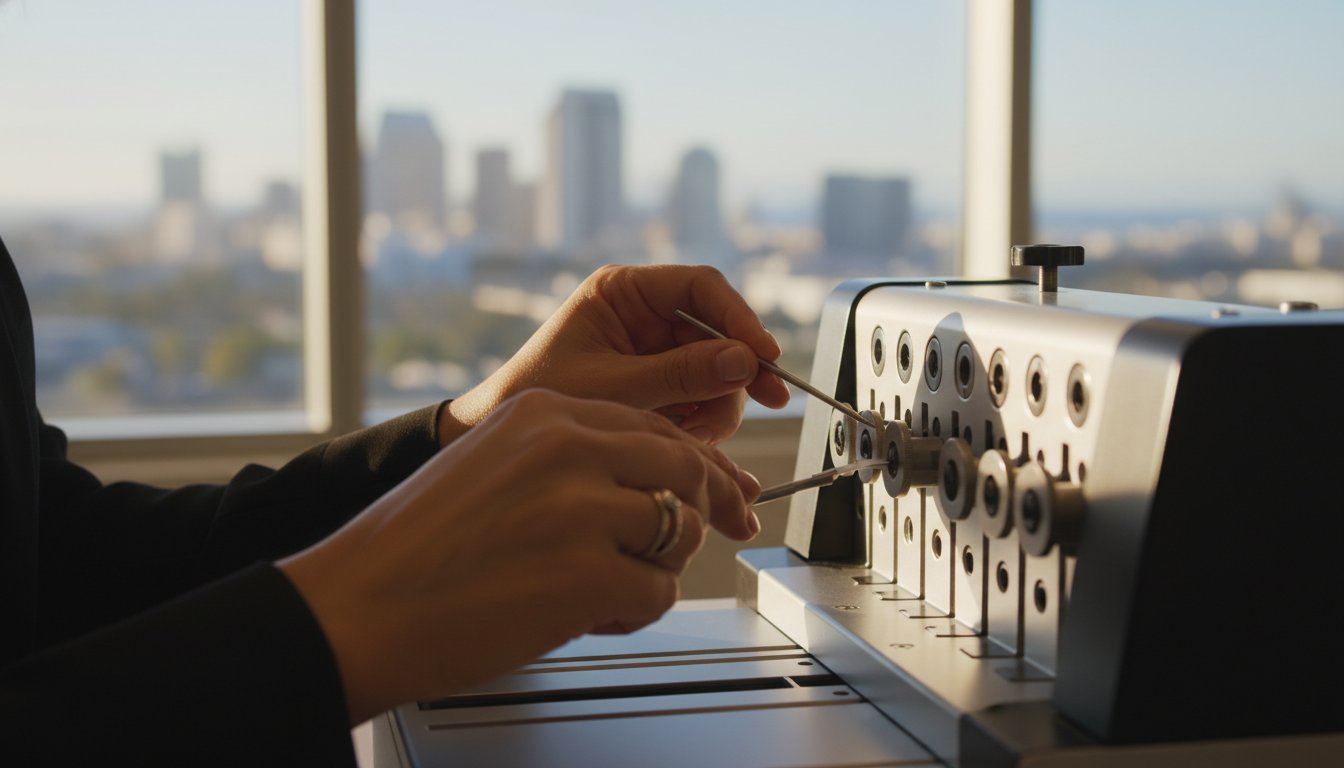
That sudden resistance in your binding handle isn't a sign to push harder; it's your machine's way of asking for a specialized touch. You've likely felt that moment of panic when a critical presentation is due and the punch lever refuses to budge. It's frustrating to face a mechanical failure when you're on a deadline, especially when you're worried about snapping the internal punch pins of a high-end unit like an Akiles CoilMac-M or a Rhin-O-Tuff Onyx HD7700. We understand that in a busy professional environment, your equipment is an investment in your reputation, and a jam can feel like a threat to your productivity.
This guide provides the professional methodology for troubleshooting a jammed coil binding machine so you can restore your workflow without causing permanent damage. You'll learn how to safely diagnose the cause of the resistance, clear the punch throat, and implement a maintenance routine that prevents future downtime. We'll walk through a methodical decompression process that ensures your San Diego office continues to produce polished, professional documents with organized efficiency and ease.
Key Takeaways
- Differentiate between a soft stall and a hard mechanical jam to determine if your equipment requires immediate power disconnection for safety.
- Master the "Reverse Tension" technique, a critical skill when troubleshooting a jammed coil binding machine to protect delicate internal punch pins from snapping.
- Identify how compressed paper chads in the waste tray and friction from plastic covers serve as the primary catalysts for mechanical resistance.
- Implement the "1000-Punch" maintenance rule using professional silicone lubricants to maintain the tactile precision of your high-volume binding equipment.
- Recognize terminal signs of failure, such as cracked frames or broken drive gears, that signal the need for specialist repair on units like the Rhin-O-Tuff Onyx HD7700.
Diagnosing the Stall: Is Your Coil Binder Jammed or Just Overloaded?
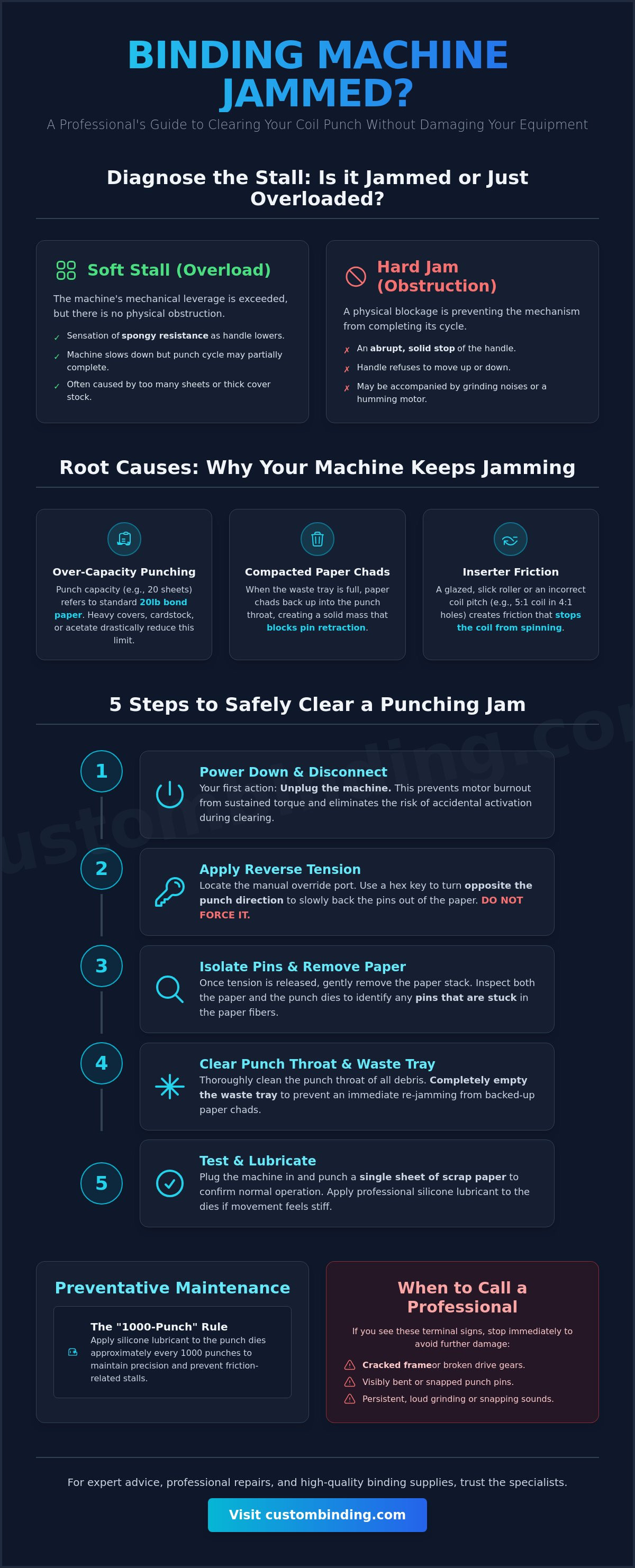
Effective troubleshooting a jammed coil binding machine begins with a precise diagnosis. You must first distinguish between a soft stall and a hard jam. A soft stall occurs when the volume of material simply exceeds the machine's mechanical leverage. You'll feel a spongy resistance as the handle reaches its lowest point. A hard jam, however, is an abrupt mechanical stop. It indicates a physical obstruction, a bent pin, or a misalignment within the internal components. Identifying which state your machine is in prevents you from applying excessive force that could crack the frame or snap a drive gear.
The two primary failure points in professional equipment are the punch throat and the electric inserter. Understanding the mechanics of What is Coil Binding? helps clarify why these two failure points are so distinct. One involves vertical force through a die, while the other relies on lateral friction from a rotating roller. Warning signs of an impending failure include grinding noises during the punch cycle, a handle that refuses to return to the upright position, or holes that are only partially punched through the stack.
Operators often confuse punch capacity with document thickness. Professional specifications for a unit like the Akiles CoilMac-M might list a 20-sheet punch capacity, but this refers to standard 20lb bond paper. If you're punching heavy Regency Composition Covers or thick acetate, that capacity drops significantly. Forcing a full stack of heavy covers is the fastest way to trigger a hard jam.
The Punching Jam: When the Handle Won’t Budge
Most punching failures stem from paper fiber buildup within the die path. When the waste tray isn't emptied regularly, compressed paper chads back up into the throat, preventing the punch pins from fully retracting. If the handle is stuck in the down position, don't jerk it upward. This usually means the pins are fused into the paper stack due to over-capacity. Check if the pins are visible through the throat; if they're stuck mid-stroke, the machine requires a methodical decompression rather than brute force.
The Inserter Jam: When the Coil Won’t Spin
When the electric inserter motor hums but the coil stays stationary, the issue is often friction-based. Verify that your coil pitch matches your punched holes; a 5:1 coil will never spin through a 4:1 hole pattern. Check the ends of your plastic spiral binding coils for sharp burrs that might be catching on the paper fibers. Additionally, inspect the electric roller for glazing. Over time, the rubber rollers on machines like the Tamerica Optimus-450 can develop a smooth, slick surface from paper dust, losing the grip necessary to drive the coil forward.
5 Steps to Safely Clear a Punching Jam
Clearing a mechanical obstruction requires a steady hand and a methodical approach. Brute force is never the solution when troubleshooting a jammed coil binding machine; in fact, excessive pressure is the leading cause of snapped internal linkages and bent punch pins. By following a structured recovery process, you can protect your investment and return to your production schedule without a costly repair bill. Your goal is to decompress the mechanical tension and clear the punch path without compromising the integrity of the die assembly.
Step 1 & 2: Power Down and Manual Reversion
If you are operating an electric model like the Rhin-O-Tuff Onyx HD7700, your first action must be to disconnect the power cord. Electric motors are designed to provide consistent torque, but when a punch cycle is interrupted, the motor continues to draw current. This creates heat that can lead to a total motor burnout if the unit remains engaged while stuck. Adhering to OSHA Machine Safety Standards protects both the operator and the equipment from accidental activation during the clearing process.
Once power is removed, look for a manual override port. Many professional units from Akiles or Tamerica include a secondary access point that allows you to manually cycle the motor using a hex key or a specialized tool. Apply the "Reverse Tension" technique by turning the manual override in the opposite direction of the punch stroke. Use steady, even pressure to back the punch dies out of the paper stack. If you feel a hard stop, do not force it; this indicates the paper fibers have compressed into a solid mass that needs to be addressed at the pin level.
Step 3 & 4: Pin Isolation and Throat Clearing
Professional machines like the Akiles CoilMac-M feature disengageable pins that are essential for isolating a jam. Pull out the die handles for the pins in the suspected area to remove them from the active drive bar. This reduces the mechanical load on the handle and helps you identify exactly where the paper is snagged. If your machine lacks this feature, you must work across the entire punch throat simultaneously.
To clear the throat, never use metal tools like screwdrivers or knives. Steel blades will easily scratch the precision-ground dies, leading to burred holes on every future document. Instead, use a "shim" made from a strip of heavy cardstock or a piece of a Regency Composition Cover. Slide the shim into the punch throat to nudge trapped paper chads into the waste tray. If the jam persists, it is often more effective to replace aging equipment with professional binding solutions that offer higher punch tolerances and more robust internal components.
Step 5: Resetting the Cycle
After the obstruction is removed, you must ensure the machine is in its neutral starting position. Manually cycle the handle or motor through one full rotation without any paper in the throat. Listen for the clean, rhythmic click of the pins hitting the base plate and retracting. If the movement feels gritty or uneven, check the waste tray again; a single stray chad can migrate back into the drive tracks and trigger a repeat failure.
Root Causes: Why Your Coil Binding Machine Keeps Jamming
Understanding the mechanical stressors that lead to a failure is the only way to move beyond reactive repairs. While troubleshooting a jammed coil binding machine often feels like a localized struggle with a single stack of paper, the true cause is usually a cumulative buildup of friction or debris. Identifying these root causes allows you to shift from emergency fixes to a proactive workflow that protects your equipment's internal die assembly. In high-volume environments, these failures are rarely random; they're the result of specific environmental or operational pressures.
San Diego's coastal climate introduces a unique variable: humidity. High moisture levels cause paper fibers to swell and become "sticky," significantly increasing the force required for the punch pins to shear through the stack. When you combine this environmental resistance with a lack of lubrication, you create the perfect conditions for a hard jam. Adhering to OSHA safety standards for clearing jams is essential when investigating these internal issues, as it ensures the machine remains de-energized while you inspect the drive tracks.
Waste Buildup and Internal Obstructions
The "Full Waste Tray" effect is the most frequent culprit behind mechanical resistance. When the waste drawer reaches 100% capacity, paper chads have nowhere to go and begin to back up into the internal "chad chute." This creates back-pressure that prevents the punch pins from completing their downward stroke. If left unemptied, these compressed chads can actually force the pins out of their precise alignment, leading to a permanent mechanical tilt. Regularly clear the chute and check for "doubled-up" sheets that may have slipped behind the punch guard, as these stray fragments can migrate into the gear assembly and cause a total stall.
Material Misuse and Die Dullness
Material selection plays a critical role in machine longevity. Punching through Clear Acetate Covers or heavy Regency Composition Covers generates significantly more friction and heat than standard bond paper. This heat can cause plastic covers to slightly melt and adhere to the punch dies during the cycle. Punching more than two PVC covers at once is a "machine killer" because the combined thickness and heat often exceed the shear strength of the internal linkages.
For professionals who handle diverse plastic materials and require robust bonding solutions beyond mechanical binding, you can learn more about Bondrite Adhesives Ltd to explore their range of high-performance industrial adhesives.
- Friction Management: Use waxed paper or specialized punching oil sheets every 500 cycles to lubricate the die path.
- Die Integrity: Inspect the hole quality regularly; ragged, uneven edges are a sign of die dullness.
- Die dullness is the primary cause of ragged, jam-prone holes that trap paper fibers and trigger mechanical stalls.
If you notice that your Akiles CoilMac-M or Tamerica Optimus-450 requires increasing amounts of physical force to complete a punch, the dies are likely losing their edge. Continuing to operate a machine with dull dies places unnecessary strain on the handle and drive bar, eventually leading to a cracked frame or a snapped pin that cannot be cleared through standard troubleshooting.
Preventative Maintenance for High-Volume Binding Environments
Establishing a rigorous maintenance schedule is the hallmark of a well-run production environment. For professional San Diego print shops, we recommend the 1000-Punch rule. Every 1,000 cycles, your machine should undergo a brief but thorough inspection and lubrication. This proactive approach significantly reduces the time spent troubleshooting a jammed coil binding machine by catching minor friction issues before they escalate into mechanical failures. Consistency in maintenance ensures that your equipment remains a reliable asset rather than a source of frustration.
Choosing the correct lubricant is vital for machine longevity. Always use a high-quality silicone spray rather than multi-purpose oils like WD-40. Silicone creates a dry, slick barrier that doesn't attract paper dust or become gummy over time. WD-40 is a solvent that can actually strip away factory grease and create a sticky residue, which eventually leads to the very jams you're trying to avoid. A well-lubricated die assembly requires less physical force from the operator, preserving the integrity of the internal gears.
Another critical preventative measure is the "Sheet Limit" protocol. While a machine like the Tamerica Optimus-450 may be rated for 20 sheets, training your staff to punch at 80% of that capacity (16 sheets) preserves the life of the motor and the sharpness of the dies. This buffer accounts for variations in paper density and prevents the "soft stall" that often precedes a hard mechanical failure. It's a simple adjustment that extends the service life of your equipment by years.
Lubrication and Cleaning Protocols
To maintain the fluid motion of an Akiles CoilMac, apply a small amount of silicone lubricant to the internal slide bar every month. This ensures the drive bar moves without hesitation. Use a canister of compressed air to blow out paper dust from the internal sensors and the punch throat. This is especially important for electric units like the Rhin-O-Tuff Onyx HD7700, where dust can interfere with the foot-pedal trigger or the auto-punch cycle. If you notice the dies are beginning to struggle, punch through a few sheets of aluminum foil. This acts as a temporary sharpening agent to refine the edges of the punch pins.
Staff Training and Best Practices
Mechanical reliability depends heavily on the operator's technique. Ensure all paper is properly jogged and squared against the side guide before the punch cycle begins. Misaligned sheets often lead to corner jams that are difficult to clear. Implement a strict "one cover at a time" rule for heavy materials like Regency Composition Covers or Clear Acetate Covers. These materials are significantly denser than standard bond paper and require the machine's full mechanical leverage. If your current equipment is consistently failing despite these protocols, it may be time to upgrade to a more robust unit from our collection of professional coil binding machines to ensure your office stays productive.
When to Call Custom Binding Products for Professional San Diego Repair
Sometimes, the resistance you feel in the handle is more than a simple paper blockage. While the steps outlined in previous sections resolve the vast majority of operational stalls, certain mechanical signatures indicate a terminal failure that requires a specialist's touch. Continuing to attempt troubleshooting a jammed coil binding machine after a major internal component has failed can lead to irreparable damage to the chassis or the motor. Recognizing when to step away from the machine is just as important as knowing how to clear a minor chad backup.
Signs You Need a Professional Technician
If you hear a loud "pop" or "bang" during a punch cycle, stop all operations immediately. This sound usually signals a snapped drive link, a broken gear tooth, or a cracked frame casting. Another critical warning sign is a handle that feels completely disconnected or weightless. This indicates that the internal shear pins or the drive bar has separated from the linkage. For electric models like the Rhin-O-Tuff Onyx HD7700, if the motor hums but the punch dies do not move after you've followed the clearing protocols, the issue likely lies within the capacitor or the drive gears. Attempting a DIY repair on these high-value units often leads to misaligned timing gears or lost tension springs, which can significantly increase the eventual restoration cost.
Our San Diego On-Site Service Advantage
Custom Binding Products has served as a reliable specialist for San Diego County professionals since 1988. We understand that shipping a heavy-duty Tamerica or GBC system for repair is both logistically difficult and prohibitively expensive. Our decades of experience allow us to offer on-site service that eliminates shipping risks and keeps your production floor running. Beyond emergency repairs, our technicians provide professional die sharpening. This precision process removes microscopic burrs from the punch pins, extending the life of your equipment by years and ensuring every document maintains the polished, professional aesthetic your brand demands.
If your equipment has reached its mechanical limit or the punch quality has begun to degrade, don't risk a permanent failure. Schedule a professional binding machine service call in San Diego today to restore your office to peak efficiency and organized success.
Restore Peak Productivity to Your Binding Workflow
Mastering your equipment's mechanical nuances turns a potential project delay into a brief maintenance pause. By distinguishing between simple overloads and true mechanical obstructions, you protect the precision of your punch dies and the longevity of your motor. Implementing the 1000-Punch maintenance protocol ensures your equipment continues to deliver the tactile quality and professional image your clients expect. While troubleshooting a jammed coil binding machine is often manageable through methodical decompression, some failures require the specialized expertise of a factory-trained technician.
Custom Binding Products has served as a reliable specialist for San Diego businesses since 1988. As an authorized dealer for Akiles, Rhin-O-Tuff, and Tamerica, we provide the on-site technical support and maintenance necessary to keep your high-volume production moving. If you don't feel confident performing a manual override or if your machine shows signs of terminal wear, our team is ready to step in. Get Expert Binding Machine Repair in San Diego and return your focus to what matters most: your work. With the right care and a proactive maintenance strategy, your binding equipment will remain a durable foundation for your professional storytelling for years to come.
Frequently Asked Questions
Why is my binding machine handle stuck in the down position?
The handle typically locks in the down position when the punch pins are trapped within a dense stack of paper or compressed debris. This occurs when you exceed the machine's rated capacity or when a full waste tray creates back-pressure. To resolve this, use the manual override port or apply steady, even reverse pressure to the handle to retract the pins without snapping the internal drive links.
Can I use WD-40 to lubricate my coil binding machine?
You should never use WD-40 on your binding equipment because it is a solvent that attracts paper dust and creates a gummy residue. Instead, apply a dry silicone spray to the internal slide bars and punch pins. This ensures a slick, friction-free movement that won't compromise the mechanical integrity of your Akiles or Tamerica systems over time.
How many sheets of paper can I safely punch at one time?
You should safely punch at 80% of your machine's rated capacity to preserve the life of the dies and motor. For instance, if your Rhin-O-Tuff Onyx HD7700 is rated for 20 sheets of 20lb bond paper, limit your stacks to 16 sheets. This buffer prevents the mechanical strain that often leads to troubleshooting a jammed coil binding machine during high-volume production runs.
What should I do if a punch pin is bent?
A bent punch pin requires immediate professional replacement to prevent damaging the entire die assembly. Do not attempt to straighten the pin yourself, as this often causes the hardened steel to snap or misalign, leading to further internal damage. If you notice a pin is failing to retract, disengage that specific die handle and contact a specialist for a precision repair.
Why does my machine struggle to punch through plastic covers?
Plastic covers like clear acetate or Regency Composition Covers are significantly denser than paper and generate friction-based heat during the punch cycle. This heat can cause the plastic to slightly melt and "grab" the punch pins. To avoid a jam, punch these heavy covers one at a time and use a silicone-treated lubricant sheet every few cycles to reduce mechanical resistance.
How often should I empty the waste tray on my binding machine?
Empty your waste tray daily or after every 500 punch cycles to prevent paper fragments from backing up into the punch throat. When the tray reaches capacity, chads compress into the internal chute and force the punch pins out of alignment. Maintaining a clear path for waste is a fundamental step in troubleshooting a jammed coil binding machine and avoiding unnecessary mechanical stalls.
Is it worth repairing an old GBC or Akiles binding machine?
Professional-grade machines from GBC, Akiles, or Tamerica are built with durable metal frames and are almost always worth repairing. These units are significant investments in your professional image; a technician can often restore them to peak performance by sharpening the dies or replacing worn drive belts. Repairing a high-quality machine is typically more cost-effective than replacing it with a lower-grade consumer alternative.
Where can I find on-site binding machine repair in San Diego?
Custom Binding Products provides specialized, on-site binding machine repair throughout San Diego County. Since 1988, our team has offered technical support for professional finishing equipment, including Rhin-O-Tuff and Akiles systems. Our on-site service eliminates the risks of shipping heavy machinery and ensures your office remains productive with minimal downtime for your essential presentation tools.
Recent Posts
-
Upgrading Your Office Binding System: The 2026 Professional Guide
Did you know that switching from a manual punch to an electric binding machine can save your team …Jun 27th 2026 -
Professional Wire Binding Supplies in San Diego: Your 2026 Essential Guide
Imagine handing a potential client a thick, high-value report, only for the pages to snag because …Jun 26th 2026 -
Best Binding Method for Professional Reports: A 2026 Executive Guide
The physical feel of your document often speaks louder than the data on the page. In a high-stakes …Jun 25th 2026