
Durable Menu Lamination in San Diego: A 2026 Guide to Professional Supplies & Equipment
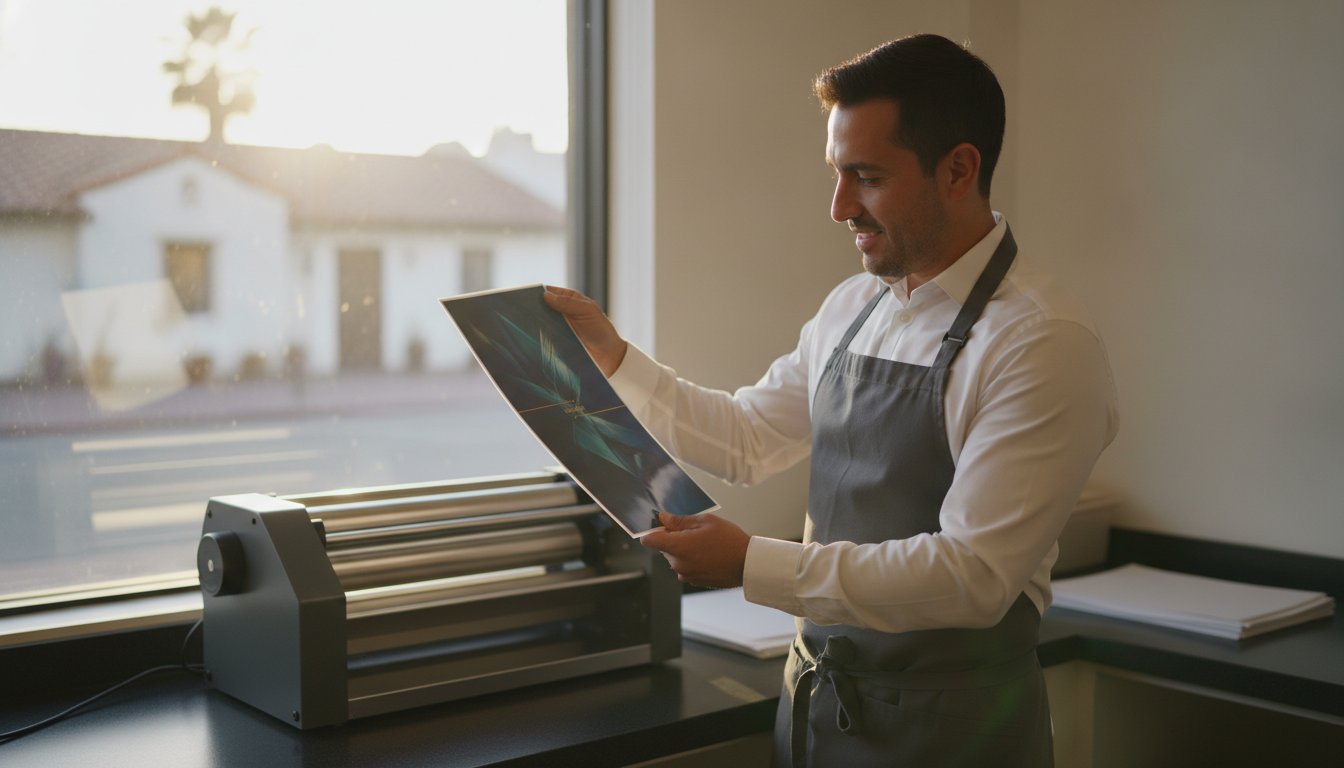
With nearly 100 new bars and restaurants set to open across the county this year, your brand's first physical touchpoint needs to be flawless. If your menus are fraying at the corners or showing unsightly stains within a fortnight, you aren't just losing money on reprints; you're signaling a lack of attention to detail to every guest. Investing in durable menu lamination San Diego restaurants can rely on is the most effective way to protect your professional image while slashing recurring outsourcing costs. We understand that in a high-volume environment, a menu is a tool that must perform under pressure every single shift.
You likely agree that a flimsy, stained menu can quietly erode a customer's confidence in your kitchen's quality. This guide will show you how to produce professional-grade menus that last six months or longer using high-mil films and heavy-duty equipment like the Tamerica Optimus-450. We'll walk through selecting the right roll laminating film and precision trimmers to ensure your presentation remains crisp and waterproof. By the end of this article, you'll have a clear roadmap for sourcing local supplies and mastering the techniques required for a truly permanent, high-end finish.
Key Takeaways
- Identify the specific environmental factors, like San Diego's coastal humidity and salt air, that cause standard menu stock to degrade prematurely.
- Compare the physical rigidity of 3-mil, 5-mil, and 10-mil films to find the ideal tactile experience and durability for your guests.
- Determine whether pouch or roll lamination fits your daily production volume to maximize staff efficiency and equipment ROI.
- Learn to choose between edge-sealing for a 100% waterproof barrier and flush-cutting for a premium, high-end aesthetic.
- Secure a reliable local supply chain for durable menu lamination San Diego materials to eliminate shipping delays and reduce wholesale costs.
The Tactile First Impression
A guest's perception of your brand begins the moment they touch your menu. A heavy, rigid menu signals that your establishment is a reliable specialist that values quality in every detail. Flimsy paper suggests a temporary or low-effort approach, whereas a thick, laminated surface feels substantial and intentional. For local eateries looking to build a lasting reputation, this physical durability translates directly into a sense of professional permanence.
San Diego Health Standards and Cleanability
Hygiene remains a top priority for diners and health inspectors alike. Laminated surfaces are non-porous, meaning they don't trap bacteria or food particles like raw paper does. This allows staff to use industrial-grade anti-bacterial cleaners and heavy-duty wipes without warping the print or bleeding the ink. For high-traffic environments, 10-mil lamination is the gold standard for hygiene in 2026 because it creates a completely sealed, wipeable surface that withstands rigorous daily sanitization.
Selecting the Right Laminating Film Thickness for Maximum Durability
A "mil" is the standard unit of measurement for lamination film, representing one-thousandth of an inch. While the difference between a few mils may seem negligible, it fundamentally alters the rigidity and lifespan of your printed materials. To achieve the durable menu lamination San Diego hospitality leaders expect, you must match the film thickness to your specific service environment. Thicker films require professional equipment that can maintain high, consistent temperatures to fully liquefy the adhesive. Without this precision, thick films often suffer from silvering or delamination, which ruins the professional aesthetic you've worked to build.
Lighting conditions in your venue should also dictate your choice of finish. San Diego's bright, coastal sun can create significant glare on high-gloss menus, making them difficult for guests to read during brunch or outdoor service. Matte finishes diffuse light and provide a sophisticated, tactile feel that resists fingerprints. Regardless of the finish, using high-quality laminating pouches or roll film ensures your menus meet FDA food safety standards by providing a non-porous, easily sanitized surface that withstands daily chemical cleaning.
3-Mil to 5-Mil: The Flexible Choice
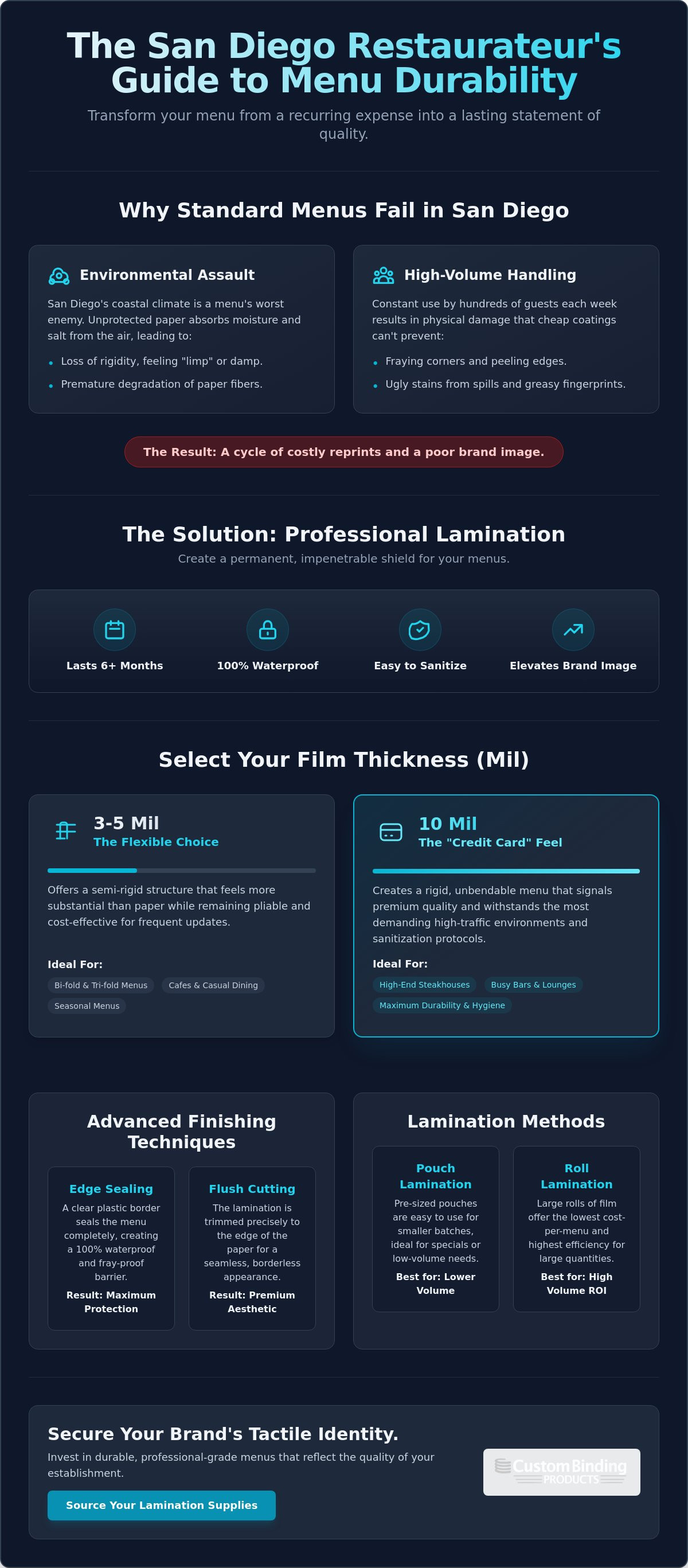
These thinner films are ideal for bi-fold or tri-fold menus that need to be folded without cracking the spine. A 3-mil film provides a basic moisture barrier, but 5-mil is often the preferred baseline for San Diego cafes with seasonal menus. It offers a semi-rigid structure that feels more substantial than paper while remaining cost-effective for frequent updates. This thickness protects against light spills and handling while allowing the menu to remain lightweight and easy to store in high-volume environments.
10-Mil: The "Credit Card" Feel
High-end San Diego steakhouses and busy bars typically opt for 10-mil film to achieve maximum durability. This thickness creates a rigid, unbendable menu that feels similar to a credit card, conveying an immediate sense of quality and permanence. 10-mil lamination is exceptionally effective at preventing corner dog-earing, even in the most demanding environments. Because this film is so dense, it requires a heavy-duty pouch laminator or a robust roll machine like the Tamerica Optimus-450 to ensure a flawless, permanent bond that won't peel at the edges over time.
Pouch vs. Roll Lamination: Which is Best for Your Restaurant?
Deciding between pouch and roll systems depends on your daily volume and the physical footprint of your prep area. While many local print shops focus on selling you one-off services, investing in your own equipment provides a level of autonomy that matches the fast-paced nature of the hospitality industry. To achieve durable menu lamination San Diego managers can execute on-demand, you need a system that balances speed with consistent mechanical precision. Bringing this capability in-house allows you to react instantly to menu changes or price adjustments without waiting for a third-party delivery.
Professional-grade machinery is designed to remove friction from your preparation tasks. Whether you are sealing a single daily special or a full production run of dinner menus, the goal remains a polished, professional presentation. Choosing the right machine ensures that the tactile experience of your menu reflects the quality of the food you serve. It is an investment in your brand's reputation for reliability and attention to detail.
The Case for Pouch Laminators
Small San Diego diners or boutique cafes with limited counter space often find pouch laminators to be the ideal entry point. These machines are compact and require almost no setup time. By using high-quality Laminating Pouches, your staff can protect a dozen daily specials in minutes. To keep these units running smoothly, always ensure the rollers are clear of adhesive buildup. This simple maintenance prevents jams and ensures every menu comes out perfectly flat and crystal clear, maintaining that essential "Reliable Specialist" look for your guest presentation.
Roll Laminators for High-Volume Production
When you need to process hundreds of menu inserts for multiple locations, roll lamination is the superior workflow. The primary advantage lies in speed and the significant cost-per-unit savings found in Roll Laminating Film rolls. A professional machine like the Tamerica Optimus-450 offers a strong long-term ROI by reducing the material waste associated with individual pouches. These units are built for continuous use, featuring adjustable tension and heat controls that allow for a flawless bond on everything from thin paper to heavy cardstock. Roll lamination is the most scalable choice for growing restaurant groups.
The versatility of a roll laminator extends beyond the dining room. Use it to create waterproof kitchen prep sheets, durable outdoor A-frame signage, or rigid table tents for seasonal promotions. The intuitive controls on professional-grade machinery mean your team doesn't need a background in print production to achieve restaurant-grade results. Simple, direct interfaces allow staff to focus on their primary roles while still producing high-end marketing materials that reflect your commitment to excellence.
Advanced Finishing Techniques: Edge-Sealing vs. Flush-Cutting
Choosing the right finishing technique is the final step in achieving the durable menu lamination San Diego establishments require for long-term success. While film thickness provides the necessary rigidity, the sealing method determines how the menu handles daily liquid exposure and cleaning cycles. You must decide between the absolute protection of an edge-seal or the modern, premium aesthetic of a flush-cut finish. Both methods require specialized equipment to ensure the final result reflects the high standards of your brand.
Wicking remains a pervasive issue for hospitality prints in coastal environments. It occurs when moisture, grease, or cleaning chemicals penetrate the exposed paper edge of a menu, traveling inward to cause unsightly bubbling and gray stains. Edge-sealing solves this by creating a 100% waterproof barrier. This process involves a plastic-to-plastic thermal bond that extends beyond the paper, making it impossible for liquids to reach the core stock. For restaurants with outdoor seating or high-spill environments, this is the most reliable specialist solution.
The Step-by-Step Edge-Seal Process
To create a secure thermal seal, calculate a border of at least 1/8 inch to 1/4 inch around the entire printed insert. Select a pouch size that allows for this overhang without the paper shifting during processing. Use professional-grade machinery to ensure even heat distribution, which prevents the air pockets and silvering that often plague amateur attempts. A bubble-free, encapsulated finish ensures your menus remain hygienic and structurally sound for months of heavy use.
Achieving the Flush-Cut Look
Flush-cutting offers a sophisticated, modern look where the laminate ends exactly at the paper edge. This technique is preferred by high-end San Diego venues that want the durability of plastic without the visible clear border of traditional lamination. Because the paper edge is exposed, you must use higher-grade adhesive film to ensure the bond is strong enough to resist peeling. Achieve the perfect finish by using Dahle Professional Rolling Trimmers, which provide the surgical precision needed for a clean, straight edge that won't fray over time.
A critical final detail for any flush-cut menu is corner rounding. Trimming the laminate flush with the paper can leave sharp, 90-degree angles that are uncomfortable for guests and prone to catching on surfaces. Using a dedicated corner rounder softens the silhouette and significantly reduces the risk of the laminate layers splitting at the points of highest stress. This methodical approach to finishing transforms a simple utility item into an essential tool for professional storytelling.
Your Local Source for Menu Lamination Supplies and Equipment in San Diego
Custom Binding Products has served as a dedicated specialist for the local hospitality industry for over 35 years. We provide the essential infrastructure for your brand's physical identity, offering a level of support that national e-commerce vendors simply cannot match. Sourcing your materials locally eliminates the frustration of shipping delays and the risk of damaged freight that can derail a seasonal menu launch. We act as a partner in your professional success, ensuring you have the tools and materials necessary to maintain an organized, efficient prep environment.
Wholesale Supplies and Professional Machinery
Maintaining an on-site inventory of Roll Laminating Film and Laminating Pouches ensures your team can react instantly to price changes or chef specials. We stock a curated selection of machinery from industry leaders like Tamerica and Akiles, chosen for their ability to withstand the rigorous demands of restaurant use. By accessing wholesale laminating film directly in San Diego, you benefit from expert advice on matching film density to your specific paper weight. This tailored approach ensures that every project involving durable menu lamination San Diego operators produce meets the highest standards for tactile quality and professional presentation.
Local Support and On-Site Repair
Equipment downtime during peak tourism seasons or holiday weekends can disrupt your entire front-of-house workflow. Unlike online retailers, Custom Binding Products provides on-site repair and maintenance services throughout the region to keep your production line moving. Our technicians understand the mechanical movement of these components and can diagnose issues quickly to minimize operational friction. We offer the steady hand needed in a busy professional environment, promising that your finishing equipment remains a reliable asset to your business. Contact us today for a quote on equipment or supplies to secure a partnership that prioritizes your reputation for excellence.
Secure Your Brand’s Tactile Identity
Protecting your menus from the daily rigors of a high-volume dining room requires more than just a thin layer of plastic. It demands a methodical approach to choosing the right mil thickness and the correct thermal seal to prevent wicking and delamination. By bringing your production in-house with professional-grade machinery, you gain complete control over your presentation while eliminating the high costs of recurring reprints. Custom Binding Products has been a trusted partner for the hospitality industry, serving San Diego since 1988. As an authorized dealer for Tamerica and Akiles, we provide the industrial-grade tools you need to achieve durable menu lamination San Diego guests will associate with quality. Our expert on-site repair services ensure your equipment remains a reliable asset during your busiest seasons. View Our Professional Laminating Equipment and Supplies to find the tailored solution that fits your venue's unique needs. We look forward to helping you create a lasting first impression that stands up to every shift.
Frequently Asked Questions
What is the best laminating thickness for restaurant menus?
Select 10-mil film for standalone single-sheet menus and 5-mil for multi-page inserts or folded layouts. A 10-mil thickness provides the structural rigidity of a credit card, which prevents the menu from bowing when held with one hand. For menus placed inside protective covers or used as inserts in a leather binder, a 5-mil film offers sufficient protection without adding unnecessary bulk that could strain the binding mechanism or prevent the cover from closing flat.
Can I laminate my own menus to save money?
In-house lamination allows you to bypass the minimum order quantities and per-page premiums typically charged by commercial printers. By controlling the durable menu lamination San Diego process internally, you can print and seal a single replacement menu the moment one is damaged. This immediate turnaround keeps your guest presentation consistent and prevents the need to keep a large, expensive inventory of pre-printed menus that may become obsolete after a price change.
Is edge-seal or flush-cut better for waterproof menus?
Edge-sealing is superior for high-moisture environments, while flush-cutting is designed for high-end, dry dining settings. An edge-seal creates a continuous plastic perimeter that prevents liquids from ever reaching the paper core. This makes it the only viable option for outdoor patios or bars where menus frequently sit in condensation. Flush-cutting offers a more traditional paper-like feel but requires staff to be more diligent about wiping spills immediately to prevent edge wicking.
Where can I buy wholesale laminating film in San Diego?
Custom Binding Products provides local will-call pickup for durable menu lamination San Diego supplies at our regional warehouse. Buying locally allows you to inspect film clarity and thickness before purchasing, ensuring the material matches your brand standards. This proximity eliminates the multi-day shipping delays and high freight costs associated with online orders, allowing your restaurant to stay stocked with essential film and pouches even during unexpected menu revisions or seasonal launches.
What happens if my laminating machine jams or stops heating?
Use the reverse switch immediately to back the material out of the rollers and run a cleaning sheet through the machine to remove adhesive residue. Jams often occur if the rollers haven't been cleaned or if the tension is set incorrectly for the film thickness. If the unit stops heating, it may have a blown fuse or a failed thermocouple. We provide local technical support and maintenance to ensure your production remains steady during your busiest service windows.
Do I need a special laminator for 10-mil film?
High-heat rollers are essential because 10-mil film acts as an insulator, requiring more energy and slower speeds to achieve a successful bond. Standard office laminators often lack the thermal capacity to fully liquefy the adhesive on such thick film, resulting in a cloudy or "silvered" appearance. Professional-grade machines like the Tamerica Optimus-450 feature reinforced heating elements and adjustable speed controls specifically designed to handle the density of heavy-duty menu films without overheating.
How do I prevent my menus from peeling at the corners?
Ensure the laminate has fully cured on a flat surface for several minutes before handling or trimming the edges. Peeling often occurs when the adhesive is still semi-liquid during the cutting process, which breaks the thermal bond. For flush-cut menus, using a corner rounder is a critical step because it removes the sharp points that are most vulnerable to friction. This simple mechanical finish significantly extends the lifespan of the menu by reducing surface tension at the corners.
Is matte or gloss laminate better for menus under restaurant lighting?
Matte finishes are preferred for scuff resistance and to minimize the visibility of scratches that occur during heavy daily use. While gloss laminate makes colors appear more vibrant, it also creates significant glare under bright restaurant spotlights or outdoor sun. Matte film diffuses light evenly across the surface, ensuring that your text remains legible from all angles. It also provides a soft-touch tactile experience that feels more premium and resists the oily fingerprints common in hospitality environments.
Recent Posts
-
Upgrading Your Office Binding System: The 2026 Professional Guide
Did you know that switching from a manual punch to an electric binding machine can save your team …Jun 27th 2026 -
Professional Wire Binding Supplies in San Diego: Your 2026 Essential Guide
Imagine handing a potential client a thick, high-value report, only for the pages to snag because …Jun 26th 2026 -
Best Binding Method for Professional Reports: A 2026 Executive Guide
The physical feel of your document often speaks louder than the data on the page. In a high-stakes …Jun 25th 2026