
Best Laminator for Restaurant Menus in San Diego: 2026 Buyer’s Guide
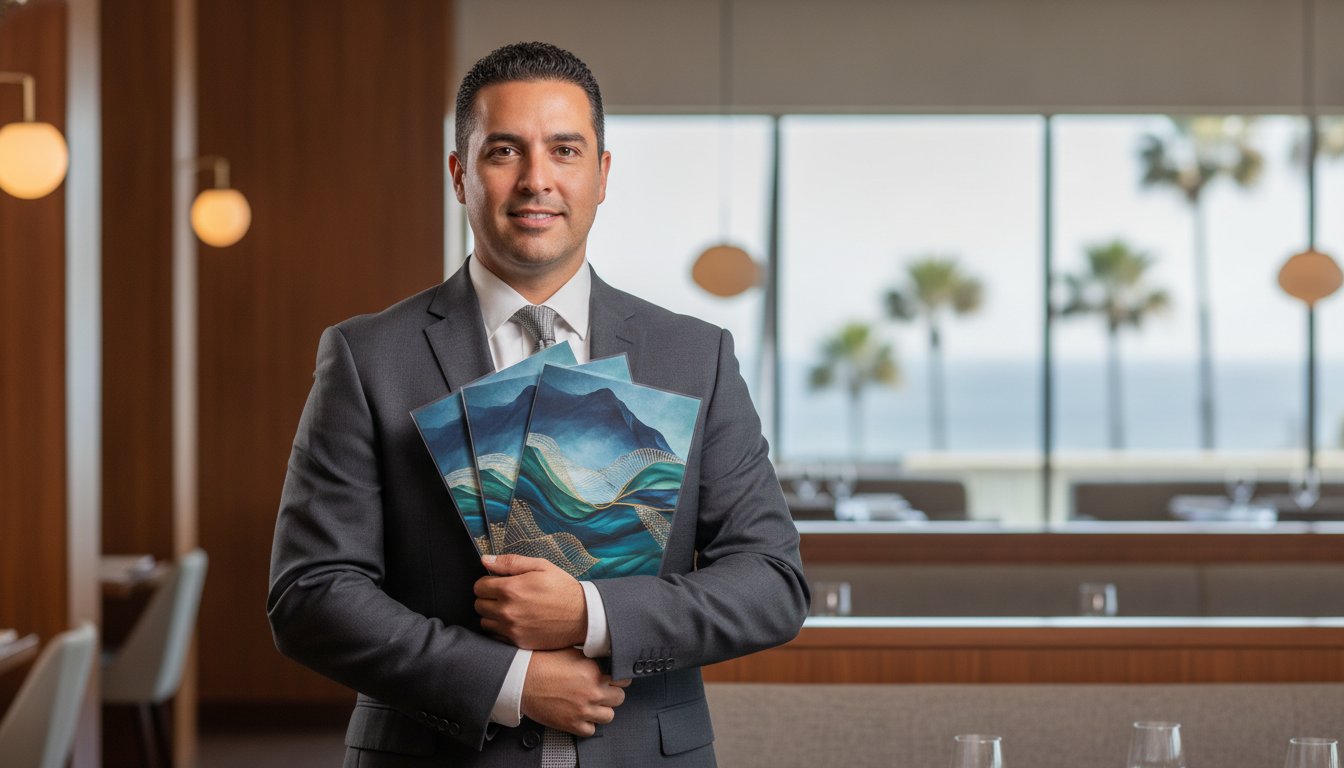
A menu that peels at the edges or carries a faint grease stain tells your guests more about your kitchen standards than the actual food ever will. In our unique coastal environment, standard lamination often fails, leaving San Diego restaurateurs with warped paper and unprofessional presentations. Finding the best laminator for restaurant menus San Diego businesses need involves selecting hardware that balances thermal precision with high-volume durability. You've likely felt the frustration of a slow office machine causing a bottleneck just as the dinner rush begins.
We're here to help you secure a solution that transforms expensive cardstock into a 100% waterproof, wipeable asset that withstands every spill and heavy-handed cleaning. This 2026 guide highlights the professional systems that handle daily specials quickly while ensuring you stay compliant with new California allergen disclosure requirements. We'll examine the technical specifications of top-tier pouch and roll laminators, providing you with the clarity to invest in a machine that serves as a steady hand in your busy kitchen. Discover how the right finish can elevate your brand's tactile story and ensure your menus remain as fresh as your ingredients.
Key Takeaways
- Understand how professional-grade thermal consistency prevents coastal delamination and protects menus from the abrasive sanitizers used in busy San Diego kitchens.
- Compare the operational efficiency of pouch systems for small cafes against high-volume roll laminators to find the best laminator for restaurant menus San Diego businesses require.
- Evaluate top-tier equipment like the Tamerica Optimus-450 to ensure your hardware can keep pace with the frequent menu updates required by new 2026 California allergen laws.
- Select the ideal film thickness and finish—such as matte or luster—to balance tactile quality with the ability to mask fingerprints and glare.
- Learn the importance of local maintenance support to avoid the costly downtime associated with unserviceable, mass-market machines during peak tourist seasons.
Why San Diego Restaurants Require Professional-Grade Menu Lamination
A menu's lifespan in San Diego is often cut short by the very environment that draws guests to our city. The salt air and persistent coastal humidity work against standard adhesive bonds, causing inferior laminates to bubble or cloud within weeks. Choosing the best laminator for restaurant menus San Diego businesses rely on means looking beyond basic office supplies. You need equipment that creates a hermetic seal, ensuring your branding remains crisp from the first seating to the last call. Investing in professional-grade hardware isn't just about protection; it's about maintaining a tactile experience that reflects the quality of your cuisine.
The Coastal Factor: Humidity and Adhesion
Moisture is the primary enemy of print longevity. In beachfront bistros or open-air dining rooms in Little Italy, the air carries enough humidity to soften paper fibers if they aren't perfectly sealed. The lamination process requires precise thermal control to ensure the adhesive penetrates the paper grain. Standard office machines often lack the consistent heat rollers necessary for a permanent bond. This leads to "silvering" or edge peeling where the salt air begins to delaminate the plastic. For menus with high-ink coverage, such as those featuring full-color photography, San Diego restaurants require aggressive adhesive films that can grip the page despite the heavy toner layer.
Hospitality Durability Standards
Kitchen environments present a unique set of hazards that go far beyond simple wear and tear. Your menus must survive the "wipe-down test" multiple times per shift. Professional lamination creates a barrier against:
- Corrosive Acids: Citrus juices and vinegars that can eat through low-quality films.
- Industrial Sanitizers: Harsh chemicals required for health code compliance that often turn cheap plastic brittle.
- Oils and Grease: Kitchen residues that stain unprotected cardstock and make menus feel "tacky" to the touch.
By using a professional system, you prevent the frayed edges and dog-eared corners that signal a lack of attention to detail. It's a small mechanical solution that solves a major organizational challenge.
The return on investment for in-house lamination is particularly high given the 2026 California allergen disclosure requirements (SB 68). With the legal need to update menu content more frequently, relying on a local print shop for every minor adjustment becomes a logistical bottleneck. Owning a machine like the Tamerica Optimus-450 allows your team to print and seal new inserts immediately. Beyond the cost savings, high-clarity professional films enhance the visual appeal of your farm-to-table photography, making colors pop and ensuring your guests' first impression is one of organized excellence.
Pouch vs. Roll Laminators: Which is Best for Your Menu Layout?
Selecting the right equipment depends on the scale of your operation and the physical dimensions of your menu. A small boutique cafe in North Park has different needs than a high-volume bistro in the Gaslamp Quarter. Identifying the best laminator for restaurant menus San Diego owners can rely on requires a look at both the physical footprint of the machine and the long-term operational cost. Beyond aesthetics, your menus serve as critical communication tools that must remain legible to comply with Federal menu labeling regulations. Professional lamination ensures these mandatory disclosures don't smudge or fade under the rigors of daily service.
Pouch Laminators: The Choice for Small Menus and Daily Specials
Pouch systems are the ideal solution for restaurants that prioritize ease of use and have a limited number of menu pages. These machines are perfect for standard 8.5x11 single sheets or small-format table tents. If you want your menus to have the rigid, premium feel of a plastic credit card, we recommend using 10 mil Laminating Pouches. This "heavyweight" thickness provides maximum durability against bending and spills. To achieve professional results, ensure your machine utilizes "hot runners." These internal heating elements apply heat and pressure simultaneously, which is the only way to guarantee a bubble-free finish on high-ink coverage designs.
Roll Laminators: Efficiency for Large-Scale Menu Overhauls
When you're dealing with oversized layouts, such as 11x17 bi-folds or long-form wine lists, a roll laminator is the superior choice. These machines offer a continuous feed system that allows you to produce dozens of menus in a single hour. This throughput is essential during seasonal menu launches when you can't afford a bottleneck in the back office. While the initial investment in a roll system is higher, the cost-per-menu is significantly lower over time. By using Roll Laminating Film, you eliminate the per-piece premium of individual pouches. Modern roll machines also feature adjustable tension and speed controls, allowing you to reduce waste by tailoring the mechanical pressure to your specific paper density.
Throughput speeds vary significantly between the two formats. A high-end pouch laminator might process 15 to 20 sheets per hour, which is sufficient for daily specials or small cafes. However, a professional roll system can easily handle 60 or more units in the same timeframe. If your business model involves frequent menu updates or managing multiple locations, the speed and lower material costs of a roll system provide a much faster return on investment. It's about choosing the tool that matches the rhythm of your kitchen and the complexity of your brand's tactile story.
Top Recommended Models for San Diego Hospitality in 2026
Selecting the right hardware is a decision that impacts your daily workflow and your brand's physical presentation. In a busy kitchen or host stand, you don't have time to troubleshoot temperamental office-grade equipment. The best laminator for restaurant menus San Diego managers can invest in must offer a combination of thermal precision, mechanical speed, and ease of use. Whether you're sealing 10 mil heavyweight cards for a high-turnover bistro or delicate seasonal inserts for a boutique cafe, these professional systems provide the steady reliability required for the 2026 hospitality landscape.
The Tamerica Optimus-450: The Restaurant Workhorse
The Tamerica Optimus-450 stands out as the primary choice for most San Diego establishments due to its versatile 18-inch width capacity. This extra width allows you to process nearly any menu size, including oversized ledger sheets and custom drink lists, without the risk of edge curling. Its sophisticated four-roller system is designed specifically to handle high-ink coverage. By applying balanced pressure across the entire surface, it ensures edge-to-edge clarity and eliminates the silvering often seen in cheaper models. Staff members don't need to be technical specialists to operate this machine; its intuitive interface simplifies the production process so your team can focus on guest service rather than equipment maintenance.
Heavy-Duty Options for High-Volume Chains
For large-scale operations or businesses managing multiple locations, stepping up to industrial-grade finishing equipment is a strategic move. The Rhin-O-Tuff Onyx series, particularly the HD7700, has become the heavy-duty standard for local businesses with high-volume printing needs. These machines are built for continuous operation, handling thick films and large batches without overheating. To achieve a truly professional result, we recommend pairing these systems with Dahle Professional Rolling Trimmers. These trimmers allow you to create a perfect "menu bleed," where the image extends to the very edge of the page, followed by a clean, sealed laminate border. Custom Binding Products curates these selections specifically to meet the rigorous demands of San Diego’s unique hospitality market.
When evaluating these models, look for two critical mechanical features: a "cold" setting and a reverse function. The cold setting is essential for 2026 digital prints that use heat-sensitive toners; it allows you to use pressure-sensitive films that won't cause color shifts or "melting" of the digital image. Simultaneously, a robust reverse function serves as a lifesaver during a busy prep shift. If a pouch is fed incorrectly, the reverse switch allows you to clear the jam immediately, preventing costly downtime and protecting the internal rollers from damage. These technical details ensure your equipment remains a partner in your success, rather than a friction point in your preparation tasks.
Choosing the Right Film: Thickness and Finish for Your Brand
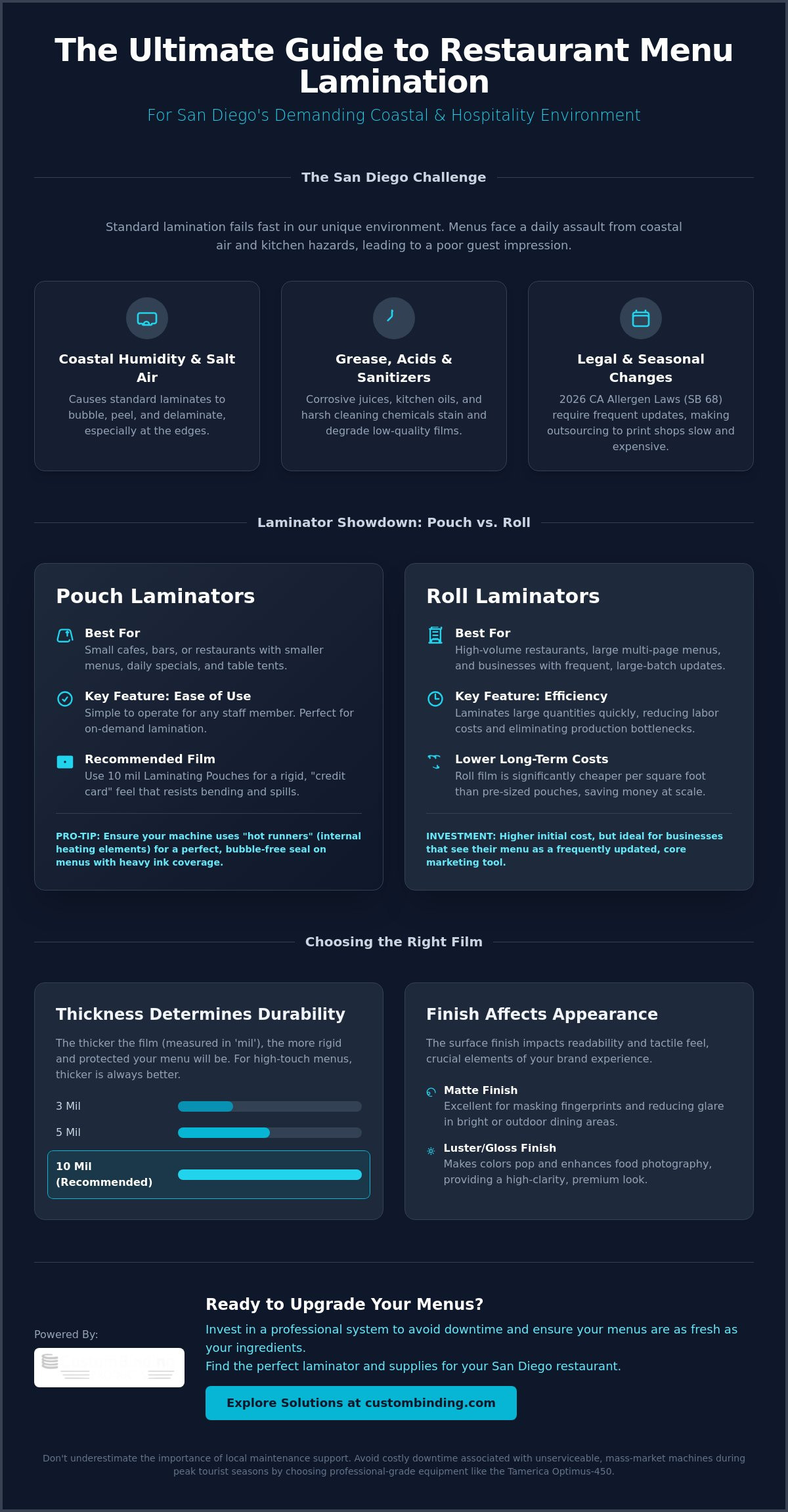
The tactile experience of a menu acts as a silent brand ambassador. While the mechanical precision of your equipment ensures a clean bond, the film you choose dictates the final aesthetic and long-term durability. Finding the best laminator for restaurant menus San Diego businesses rely on is a critical first step; however, the "Rigidity Scale" of your film determines how that menu feels in a guest's hands. A mil is a technical unit of measurement equal to 1/1000th of an inch. Understanding this scale allows you to balance weight, cost, and professional presentation.
The 10 Mil Standard for Premium Menus
For high-end bistros and steakhouses, 10 mil film is the industry standard. This thickness provides the "credit card" rigidity that customers instinctively associate with quality and hygiene. Because 10 mil film is exceptionally stiff, it's virtually impossible to bend or crease during a busy shift. If your menu design requires a fold, you must score the laminate first to prevent the plastic from cracking or lifting. Using heavyweight Laminating Pouches in this density ensures your menus stay flat and professional, even in the high-turnover environment of a San Diego tourist hub.
Anti-Glare and Matte Finishes
Lighting plays a significant role in menu readability. While gloss finishes make food photography pop with vibrant colors, they often create harsh reflections under bright dining room lights. Matte or luster finishes solve this problem by diffusing light, making your text easier to read at any angle. These finishes also excel at hiding the fingerprints and oily smudges that are inevitable in food service. For a truly premium feel, soft-touch laminates provide a velvet-like texture that enhances the guest's sensory experience. To avoid a "milky" or cloudy look on dark, sophisticated menu designs, ensure your laminator is set to the correct thermal temperature for the specific film brand you've selected.
Waterproofing depends heavily on your trimming method. A "Seal Edge" finish leaves a small clear border around the paper, creating a 100% moisture-proof barrier that survives industrial sanitizers. In contrast, a "Flush Cut" trims the laminate exactly to the edge of the paper, which looks sleeker but allows moisture to eventually seep into the cardstock. If you manage a high-volume establishment, sourcing wholesale Roll Laminating Film in San Diego is the most cost-effective path. Buying in bulk rolls reduces your per-unit cost significantly compared to individual pouches, allowing you to refresh your menus more frequently without straining your budget.
Local San Diego Support: Maintenance and Supply Delivery
Purchasing a machine from a faceless online retailer might save a few dollars upfront, but it leaves your business vulnerable to unexpected downtime. When a gear slips or a roller fails during a critical seasonal menu launch, waiting weeks for a manufacturer's shipping label isn't a viable option for a busy bistro. The best laminator for restaurant menus San Diego owners can choose is one backed by local, on-site technical support. Having a specialist who understands the mechanical movement of your equipment ensures your production line stays operational when it matters most. We believe the quality of the support should match the quality of the machine.
On-Site Laminator Repair in San Diego
High-volume restaurant environments are notoriously tough on machinery. Heat rollers eventually accumulate adhesive buildup, and tension settings require periodic calibration to prevent film curling or silvering. While some sources suggest you must ship heavy equipment back to the manufacturer for repair, on-site service is a much more efficient reality for San Diego County businesses. Attempting to box and ship an industrial unit like the Tamerica Optimus-450 is a logistical nightmare that leads to weeks of lost productivity. Instead, establishing a preventative maintenance schedule allows a technician to clean rollers and inspect internal components before a failure occurs. This proactive approach keeps your presentation polished and your workflow uninterrupted.
Wholesale Supplies for San Diego Businesses
Consistency in your supply chain is as vital as the hardware itself. We provide local businesses with a steady flow of high-quality Laminating Pouches and Roll Laminating Film, often with same-day or next-day delivery options. This prevents the friction of running out of materials right when you need to print a new set of allergen-compliant inserts or daily specials. For multi-location restaurant groups, we offer customized supply bundles that include everything from clear acetate covers to Regency composition covers. This modular approach allows you to find exactly what you need without unnecessary filler, ensuring your inventory is as organized as your kitchen.
Training your staff is the final piece of the puzzle. We don't just sell equipment; we act as a partner in your professional success by ensuring your team knows how to load film and clear jams safely. This commitment to local excellence removes the guesswork from your finishing process and protects your investment from operator error. To ensure your kitchen is equipped with the right tools and the support needed to maintain them, Schedule a professional equipment consultation in San Diego today. Our goal is to help you create a tactile experience that reflects the pride you take in your craftsmanship.
Elevate Your Restaurant's Professional Image
Your menus serve as the tactile introduction to your culinary vision. By selecting hardware with precise thermal control and high-volume capacity, you ensure your brand survives the rigors of coastal humidity and busy shifts. Balancing the right film thickness with a professional finish allows you to maintain a clean, sophisticated image that guests notice immediately. These mechanical solutions remove the friction from your daily operations, allowing your team to focus on guest service rather than equipment failure.
Securing the best laminator for restaurant menus San Diego businesses rely on is only the beginning of a successful partnership. We've been serving the San Diego community since 1988, providing the on-site repair and maintenance services necessary to prevent costly downtime during peak seasons. Our wholesale pricing on laminating film and pouches ensures you can refresh your presentation as often as your ingredients change. Browse our Professional Laminators for San Diego Restaurants to find the perfect fit for your establishment. Take the guesswork out of your menu preparation and invest in a solution that reflects the pride you take in your craftsmanship.
Frequently Asked Questions
What is the best laminator thickness for a restaurant menu?
A thickness of 10 mil is the professional standard for standalone restaurant menus because it provides a rigid, credit-card-like feel that signifies quality. If your menus are placed inside a multi-page binder or protective cover, a thinner 3 mil or 5 mil film is usually sufficient. Selecting the correct density ensures your menus remain flat and presentable even after hundreds of guest interactions.
Can I laminate menus myself or should I use a San Diego print shop?
Laminating menus in-house is the most efficient choice for restaurants that update their selections frequently to comply with 2026 California allergen disclosure laws. While a San Diego print shop can handle one-off projects, owning the equipment allows you to bypass the markup and turnaround times of a third-party vendor. It gives you the flexibility to refresh your presentation the moment a dish changes.
How do I clean a laminated menu without damaging the seal?
Clean your menus with a soft, lint-free cloth and a solution of mild soap and water. Avoid using industrial degreasers or abrasive scrubbing pads, as these can dull the finish and eventually degrade the adhesive bond. To maintain a professional appearance, always wipe from the center toward the edges to prevent moisture from being forced into the paper core.
Why is my menu laminate peeling at the corners?
Peeling is typically caused by insufficient roller heat or the persistent humidity found in San Diego coastal environments. If the laminator doesn't reach the optimal temperature, the adhesive won't fully penetrate the paper fibers, leading to delamination. Using a "seal edge" finish, which leaves a small clear border around the paper, provides a much more durable bond than a flush-cut edge.
Is a roll laminator or a pouch laminator better for a small cafe?
A pouch laminator is generally the best laminator for restaurant menus San Diego cafes can utilize because of its small footprint and simple operation. Pouch systems are perfect for low-volume needs like daily specials or small-format table tents. If your cafe grows into a high-volume bistro with multi-page menus, you might eventually consider the speed and lower material costs of a roll system.
Where can I get a laminator repaired in San Diego?
Custom Binding Products offers specialized on-site repair and maintenance services for professional laminating equipment throughout San Diego County. Local support is essential for hospitality businesses that can't afford the weeks of downtime required to ship a heavy machine to an out-of-state service center. Our technicians ensure your rollers are clean and your tension is calibrated for a perfect finish every time.
How much does it cost to laminate menus in-house versus outsourcing?
In-house lamination involves a higher upfront cost for the machine, but your ongoing expense is limited to wholesale film and pouches. Outsourcing typically costs significantly more per page due to the print shop's labor and overhead markups. For high-volume establishments that replace menus seasonally, the investment in a professional system usually pays for itself within the first year of operation.
What is the difference between thermal and cold lamination for menus?
Thermal lamination uses heat to activate a permanent adhesive bond, making it the most durable choice for traditional restaurant menus. Cold lamination uses pressure-sensitive film and is specifically designed for 2026 digital prints that might be sensitive to high temperatures. Most high-end machines used in the hospitality industry offer both settings, providing the versatility to handle various paper types and ink technologies.
Recent Posts
-
Upgrading Your Office Binding System: The 2026 Professional Guide
Did you know that switching from a manual punch to an electric binding machine can save your team …Jun 27th 2026 -
Professional Wire Binding Supplies in San Diego: Your 2026 Essential Guide
Imagine handing a potential client a thick, high-value report, only for the pages to snag because …Jun 26th 2026 -
Best Binding Method for Professional Reports: A 2026 Executive Guide
The physical feel of your document often speaks louder than the data on the page. In a high-stakes …Jun 25th 2026