
The Best Binding Method for Training Manuals: A 2026 Professional Guide
May 10th 2026
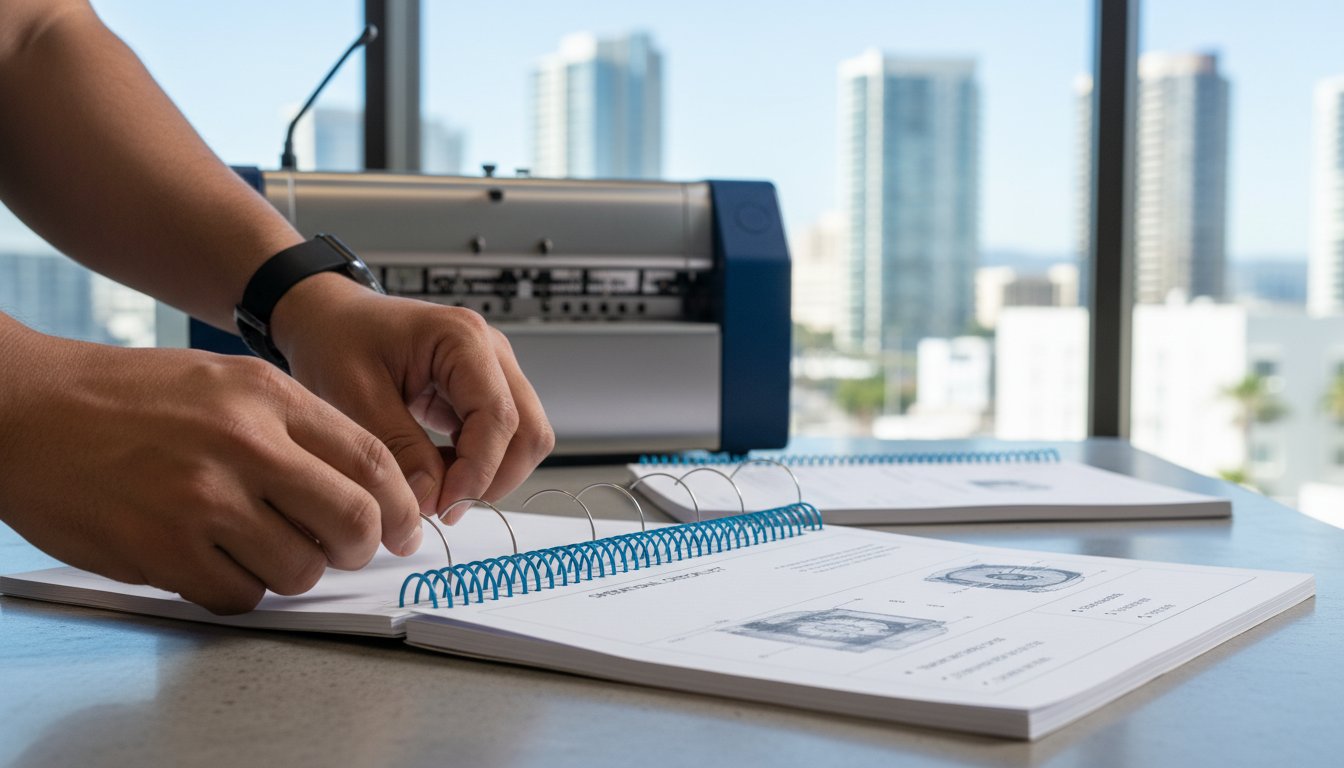
A training manual that falls apart in a week isn't just a document. It's a direct reflection of your brand's commitment to quality and organized efficiency. You've likely experienced the frustration of manuals that won't stay open during hands-on sessions or pages that tear out after only a few uses. These tactile failures hinder the learning process and drive up costs through constant reprinting. Identifying the best binding method for training manuals is the first step toward creating a reliable tool that withstands heavy daily use.
We believe that a professional presentation should be paired with absolute functionality. Whether you require the 360-degree page rotation of a plastic coil or the sophisticated finish of twin loop wire, the right equipment allows you to maintain control over your brand's image. High-quality materials like 120gsm silk paper and 300gsm laminated covers ensure your content remains legible and intact, even in demanding environments like manufacturing floors or service centers.
This guide explores how to achieve professional results in-house using industry-standard hardware such as the Akiles CoilMac-M and the Rhin-O-Tuff Onyx HD7700. You'll discover how to select the right pitch and capacity for your projects, transforming standard documents into polished, bespoke assets that support your team's success.
Key Takeaways
- Identify why 360-degree page rotation and lay-flat functionality are the non-negotiable standards for effective learning environments.
- Compare the durability and aesthetics of plastic coils versus twin loop wire to select the best binding method for training manuals that represent your brand.
- Master the logistics of document maintenance, including how to efficiently update individual pages when training content or corporate regulations change.
- Determine when to invest in professional-grade machines like the Rhin-O-Tuff HD7700 to bring production in-house and eliminate outsourcing friction.
- Discover how local San Diego support for supplies and equipment repair ensures your production process remains seamless and cost-effective.
Why the Right Binding Method is Critical for Training Success
Professional training environments demand documents that function as tools; they shouldn't just be static references. When a learner works on a manufacturing floor or at a busy workstation, the manual must stay open and out of the way. This high-frequency handling sets a specific standard for production. Relying on standard stapling or flimsy folders often leads to torn pages and frustrated employees within the first 48 hours of a program. By understanding bookbinding and its mechanical requirements, you can select the best binding method for training manuals that actually supports the learning process.
There's a significant psychological component to document finishing. A manual bound with professional-grade materials, such as Regency Composition Covers, signals that the information inside is valuable. It builds immediate confidence. If the binding is sloppy, the learner subconsciously devalues the content. Choosing between the primary contenders isn't just a logistical choice; it's a branding decision. The most effective methods for training include:
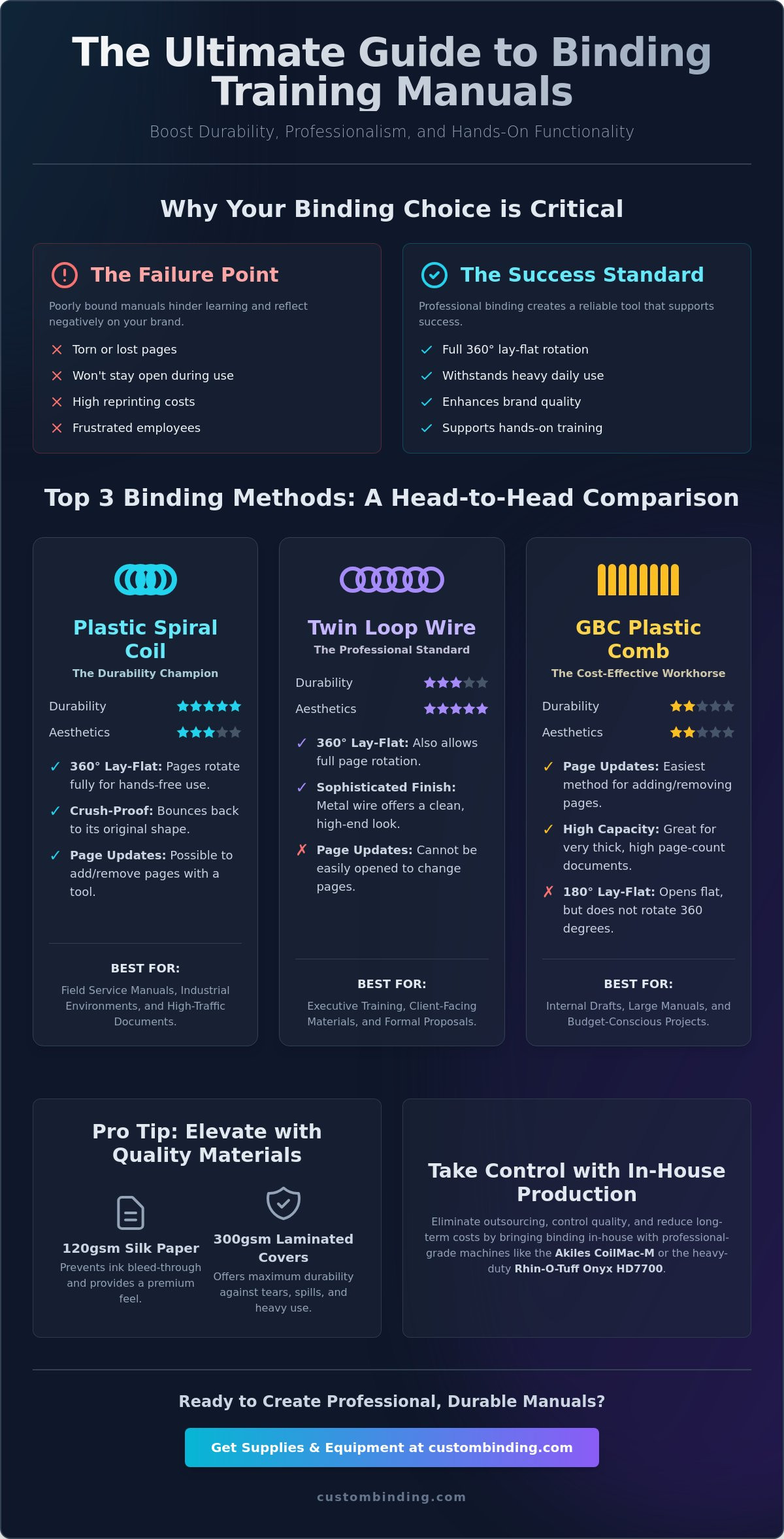
- Plastic Spiral Coils: Unmatched for durability and flexibility.
- Twin Loop Wire: The gold standard for professional, high-end presentations.
- GBC Plastic Combs: A traditional, cost-effective choice for large documents.
The "Lay-Flat" Requirement
Hands-on training sessions require a minimal desk footprint. A document that stays open at 180 degrees allows a student to read while keeping their hands free for tools or keyboards. Methods like spiral coil or wire-o go even further, allowing for a full 360-degree rotation. Lay-flat functionality is the ability for a document to remain open at 180 or 360 degrees without structural tension. This prevents the "spring-back" effect that causes pages to flip closed unexpectedly during a critical task.
Durability vs. Aesthetics
Selecting the right material depends on the final environment. Plastic Spiral Coils offer unmatched ruggedness. They are crush-proof and bounce back after being squeezed in a laptop bag or toolkit. This makes them ideal for field service manuals or industrial environments. Twin Loop Wire provides a sophisticated, elegant finish that suits executive training or client-facing materials. While metal wire is aesthetically superior, it can be bent if handled roughly. Balancing these factors ensures your manuals survive months of use while maintaining a professional-grade appearance. Using 120gsm silk paper and 300gsm laminated covers further reinforces this durability, preventing ink bleed-through and protecting the document's integrity over time.
In industrial settings where durability is non-negotiable, it is common to seek out specialists like bondrite.co.uk for high-performance bonding solutions that complement robust document assembly.
Comparing the Top 3 Binding Methods for Training Manuals
Selecting the best binding method for training manuals requires a balance between page count, frequency of use, and the intended audience. While there are many modern binding options available, three specific mechanical solutions dominate the professional landscape. Each offers a distinct tactile experience and structural benefit. For a standard 50-page document, almost any method provides sufficient stability. However, as manuals expand to 250 pages or more, the mechanical integrity of the spine becomes the deciding factor in document longevity.
Cost-per-unit analysis typically favors plastic combs for low-volume, internal drafts. When you move toward external or high-stakes training, the investment shifts toward coils or wire. Producing these in-house allows for better quality control and predictable supply costs, especially when sourcing bulk Plastic Spiral Binding Coils and clear covers. On a professionalism scale, plastic combs sit at the entry level for internal utility, while twin loop wire represents the executive standard for client-facing excellence.
Plastic Coil: The Durability Champion
Plastic coils are the most resilient choice for high-traffic environments. These spirals possess a unique "memory" that allows them to bounce back to their original shape even after being crushed or stepped on. The industry standard 4:1 pitch, which features four holes per inch, provides the smoothest page-turning experience and prevents pages from catching on the spine. You can easily align these coils with your brand identity by selecting from a wide spectrum of colors, ensuring that your durable manuals also serve as effective marketing tools.
Twin Loop Wire: The Executive Finish
Twin loop wire offers a sophisticated, high-end appearance that plastic cannot replicate. It utilizes either a 3:1 or 2:1 pitch depending on the document's thickness, creating a seamless and elegant spine. This method is essentially tamper-proof; once the wire is closed with a finishing press, pages cannot be added or removed without a machine. This makes it the ideal choice for high-stakes leadership training or certification manuals where document security and a premium feel are paramount.
Plastic Comb: The Budget-Friendly Classic
The primary advantage of GBC plastic combs is their versatility in content management. You can open the comb at any time to swap or update pages, which is useful for evolving training modules. However, combs have limitations in durability. The plastic teeth can snap under pressure, and the rectangular hole pattern can cause pages to catch or tear during fast flipping. While cost-effective, they lack the 360-degree rotation found in coils and wire, meaning they occupy a larger footprint on a trainee's desk.
The Maintenance Factor: Updating and Editing Your Manuals
Many organizations hesitate to commit to professional binding because they fear their content will become obsolete within 30 days. This concern often leads to the use of temporary, unprofessional solutions like loose-leaf folders or staples. However, a well-planned document strategy allows for seamless updates without sacrificing the durability of the final product. Choosing the best binding method for training manuals involves evaluating how your team handles revisions and identifying the tools that minimize downtime.
Plastic combs offer the highest level of immediate updateability. You can simply place the document on a comb opener, spread the plastic teeth, and swap out a single sheet. This makes it a preferred choice for internal documents that undergo monthly regulatory changes. In contrast, plastic coils require you to snip the crimped ends and spin the spiral out of the document. While this takes slightly longer than opening a comb, the process remains straightforward and preserves the integrity of the remaining pages. Both methods allow you to avoid the high costs of full reprints.
Adopting a modular approach to your manual design maximizes your return on investment. Instead of reprinting a 200-page manual, you only print the 10-page update. This strategy can reduce printing waste by up to 40% annually for high-growth companies that frequently refine their processes. To protect these modular sections, use Clear Acetate Covers on the front to resist spills and Regency Composition Covers on the back. Regency composition covers provide a premium leather-like feel while protecting internal pages from edge-wear.
Modular Manual Design
Structure your content with logical break points to simplify the replacement process. Use tabbed dividers to separate modules, which allows trainees to find specific sections quickly. To ensure these tabs don't get crushed, utilize oversized covers that extend beyond the standard 8.5 x 11-inch page width. This small adjustment provides a professional-grade finishing touch that keeps the document looking bespoke even after multiple hand-offs and updates.
Tools for Efficient Updates
Speed is essential when managing a fleet of manuals. An electric coil inserter, such as the one integrated into the Akiles CoilMac-M, significantly reduces the time required to re-bind updated documents. It spins the coil through the 4:1 pitch holes in seconds. For plastic combs, a dedicated manual opener allows for a quick, tactile swap of pages. These tools transform document maintenance from a chore into a precise, well-oiled production process. By keeping your supplies and hardware in-house, you eliminate the friction of external lead times and maintain absolute control over your brand’s presentation.
In-House Production: Choosing the Right Binding Machinery
Transitioning to in-house production transforms your document preparation from a logistical hurdle into a streamlined, well-oiled workflow. For San Diego businesses producing more than 25 manuals per month, the investment in professional hardware typically pays for itself within 12 months by eliminating third-party markups and shipping delays. Owning your equipment ensures you can execute the best binding method for training manuals on demand, maintaining absolute control over your brand’s tactile identity. When you control the punch and the finish, you guarantee that every manual leaving your office meets a professional-grade standard.
The choice between a manual punch and an electric punch depends entirely on your production volume. Manual machines are excellent for small batches; however, electric punches are essential for high-volume environments where operator fatigue can lead to alignment errors. An electric motor increases punching speed by approximately 300% compared to manual lever systems. Regardless of the power source, prioritize machines with disengageable pins. These allow you to pull specific punching dies out of the sequence to accommodate non-standard paper sizes without leaving messy "half-holes" at the document's edge. Additionally, look for an adjustable depth of punch. This feature ensures that thicker manuals have a deeper margin, providing the structural integrity needed to prevent pages from tearing out during heavy use.
Entry-Level vs. Professional Grade
Select your hardware based on your expected daily output. For small to mid-sized San Diego offices, the Akiles CoilMac-M offers a reliable, all-in-one solution. It combines a heavy-duty manual punch with an integrated electric coil inserter, making it a versatile choice for moderate volumes. When your requirements scale to heavy-duty, daily production, the Rhin-O-Tuff Onyx HD7700 is the industry standard. Its high-capacity motor and interchangeable die system allow it to handle thousands of sheets daily with quiet confidence. While all-in-one machines provide great versatility, standalone punches like the HD7700 win on pure mechanical speed and longevity.
Finishing Touches: Trimmers and Laminators
The binding process is only one part of professional document preparation. Use Dahle professional rolling trimmers to ensure perfectly square manual edges, which prevents the stepped "shingling" effect common in thick documents. For specialized "field manuals" used in industrial or outdoor environments, apply roll laminating film to create waterproof and tear-resistant pages. Finally, integrate a corner rounder into your process. This small finishing touch prevents the "dog-eared" pages that occur when sharp paper corners catch on bags or clothing during training kits assembly. To ensure your production line never stops, browse our inventory of professional binding machines and local supplies.
Maintain your investment to keep it running for decades. Empty your punch chip trays daily to prevent internal jams and oil the punch pins every 5,000 cycles using specialized lubrication strips. These simple steps ensure your equipment remains a reliable partner in your professional success.
The San Diego Advantage: Local Support for Your Binding Needs
Proximity is often the deciding factor in maintaining a seamless production schedule. When you're executing the best binding method for training manuals, waiting five business days for a shipment of coils or a replacement punch die can derail your entire training calendar. Custom Binding Products has served the San Diego business community since 1988, providing the technical expertise and inventory depth that national online retailers can't match. Having a local partner means you aren't just a customer number; you're a professional peer who deserves immediate, reliable solutions.
Sourcing materials like wholesale laminating film and plastic coils locally provides a tangible financial advantage. You eliminate the high costs of shipping heavy, bulky supplies and bypass the risk of transit damage. Our San Diego warehouse ensures that your project remains on track with predictable availability. We offer bespoke consultations to help you navigate technical specifications, ensuring you select the exact gauge and pitch required for your specific manual project. This personalized approach guarantees that the quality of the binding reflects the quality of the work inside the document.
On-Site Equipment Repair in San Diego
Mechanical failures don't happen on a schedule. If your punch dies mid-project, our local repair services provide a critical safety net. We specialize in maintaining professional-grade hardware, ensuring your GBC or Akiles machines last 20 years or more through precise preventative maintenance. Regular calibration and pin sharpening prevent the friction that leads to motor burnout, keeping your production line moving with quiet confidence. Our technicians understand the urgency of document preparation and work to minimize your downtime effectively.
Sourcing Supplies Locally
The tactile experience of a manual is its most important feature. Sourcing locally allows you to feel the texture of Regency covers and the clarity of clear acetate covers in person before committing to a large order. This hands-on approach ensures the final result matches your brand's sophisticated image perfectly. We provide same-day or next-day availability for plastic spiral binding coils in San Diego, allowing you to react to last-minute training needs without stress. Visit our San Diego showroom or request a quote for your training project to see how we can elevate your corporate storytelling through superior document finishing and reliable local support.
Master Your Document Finishing Strategy
Investing in the right finishing tools transforms a simple stack of paper into a durable, professional asset. You've identified that selecting the best binding method for training manuals depends on your specific environment; whether you prioritize the 360-degree rotation of plastic coils or the executive elegance of twin loop wire. Moving production in-house with hardware like the Rhin-O-Tuff Onyx HD7700 provides the speed and customization necessary to keep your training materials current without the friction of outsourcing.
Custom Binding Products has served San Diego businesses since 1988 as a reliable specialist in document preparation. As an authorized dealer for industry leaders like Akiles, Dahle, and Rhin-O-Tuff, we provide more than just hardware. Our on-site technical repair services ensure your equipment remains a long-term partner in your professional success. Take control of your brand's tactile identity by choosing solutions that balance aesthetics with rugged functionality.
Explore our Professional Binding Machines and Supplies and discover the difference that expert support makes. We're ready to help you create manuals that stand the test of time and reflect the high quality of your work.
Frequently Asked Questions
What is the most durable binding for a manual that will be used outdoors?
Plastic Spiral Binding Coils paired with Roll Laminating Film provide the highest level of outdoor durability. Plastic coils are crush-proof and won't rust when exposed to moisture. Applying roll lamination to individual pages creates a waterproof barrier, ensuring your manual survives manufacturing floors or field service locations without degradation. This combination prevents the document from becoming waterlogged or illegible in harsh environments.
Can I add or remove pages from a spiral bound training manual?
Yes, you can update pages by snipping the crimped ends of the coil and spinning it out of the document. Once you've inserted the new content, simply spin a new coil back through the 4:1 pitch holes and re-crimp the ends. This process makes spiral coils a viable choice for the best binding method for training manuals that require semi-regular updates without the need for a full reprint.
Is it cheaper to bind manuals in-house or at a print shop?
In-house production is more cost-effective for businesses producing at least 25 manuals per month. Identifying the best binding method for training manuals often involves looking at the total cost of ownership; most organizations see a full return on their equipment investment within 12 months. Controlling the process in-house also removes the friction of external lead times, allowing for same-day production of bespoke training materials.
What is the difference between 4:1 and 3:1 pitch in coil binding?
The pitch refers to the number of holes punched per inch along the document's edge. A 4:1 pitch is the industry standard for plastic coil, featuring four holes per inch to facilitate a smooth, seamless page turn. In contrast, 3:1 pitch is typically reserved for twin loop wire binding. Using the correct pitch ensures the binding material fits the punch pattern without structural tension or page misalignment.
How many pages can a standard plastic comb binder hold?
A standard plastic comb can accommodate up to 425 sheets of 20lb paper, which is approximately two inches thick. This high capacity makes it a practical solution for massive reference guides or technical documentation. If your manual exceeds this limit, consider modularizing the content into two separate volumes. This maintains ease of use and prevents the plastic teeth from spreading under the weight of the paper.
Do I need a special machine for wire-o binding vs. coil binding?
Yes, wire-o and coil binding require different mechanical processes and hole patterns. Coil machines use a circular punch and an inserter, while wire-o requires a square or rectangular punch and a specialized closer to secure the metal loops. Modular systems like the Rhin-O-Tuff Onyx HD7700 allow you to swap die sets. This enables you to produce both styles using a single power base, providing maximum versatility for your office.
What is the best cover material to prevent training manuals from looking dirty?
Clear Acetate Covers are the superior choice for maintaining a clean, professional appearance in high-traffic environments. Unlike paper covers, acetate is non-porous and can be wiped down to remove grease, fingerprints, or spills. Pairing a clear front cover with a Regency Composition back cover provides a durable, leather-like finish. This combination resists edge-wear and protects internal pages from the rigors of daily handling.
Where can I get my binding machine repaired in San Diego?
Custom Binding Products provides on-site technical repair services for businesses throughout the San Diego area. We've supported local organizations since 1988, specializing in the maintenance and repair of Akiles, Rhin-O-Tuff, and GBC equipment. Regular preventative maintenance can extend the life of your punch pins and motors by 10 years or more, ensuring your production remains uninterrupted and efficient.