
Getting Buy-In for New Office Finishing Equipment: A Strategic Guide
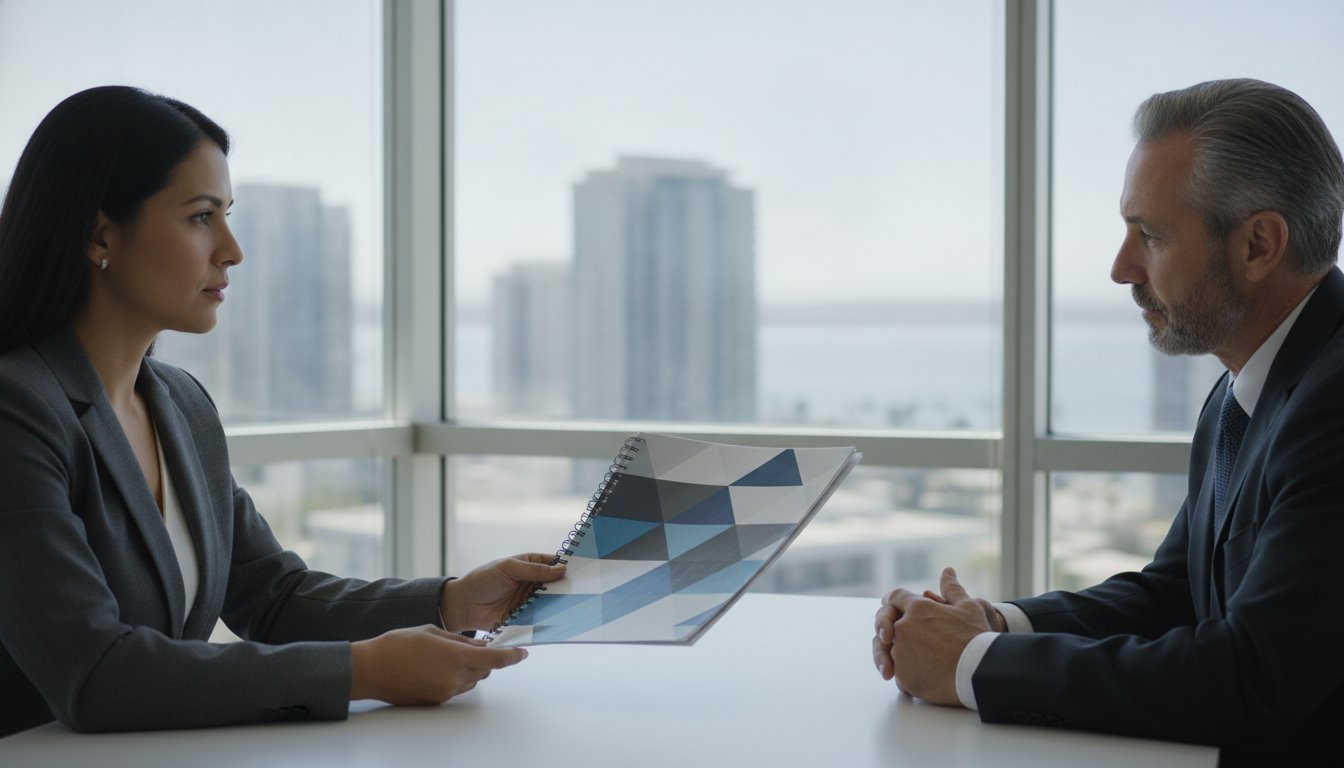
Your client-facing reports are often the only physical touchpoint a prospect has with your brand, yet many firms treat their binding and laminating tools as a secondary thought rather than a strategic asset. If you are currently struggling with high monthly invoices from local San Diego print shops or watching deadlines slip due to aging hardware, you know that getting buy-in for new office finishing equipment requires more than just a request for a new machine. It demands a clear demonstration of how a professional-grade upgrade protects your brand reputation and your bottom line.
We understand the pressure of maintaining a polished image while managing tight operational budgets. You shouldn't have to choose between professional quality and internal efficiency. This guide provides the framework you need to build a bulletproof business case that secures executive approval. We will walk through calculating a clear ROI, leveraging the 2026 Section 179 deduction limits, and selecting high-performance systems like Rhin-O-Tuff or Akiles that turn document preparation into a seamless, reliable workflow. By the end, you'll have the data and the strategy to prove that quality finishing is an investment in your company’s professional story.
Key Takeaways
- Understand how professional document finishing serves as a critical touchpoint for client trust and brand identity.
- Identify the hidden costs of outsourcing, including rush fees and the staff time required to coordinate with external print shops.
- Implement a data-driven 5-step strategy for getting buy-in for new office finishing equipment by documenting equipment downtime and missed deadlines.
- Overcome budget objections by shifting the conversation from initial price to a Total Cost of Ownership model that highlights long-term durability.
- Leverage the benefits of local San Diego expertise to test equipment in person and ensure a seamless integration into your office workflow.
The Business Case for Professional Document Finishing
Office finishing equipment represents the final, physical touchpoint of your professional communication. It’s the difference between a simple stack of papers and a structured, authoritative document that commands respect. When you present a proposal or a report, the mechanical assembly speaks to your standards before you even begin your presentation. High-quality coil binding and precise lamination signal that your firm values detail and durability, which is essential for building a strong business case for any high-value project or partnership.
Tactile quality directly influences client trust. A report bound with Twin Loop Binding Wire feels substantial, permanent, and premium. In contrast, a flimsy stapled document or a poorly aligned punch suggests a lack of preparation. For those tasked with getting buy-in for new office finishing equipment, the argument starts here: the physical feel of a document reflects the quality of the intellectual property contained within it. Using professional-grade tools like the Akiles CoilMac-M ensures every pitch deck or quarterly report meets a standard that basic office supplies cannot match. In high-stakes San Diego boardrooms, where the first impression is often a tactile one, these aesthetic details can be the deciding factor in how your expertise is perceived by stakeholders. To ensure your office environment reflects this same level of excellence, you can check out ReModern Living for contemporary European furnishings that help define a sophisticated brand identity.
Beyond Utility: Finishing as a Branding Tool
A proposal’s first impression begins the moment it is handed to a prospect. Using Regency Composition covers provides a leather-like texture that immediately signals a premium service level. This isn't just about utility; it’s about brand identity and perceived value. For multi-office organizations, having consistent equipment like the GBC CombBind C800pro or Rhin-O-Tuff Onyx HD7700 across branches ensures every client receives a uniform experience. It removes the risk of unprofessional, low-quality documents that undermine your corporate image and ensures your brand story is told with precision every time.
Operational Agility and Speed to Market
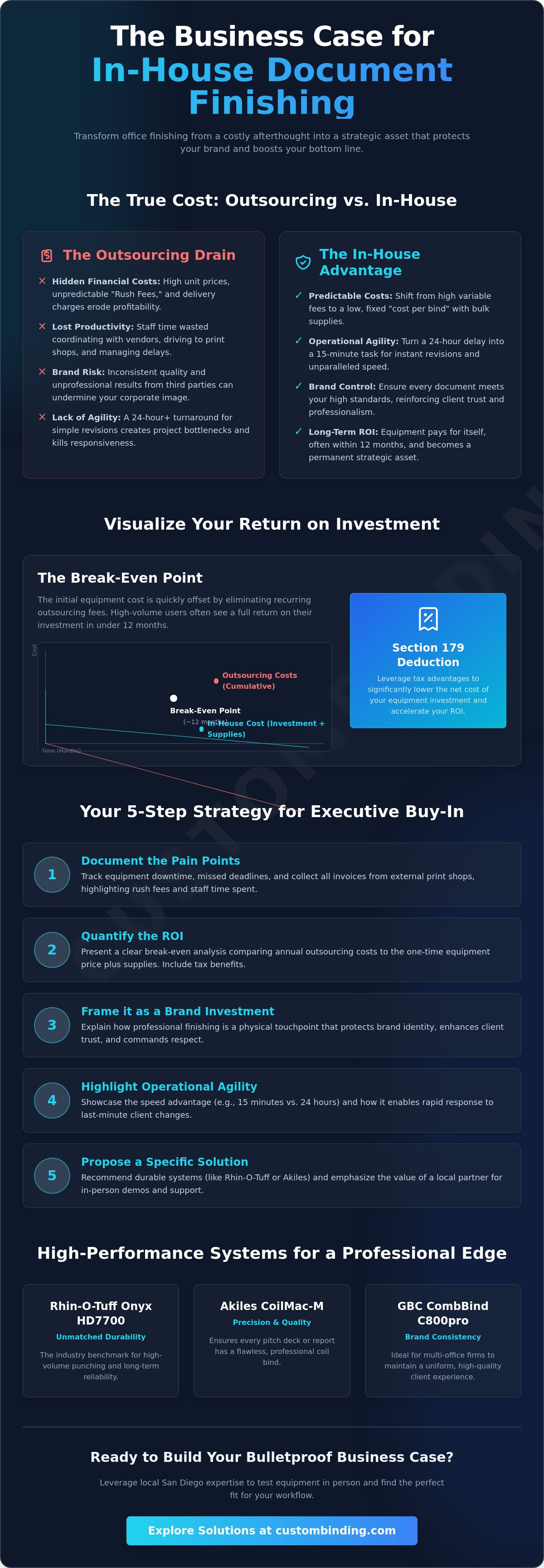
Relying on external vendors introduces unnecessary friction into your workflow. The hidden costs of driving to a local San Diego print shop for a last-minute bind include lost productivity, fuel, and the risk of vendor delays. In-house equipment provides the agility to make instant revisions. If a client identifies a necessary change minutes before a meeting, you can print, trim, and re-bind the document immediately. Consider the shift in efficiency: a typical 24-hour turnaround for outsourced binding becomes a 15-minute in-house task. Successfully getting buy-in for new office finishing equipment hinges on proving that these tools are essential for maintaining this level of responsiveness and professional agility.
Calculating the ROI: In-House vs. Outsourcing
Executives and financial officers prioritize data over aesthetics. While the visual quality of a report is vital for brand reputation, getting buy-in for new office finishing equipment requires a rigorous financial justification. To build this case, you must look beyond the sticker price of a machine and analyze the total cost of document production. This involves identifying the direct expenses of outsourcing and the often-overlooked indirect costs that erode your firm’s profitability.
The direct costs of outsourcing are found on your monthly invoices: unit prices for binding, lamination fees, and delivery charges. However, these figures don't account for "Rush Fee" taxes, which frequently occur when a proposal needs a final revision before a deadline. In contrast, in-house production utilizes the "Cost per Bind" model. By purchasing bulk supplies like Plastic Spiral Binding Coils or Twin Loop Binding Wire, the incremental cost of finishing a document drops to a fraction of the retail price. For those following a seven-step process for justification, this shift from variable service costs to predictable supply costs is a powerful argument for capital investment.
A standard 12-month break-even analysis often reveals that the equipment pays for itself within the first year. You can calculate this by totaling your annual outsourcing spend and comparing it to the one-time purchase price of a machine plus the cost of internal labor and supplies. You might find that high-volume users reach the break-even point even sooner, especially when factoring in tax advantages like the Section 179 deduction.
The Hidden Drain of External Print Invoices
Audit your last six months of local San Diego print shop receipts to uncover the true drain on your budget. Look for line items related to small-batch runs, which often carry high minimum-order fees. You should also compare the cost of retail laminating services against the price of wholesale Roll Laminating Film. Moving these tasks in-house eliminates the middleman markup and protects your budget from the unpredictable pricing of external service providers. If you are ready to begin this audit, you can review professional equipment specifications to estimate your potential savings.
Staff Efficiency and Billable Hours
Quantify the time lost in transit and communication with external vendors. Every hour an employee spends driving through San Diego traffic or proofing vendor mock-ups is an hour of lost billable time. Modern machines like the GBC CombBind C800pro are designed for intuitive operation, which significantly reduces training time for your team. A 5-minute in-house bind saves approximately $40 in labor and vendor fees when compared to the total time and expense of an outsourced equivalent. This efficiency allows your staff to focus on high-value tasks rather than logistics, streamlining your internal workflows and improving overall responsiveness.
Overcoming Executive Objections to New Equipment
Decision-makers often view finishing tools as a luxury rather than a core operational necessity. When getting buy-in for new office finishing equipment, you must anticipate and dismantle the standard objections regarding cost and frequency of use. If an executive claims the office won't use the machine enough, expand the conversation beyond client proposals. Professional binding and laminating are essential for internal training manuals, employee handbooks, and archival reference guides. By centralizing these tasks, you transform a specialized tool into a versatile asset that supports every department, from HR to sales.
Counter the "it's too expensive" argument with a Total Cost of Ownership (TCO) model. A cheap, plastic binder from a big-box retailer might seem cost-effective initially, but these "disposable" machines lack the mechanical integrity for consistent professional use. In contrast, investing in a Rhin-O-Tuff Onyx HD7700 represents a long-term commitment to quality. These heavy-duty systems are engineered for durability, often outlasting several generations of cheaper alternatives. For insights into the high-precision manufacturing and material science that go into creating such durable industrial components, you can learn more about Keiteq Co Ltd. When you factor in the avoided costs of frequent replacements and the time lost to mechanical jams, the professional choice becomes the most fiscally responsible one.
Avoid the temptation to settle for used equipment to save on the initial purchase price. Pre-owned machines often carry hidden repair costs and lack the manufacturer warranties that protect your investment. More importantly, older hardware is prone to failure during peak production cycles. The mechanical movement of a new machine is precise and reliable, ensuring that your team can focus on the content of their work rather than troubleshooting hardware issues. Reliability is a strategic advantage that protects your firm's reputation and revenue.
The Price vs. Value Conversation
Focus on the lifespan of the investment. A professional-grade hole punch or binding system can easily provide a 20-year service life. This longevity drastically reduces the annual cost of the equipment. While the machine itself is a capital expenditure, the recurring supplies like Twin Loop Binding Wire or Plastic Spiral Binding Coils can be categorized as operating expenses. This structural distinction often makes the budget request more palatable for finance teams who prefer predictable, ongoing costs over large, recurring capital outlays for replacement gear.
Risk Mitigation and Reliability
The true cost of legacy equipment is found in the downtime. Imagine the mechanical failure of an aging machine the night before a major San Diego RFP deadline. The resulting panic, rush service fees, and potential loss of the contract far outweigh the cost of a new system. Partnering with a specialist who offers on-site repair, such as Custom Binding Products, provides a critical safety net. This local support acts as an insurance policy, ensuring that your production cycle remains uninterrupted even during high-pressure periods.
The 5-Step Buy-In Strategy for Office Managers
Securing approval for capital expenditures requires a methodical approach that aligns with organizational goals. When getting buy-in for new office finishing equipment, you must move beyond subjective preferences and present a case rooted in operational necessity. A structured five-step framework allows you to transition your request from a simple suggestion to a strategic priority that leadership can easily support.
- Step 1: Gather the Data. Audit your last six months of external print invoices and document every instance of equipment downtime. Track quality-related client complaints to show the tangible cost of unprofessional documents.
- Step 2: Identify the Champion. Find the stakeholder most affected by finishing delays. This is often a Sales Director or Account Manager whose team relies on polished presentations to win contracts.
- Step 3: Define the Solution. Select equipment that specifically addresses your volume and aesthetic needs. For example, the Tamerica Optimus-450 is an excellent choice for offices requiring versatile, high-capacity binding and punch capabilities.
- Step 4: Present the ROI. Utilize the cost-per-bind comparison established earlier to show long-term fiscal benefits. Focus on how the equipment reduces variable service costs.
- Step 5: Propose a Trial or Demo. Leverage local San Diego expertise to arrange a hands-on demonstration. Seeing the mechanical movement and tactile results of a professional machine often removes the final barrier to approval.
Gathering Internal Evidence
Objective data is the foundation of any successful proposal. Survey your team to identify specific finishing frustrations, such as time wasted on manual hole punching or the embarrassment of unprofessional report covers. Collect "before and after" samples to visually demonstrate the difference between a generic outsource and a professional in-house result using Regency Composition covers and Twin Loop Binding Wire. Creating a simple spreadsheet that tracks "Lost Hours" due to hardware jams or vendor coordination provides the concrete evidence needed to justify an upgrade. This data transforms a perceived "want" into a documented operational need.
The Pitch: Speaking the CFO’s Language
When you present your case to executive leadership, use financial terminology that resonates with their priorities. Discuss how the purchase improves asset utilization and operational efficiency by bringing high-margin tasks in-house. Frame the new equipment as a professional identity investment that protects the firm’s brand equity. Investing in an Onyx HD7700 pays for itself in 14 months through vendor cost elimination. By highlighting favorable depreciation schedules and the shift from variable Opex to a stable asset, you make the decision easy for the finance team. Getting buy-in for new office finishing equipment is much simpler when you can prove it strengthens the balance sheet. To find the right fit for your production volume, consult with a finishing specialist today.
Partnering with a Local San Diego Specialist
Buying from a faceless online retailer might seem convenient, but it lacks the accountability and specialized knowledge required for professional operations. When you're getting buy-in for new office finishing equipment, the strongest justification is a partnership that guarantees long-term performance. A local specialist provides a "Try Before You Buy" experience in a showroom, allowing your team to feel the mechanical movement of a Rhin-O-Tuff Onyx HD7700 or an Akiles CoilMac-M before committing to the purchase. This hands-on testing ensures the equipment fits your specific tactile standards and volume requirements.
Custom Binding Products has supported San Diego businesses since 1988, acting as a steady hand in the local professional community. We understand that your reputation depends on the quality of your assembly. By working with a local partner, you gain access to immediate expertise that online stores can't replicate. Whether you need technical guidance on Twin Loop Binding Wire or advice on selecting the right Dahle Professional Rolling Trimmers, a local specialist ensures you never make a blind investment. This local presence transforms a simple vendor relationship into a strategic partnership.
Local Support and Maintenance
The primary advantage of a local partnership is the availability of San Diego-based on-site repair services. If a machine fails, you don't have to worry about the logistics of shipping heavy hardware to a distant service center. Our technicians provide rapid response times to keep your production lines moving. Additionally, local availability of Roll Laminating Film, Clear Acetate Covers, and Plastic Spiral Binding Coils means you aren't at the mercy of national shipping delays when a major deadline approaches. This reliability is a critical component of getting buy-in for new office finishing equipment, as it mitigates the risk of operational downtime during high-stakes projects.
Selecting the Right Equipment for San Diego Workplaces
Professional consultation prevents the common mistakes of over-buying or under-buying. Different industries in San Diego have unique finishing needs that require specific hardware configurations. A legal firm may require the permanence of Twin Loop Binding Wire for court documents, while a real estate office might prioritize the speed and ease of a Tamerica Optimus-450 for high-volume marketing brochures. We help you match machine capacity to your specific industry demands, ensuring your investment is both efficient and scalable. Schedule a consultation with our San Diego experts to build your business case and ensure your office is equipped for success.
Secure Your Firm's Professional Future
Transitioning your document finishing in-house is a strategic move that replaces the friction of outsourcing with a reliable, high-quality internal workflow. This shift not only protects your brand's reputation through superior tactile presentation but also safeguards your bottom line by eliminating hidden vendor fees and logistical delays. The framework provided in this guide gives you the financial and operational leverage required for getting buy-in for new office finishing equipment from even the most budget-conscious executives.
As an authorized dealer for premium brands like Akiles, Rhin-O-Tuff, and GBC, we offer the specialized tools and local support necessary for long-term success. We've served the San Diego professional community since 1988, providing expert on-site repair and maintenance that ensures your equipment remains a durable asset for years to come. Let Custom Binding Products help you build your ROI case—Contact our San Diego office today. Your team is ready to produce exceptional work; give them the professional tools they need to finish it with pride and precision.
Frequently Asked Questions
Is it better to lease or buy office finishing equipment in 2026?
Buying is often the superior choice for long-term ROI because these machines typically offer a 20-year service life. Purchasing allows your firm to take full advantage of the 2026 Section 179 deduction, which covers equipment costs up to $1,000,000. While leasing preserves immediate cash flow with APRs ranging from 6% to 28% based on credit, owning the asset outright eliminates monthly interest and secures a durable tool for your office.
How do I calculate the break-even point for a new binding machine?
Divide the total equipment cost by your average monthly outsourcing expenses. Your calculation should include unit prices, rush fees, and delivery costs from your local print shop invoices. Most San Diego businesses find that professional-grade hardware pays for itself within 12 to 14 months. Be sure to factor in the lower cost of bulk supplies like Plastic Spiral Binding Coils to get an accurate comparison of internal versus external production.
What are the most common hidden costs of outsourcing document finishing?
The most significant hidden drain is the loss of billable staff hours. These costs include the time spent coordinating with vendors, proofing mock-ups, and driving through San Diego traffic for pickups. External shops also frequently apply minimum order surcharges and "rush fee" taxes for urgent deadlines. Bringing these tasks in-house removes these unpredictable variables and allows your team to focus on high-value billable work instead of logistics.
Can I use a professional binding machine for small volumes?
Professional machines are actually ideal for small-batch runs because they eliminate the high minimum-order fees charged by external vendors. Systems like the Akiles CoilMac-M provide the same precision for a single report as they do for a large production run. This flexibility is a major factor in getting buy-in for new office finishing equipment, as it allows for instant revisions and personalized client presentations on demand.
What is the difference between commercial-grade and home-office binders?
Commercial-grade equipment uses all-metal construction and heavy-duty motors designed for daily high-volume use. Home-office models often rely on plastic components that warp or jam under pressure, leading to frequent replacement costs. Systems like the Rhin-O-Tuff Onyx HD7700 offer a lower total cost of ownership by providing decades of reliable service. This durability ensures your documents have a consistent, professional punch that lighter, "disposable" machines cannot achieve.
How does professional finishing impact client perception in San Diego?
High-quality finishing serves as a physical marker of your firm's commitment to excellence. In the competitive San Diego business landscape, the tactile feel of Regency Composition Covers or Twin Loop Binding Wire creates an immediate sense of trust. It suggests that your attention to detail extends beyond the written word to the final presentation. This professional aesthetic helps your proposals stand out and reinforces your brand’s reputation for quality.
Does Custom Binding Products offer on-site demos in San Diego?
Yes, we offer hands-on demonstrations at our local facility so you can evaluate the mechanical movement and output of our equipment. Seeing a machine like the Tamerica Optimus-450 in person is often the final step in getting buy-in for new office finishing equipment. It allows your decision-makers to verify the ease of use and the tactile quality of the results before committing to a long-term investment for your team.
What maintenance is required for heavy-duty finishing equipment?
Maintenance is straightforward but vital for ensuring a 20-year lifespan. Essential tasks include emptying punch waste trays regularly and periodically lubricating moving parts according to the manufacturer’s specifications. For more complex hardware, scheduling annual professional inspections keeps punching pins sharp and properly aligned. Custom Binding Products provides on-site maintenance and repair services throughout San Diego to ensure your equipment remains a reliable asset for your office production needs.
Recent Posts
-
Upgrading Your Office Binding System: The 2026 Professional Guide
Did you know that switching from a manual punch to an electric binding machine can save your team …Jun 27th 2026 -
Professional Wire Binding Supplies in San Diego: Your 2026 Essential Guide
Imagine handing a potential client a thick, high-value report, only for the pages to snag because …Jun 26th 2026 -
Best Binding Method for Professional Reports: A 2026 Executive Guide
The physical feel of your document often speaks louder than the data on the page. In a high-stakes …Jun 25th 2026