
Choosing the Right Laminating Film Thickness: A Professional Guide for 2026
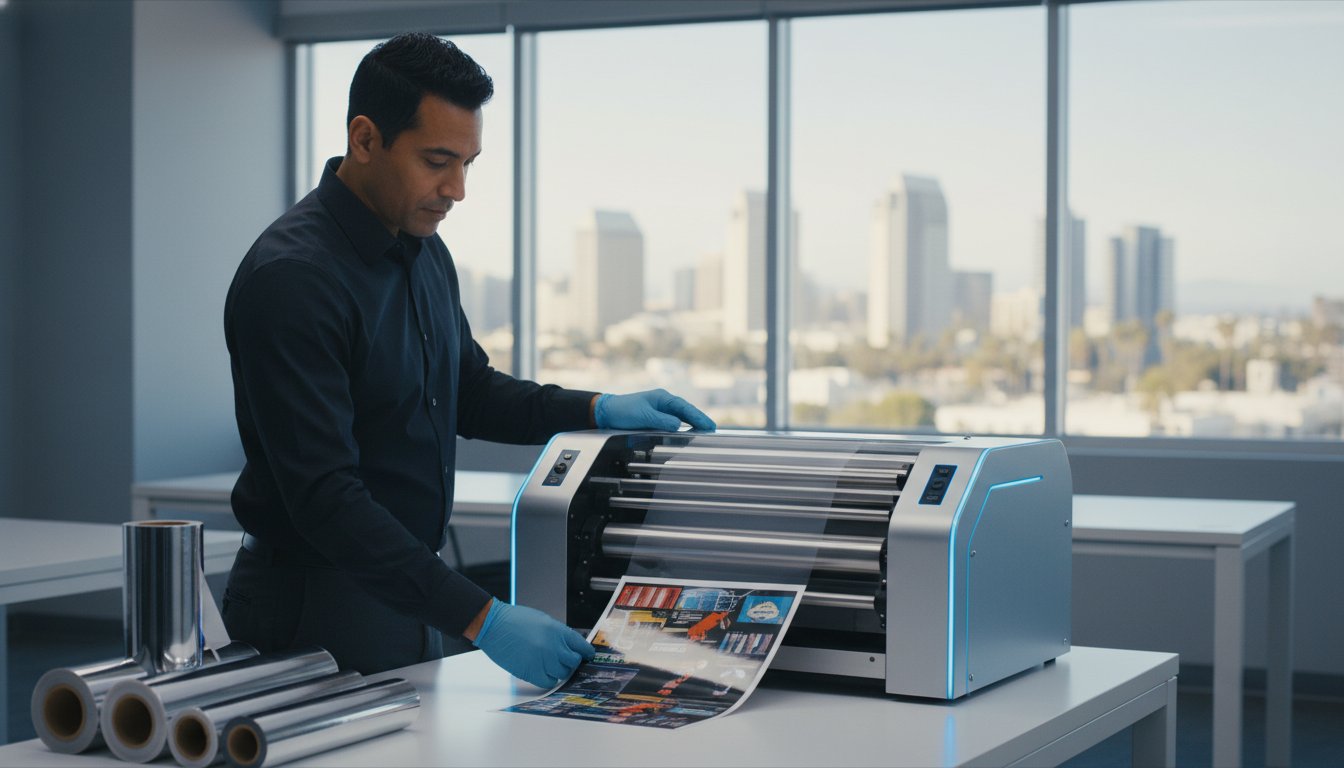
Selecting the heaviest gauge available often seems like the safest bet for protection, but in professional finishing, the "thicker is better" mantra is a costly misconception. You've likely felt the frustration of squinting at 'mil' specifications, wondering if a 10 mil pouch will provide the rigid professional feel you need or simply lead to a catastrophic jam in your Tamerica Optimus-450. It's a common pain point: wasting premium roll laminating film on a project that ends up too stiff to fold or too cloudy to read. Choosing the right laminating film thickness is about more than just survival; it's about aligning your tactile goals with your equipment's mechanical limits.
We'll help you master these technical nuances so your documents achieve the perfect balance of flexibility, durability, and clarity every time. This guide provides a clear decision-making framework for 2026, ensuring your work meets both aesthetic standards and new regulatory requirements like California's SB 54. You'll learn how to select the ideal film for everything from flexible reference sheets to rigid signage while protecting your machinery from unnecessary wear. We are moving beyond guesswork to help you produce results that reflect the high quality of your professional identity.
Key Takeaways
- Define the 'mil' scale and the critical ratio between PET base layers and adhesive to ensure your documents maintain structural integrity without losing clarity.
- Master a simple decision-making framework for choosing the right laminating film thickness by evaluating the intended lifespan and required flexibility of your specific project.
- Avoid equipment damage and machine jams by applying the "2x Rule" to calculate total document thickness, including both film layers and paper weight.
- Protect your professional image from Southern California’s environmental stressors by selecting films designed to resist UV yellowing and coastal humidity.
- Identify why professional-grade PET film prevents common defects like "silvering" and bubbling, ensuring a tactile finish that reflects your brand’s commitment to quality.
Understanding Laminating Film Thickness: The 'Mil' Scale Explained
Precision is the hallmark of a professional presentation. When you're tasked with protecting high-value documents, the first technical hurdle you'll encounter is the "mil" scale. This isn't just a measurement of size; it's a primary factor in determining the tactile quality, optical clarity, and structural integrity of your finished work. Mastering the nuances of this scale is essential for choosing the right laminating film thickness, ensuring your project doesn't end up too flimsy for its purpose or too rigid for your equipment to process.
What Exactly is a Mil?
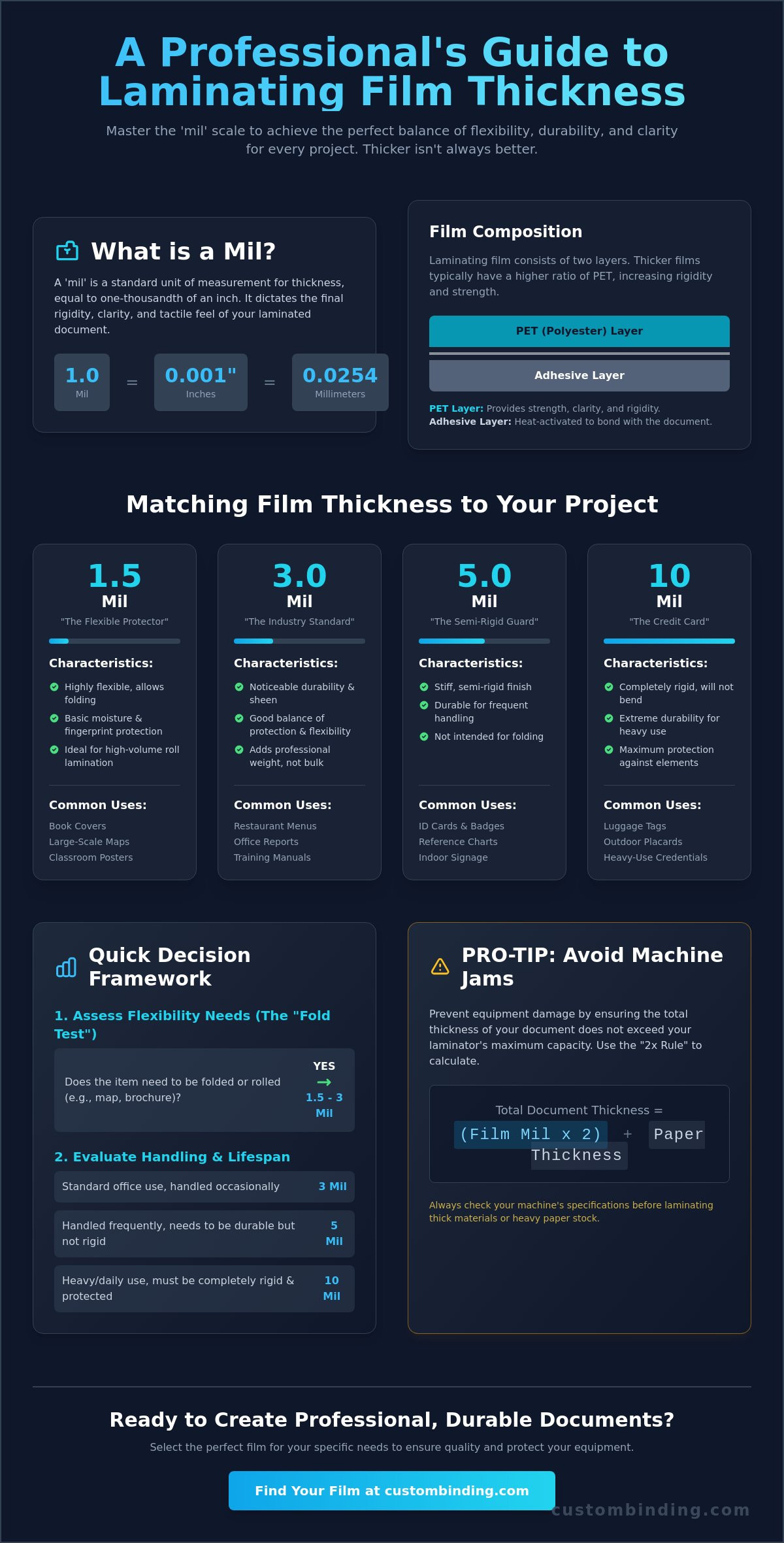
A mil is a unit of measurement equal to one-thousandth of an inch (0.001"). For professionals working on international projects, this converts to exactly 0.0254 mm. While it sounds minuscule, every additional mil significantly alters the physical properties of the film. Most roll laminating film is composed of two distinct layers: a base of Polyester (PET) and a layer of heat-activated adhesive. The PET provides the strength and clarity, while the adhesive creates the bond. As you move up the mil scale, the ratio of PET to adhesive often shifts. Thicker films generally contain a higher percentage of PET, which increases the "snap" and rigidity of the document. This construction directly impacts how light passes through the material; high-quality PET ensures that colors remain vibrant and text stays sharp, even at higher gauges.
Common Standard Thicknesses at a Glance
Visualizing the difference between gauges helps prevent costly errors during the selection process. Here is how the most common thicknesses translate to real-world applications:
- 1.5 Mil: Often referred to as "silk" or "nap-lam," this is the preferred choice for high-volume roll lamination. It provides basic protection against fingerprints and moisture while remaining thin enough to allow for easy folding. It's frequently used for book covers and large-scale maps.
- 3 Mil: This is the industry standard for office reports, training manuals, and restaurant menus. It offers a noticeable increase in durability and a professional sheen without making the document overly bulky.
- 5 Mil: At this thickness, you achieve a semi-rigid finish. It's ideal for items that will be handled frequently but don't need to be folded, such as ID cards, reference charts, or indoor signage.
- 10 Mil: This is the "credit card" gauge. It provides extreme durability and a completely rigid feel. Items laminated in 10 mil film cannot be bent without creasing the plastic, making it perfect for heavy-use items like luggage tags or outdoor placards.
Selecting the correct gauge ensures your final product looks intentional and sophisticated. By understanding these measurements, you can avoid the common mistake of over-laminating, which can lead to cloudy finishes or mechanical strain on your machinery.
Matching Film Thickness to Your Professional Project
A document's thickness is often its first handshake with a client. It communicates durability, value, and intent before a single word is read. While the technical definition of a mil provides the foundation, choosing the right laminating film thickness involves a strategic evaluation of how the document will be handled. You must consider the environment it will live in and the tactile impression you want to leave. A flimsy menu suggests a budget experience, while an over-stiff brochure feels clunky and difficult to navigate. Getting this balance right is what separates a generic printout from a professional asset.
The "Fold Test" is your most reliable decision-making tool. If your project requires any degree of flexibility, such as a map or a multi-page manual, thin gauges are essential. Conversely, if the document must stand upright on a desk or survive daily handling in a San Diego commercial kitchen, you need a rigid barrier. In the local biotech sector, for instance, lab protocols require a thickness that can withstand constant sanitization without peeling. Legal professionals often prefer a mid-range gauge for exhibits, providing enough weight to feel significant without adding excessive bulk to a case file.
Flexible Protection (1.5 - 3 Mil)
Thin films are the workhorses of high-volume environments. 1.5 mil film is the industry standard for wholesale roll lamination, commonly used for classroom posters and large-scale maps that need to be rolled for storage. For San Diego businesses managing large mailer campaigns, these thinner gauges offer excellent cost-efficiency while providing a basic moisture barrier. 3 mil film strikes a perfect middle ground for office reports and internal training manuals. It adds a professional sheen and enough body to prevent dog-eared corners, yet it remains thin enough to be processed through most Martin Yale paper folders if your project requires a clean crease after lamination.
Rigid Durability (5 - 10 Mil)
When your goal is to create a "premium" tactile experience, move into the 5 to 10 mil range. 5 mil film is a popular choice for event badges and credentials at San Diego conventions, providing a sturdy feel that doesn't easily bend or crack. For industrial environments where documents are handled daily, 10 mil is the only logical choice. This extreme gauge creates a completely rigid, plastic-like card that is impervious to grease, heavy handling, and environmental wear. It is the gold standard for reusable safety checklists and permanent outdoor signage that must maintain its integrity in the sun and salt air.
By aligning your film choice with the specific demands of your industry, you ensure that your documents don't just survive; they perform. Whether you are prioritizing the sleek flexibility of a 1.5 mil wrap or the indestructible nature of a 10 mil pouch, your selection should always serve the end user's experience.
Calculating Total Document Thickness & Machine Limits
Precision in finishing requires more than just picking a film gauge from a shelf. You must account for the mechanical reality of the entire assembly. When you're choosing the right laminating film thickness, the most critical factor isn't the film alone, but the total thickness of the "sandwich" passing through your equipment's rollers. Ignoring this total calculation is the primary cause of project failure and avoidable hardware damage. Every laminator has a specific maximum "mounting gap," and exceeding it can lead to motor burnout or ruined documents.
The first rule of professional lamination is the 2x Rule. Remember that film is applied to both sides of your substrate. If you're using a 5 mil pouch, you're actually adding 10 mils of plastic to the total profile. This becomes a significant variable when you move away from standard 20lb bond paper and begin using heavy cardstock or specialized media. High-weight papers, like 80lb or 100lb cardstock, add substantial thickness that must be factored into your machine's capacity limits before you begin a production run.
The Lamination Math Formula
To ensure a successful pass, use this simple step-by-step formula: (Film Thickness x 2) + Paper Thickness = Total Gap Requirement. For example, if you're using 3 mil film on a standard sheet of paper, your total is roughly 10 mils. However, if you switch to a heavy 12pt cardstock, that base alone is 12 mils thick. To find the final thickness of a laminated 10pt card using 5 mil film, you combine the 10-mil paper base with 10 mils of total film for a 20-mil final result. This total must remain below your laminator's rated maximum to prevent the adhesive from oozing out the sides and gumming up the internal rollers.
Verifying Your Laminator's Maximum Capacity
Most entry-level desktop units are designed for a maximum total thickness of 10 to 15 mils, effectively limiting you to 3 or 5 mil pouches on standard paper. Professional-grade hardware, such as the Tamerica Optimus-450 or Akiles pouch laminators, offers wider gaps and more robust motors to handle 10 mil films on thicker substrates. Forcing a thick pouch through a narrow-throat machine is a recipe for a catastrophic jam. The rollers will struggle to pull the heavy assembly through, causing the heat to build up and the adhesive to liquefy excessively. If you've already encountered a jam that you can't clear safely, it's best to seek professional laminator repair san diego services rather than risking further damage to the motor or heating elements.
Environmental Considerations for San Diego Businesses
San Diego's unique climate offers a demanding testing ground for laminated materials. Between the relentless Southern California sun and the salt-laden humidity of coastal areas like La Jolla, your document protection needs are significantly higher than those in more temperate regions. Choosing the right laminating film thickness is a strategic decision to prevent premature failure caused by environmental stressors. Without the correct gauge, a professional presentation can quickly succumb to yellowing, peeling, or warping, undermining your brand's image of reliability.
Thermal stability is another factor for professionals who keep documents in their vehicles. Internal car temperatures in San Diego can easily exceed 140 degrees Fahrenheit during summer months. Thicker films provide a more robust thermal barrier, maintaining the document's flatness and preventing the "waving" effect common with thinner, 1.5 mil gauges. When your work moves from the office to the field, the physical density of the laminate becomes your primary defense against the elements.
UV Protection and Sunlight Exposure
Direct sunlight is the enemy of plastic. Ultraviolet rays break down the chemical bonds in standard films, leading to brittleness and a distinct yellow tint. For outdoor signage in the Gaslamp Quarter or real estate placards in inland San Diego, 5 mil film or higher is essential. The increased PET base layer provides better structural integrity against UV degradation compared to thinner alternatives. Specialized UV-resistant films are particularly effective here, as they contain inhibitors that block harmful rays, ensuring your colors remain vibrant and your white backgrounds stay crisp. Using a thicker gauge also helps prevent "curling," where the edges of a document pull inward due to heat-induced tension.
Handling Humidity in Coastal Environments
Coastal moisture presents a different challenge: adhesive failure. In high-humidity environments like San Diego's marinas or beachfront hotels, moisture can seep into the edges of a document if the seal is insufficient. While 3 mil film is suitable for indoor office use, it may delaminate faster when exposed to damp air. A 5 mil film creates a deeper, more aggressive "edge seal" that locks out moisture more effectively. For marine businesses using laminated guides or hospitality teams with outdoor menus, ensuring this moisture barrier is intact is critical. You can find high-quality roll laminating film designed to maintain a superior bond even in demanding coastal conditions.
By selecting a film thickness that accounts for these local variables, you extend the life of your professional assets. Whether you're battling the UV index in Chula Vista or the morning fog in Del Mar, the right thickness ensures your documents remain as polished as the day they were produced.
Sourcing the Right Film for Your San Diego Workplace
Sourcing your supplies is the final step in achieving a flawless finish. Choosing the right laminating film thickness is only half the battle; the chemical composition of that film determines whether your project succeeds or fails. While generic "big box" retailers offer convenience, their films often lack the high-density Polyester (PET) base required for professional-grade results. Opting for specialized supplies ensures that your documents maintain their integrity, clarity, and color accuracy for years to come.
System compatibility is equally vital. Using a film that doesn't match the thermal profile of your specific machine can lead to inconsistent bonding or "silvering," where tiny air bubbles trapped in the adhesive obscure your work. Whether you are operating a heavy-duty Rhin-O-Tuff Onyx HD7700 or a versatile Tamerica Optimus-450, the quality of your roll laminating film directly impacts the longevity of your equipment's rollers. High-quality adhesives melt cleanly and bond instantly, reducing the risk of residue buildup that causes jams and motor strain.
Why Quality Film Matters
Professional PET film is engineered for optical brilliance. Unlike cheaper alternatives that can cast a milky or yellowish haze over your prints, premium film maintains true document colors and sharp contrast. This is particularly important for 10 mil applications, where the thickness of the plastic can naturally dampen light transmission. Low-grade films often rely on high-acid adhesives that emit a sharp vinegar smell when heated, which can be distracting in a professional office environment. By investing in professional-grade laminating pouches and rolls, you protect your staff's comfort and your brand's reputation for excellence.
Local Support from Custom Binding Products
Since 1988, Custom Binding Products has served as a Reliable Specialist for San Diego organizations. We understand that your workflow doesn't have room for downtime or failed projects. Our team provides expert advice on matching your GBC, Akiles, or Rhin-O-Tuff machines with the exact film grade they require. We bridge the gap between technical specifications and your end goal: a polished, professional presentation that commands respect. For businesses in the San Diego area, we offer the advantage of local expertise and rapid supply replenishment to keep your production process moving without friction.
Don't leave your professional image to chance with generic supplies. Browse our full range of professional laminating films to find the perfect match for your next project. Whether you need high-volume 1.5 mil rolls or rigid 10 mil pouches, we ensure you have the tools necessary to tell your brand's story with confidence and precision.
Elevating Your Professional Standards Through Precision
Achieving a flawless, durable finish is a technical skill that transforms a simple document into a lasting professional asset. By mastering the 2x Rule and accounting for San Diego's specific environmental stressors, you ensure your work remains pristine whether it's in a boardroom or a coastal marina. Choosing the right laminating film thickness is ultimately about protecting your investment in your brand's reputation while maintaining the longevity of your equipment. Precision in these details reflects the quality of the work contained within and instills immediate confidence in your audience.
As an authorized dealer for Akiles, Rhin-O-Tuff, and GBC, Custom Binding Products has provided specialized finishing solutions to San Diego organizations since 1988. We offer more than just supplies; we provide the local technical support and repair expertise you need to keep your production moving without friction. Shop Premium Laminating Film and Supplies at Custom Binding Products to ensure your next project meets the highest standards of clarity and durability. Take the guesswork out of your finishing process and focus on the craftsmanship that sets your professional identity apart.
Frequently Asked Questions
Can I use 10 mil film in a standard home laminator?
No, you shouldn't attempt to use 10 mil film in a standard home or entry-level office laminator. Most consumer-grade machines are designed for a maximum thickness of 3 to 5 mils. The heating elements in these units typically can't reach the temperature required to melt the thick adhesive layer of a 10 mil pouch. Additionally, the motor may lack the torque to pull such a rigid assembly through the rollers safely.
Is 5 mil lamination twice as strong as 3 mil?
While 5 mil film is mathematically thicker, its strength is better described by its increased rigidity and puncture resistance rather than a linear doubling of strength. Choosing the right laminating film thickness involves understanding that 5 mil film adds significantly more "snap" to a document. This makes it much harder to bend or crease compared to 3 mil film, which remains relatively flexible for projects that require folding.
What is the best laminating thickness for restaurant menus?
The ideal thickness for restaurant menus is generally 5 mil, though 3 mil is a viable alternative for multi-page booklets. 5 mil provides a sturdy, semi-rigid finish that survives constant handling and frequent cleaning with sanitizing chemicals. If your menu is a single sheet that needs to stand upright in a table holder, 7 or 10 mil might be necessary to prevent bowing or warping over time.
How do I know if my laminator is hot enough for thick film?
You can tell your laminator is hot enough when the finished document emerges perfectly clear and the edges are fully sealed. If the laminate appears cloudy, milky, or has a "silvered" look, the heat hasn't sufficiently liquefied the adhesive. Professional machines like the Tamerica Optimus-450 allow for precise temperature adjustments to ensure a complete bond on thicker gauges that require more thermal energy to process correctly.
Does the thickness of the film affect the clarity of the document?
Thickness can impact clarity if you use low-grade materials, but professional-grade PET film maintains excellent transparency even at 10 mils. High-quality films are engineered to ensure that colors remain vibrant and text stays sharp. However, thicker films require more heat to achieve this clarity. If the machine isn't hot enough, the extra adhesive in thicker films will remain opaque, which obscures your document and ruins the professional finish.
Can I laminate two pieces of paper together in one pouch?
You should avoid laminating two separate pieces of paper back-to-back in a single pouch. The adhesive is designed to bond the plastic to the paper, not paper to paper. Because there is no adhesive between the two sheets in the middle, the document will likely delaminate or bubble in the center. It's always better to use two separate pouches or simply print your content on both sides of a single sheet.
What happens if I use film that is too thick for my machine?
Using film that exceeds your machine's rated capacity usually results in catastrophic internal jams or motor failure. The rollers may fail to grip the thick assembly, causing the film to melt inside the machine and gum up the heating elements. This often leads to adhesive oozing out the sides, which can permanently damage the rollers. Always verify your machine's maximum mounting gap before choosing the right laminating film thickness.
Is there a difference between pouch film and roll film thickness?
The measurement unit, the mil, is identical for both pouch and roll film, but the application methods differ. Roll film is often used in thinner gauges, such as 1.5 to 3 mil, to allow for high-speed processing and flexibility in items like maps or book covers. Pouches are frequently available in much heavier gauges like 7 or 10 mil for rigid items. Both formats require the same attention to machine capacity and heat settings.
Recent Posts
-
Upgrading Your Office Binding System: The 2026 Professional Guide
Did you know that switching from a manual punch to an electric binding machine can save your team …Jun 27th 2026 -
Professional Wire Binding Supplies in San Diego: Your 2026 Essential Guide
Imagine handing a potential client a thick, high-value report, only for the pages to snag because …Jun 26th 2026 -
Best Binding Method for Professional Reports: A 2026 Executive Guide
The physical feel of your document often speaks louder than the data on the page. In a high-stakes …Jun 25th 2026