
How to Professionally Bind a Report: The Ultimate 2026 Guide
May 26th 2026
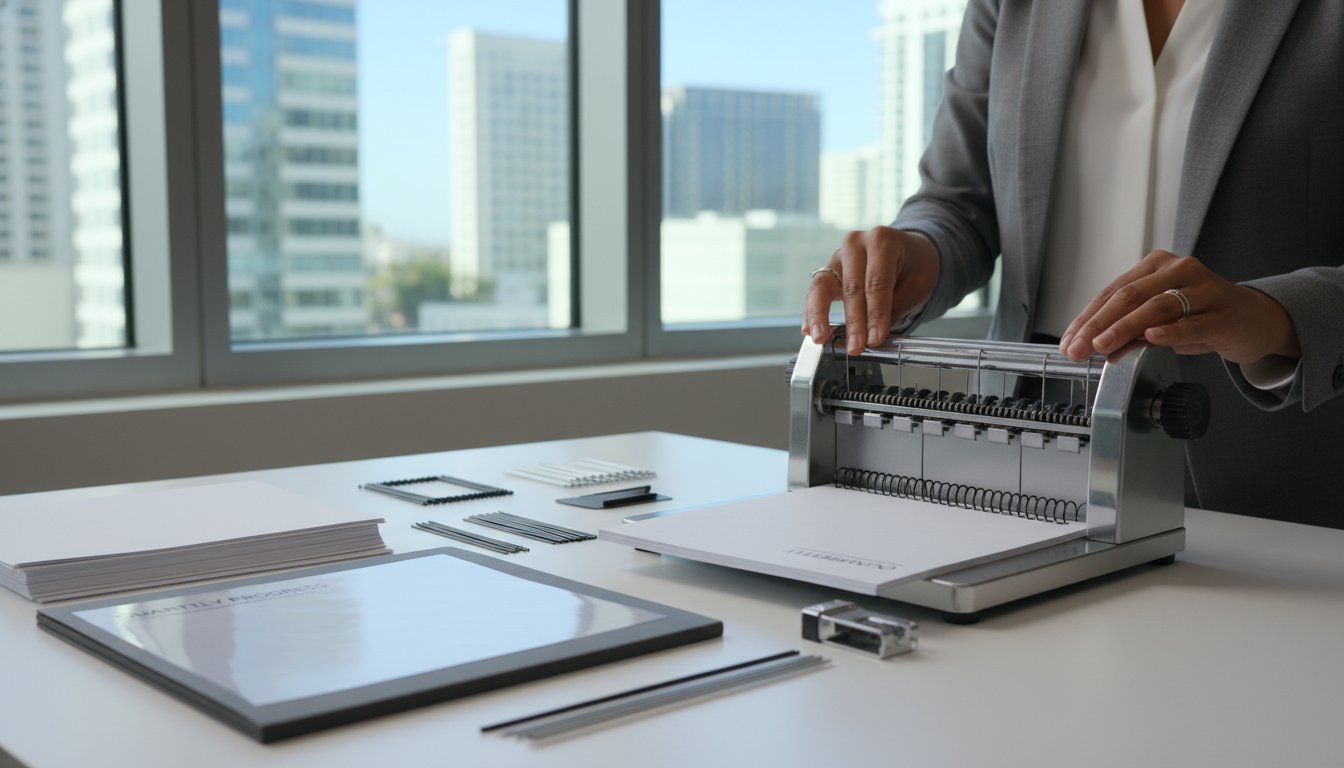
The physical weight and tactile finish of a document often carry as much authority as the data printed on its pages. You have likely felt the frustration of a high-stakes presentation being undermined by pages that fall out of cheap binders or refuse to lay flat on a conference table. It is a common organizational challenge where the mechanical finish simply doesn't match the intellectual effort. Learning how to professionally bind a report is about more than just holding paper together; it is a strategic investment in your professional image and a commitment to quality craftsmanship.
This guide will transform your document finishing process from a routine task into a strategic advantage. We promise to show you how to move beyond generic, mass-market approaches to create high-impact reports that impress clients through superior tactile quality and organized efficiency. You will learn how to select the right mechanical solutions, from the precision of an Akiles CoilMac-M to the sleek finish of twin loop binding wire and Regency Composition covers. We provide a methodical look at the specific materials and expert techniques required to produce a durable, lay-flat document that reflects the high standards of your professional work.
Key Takeaways
- Define the link between mechanical durability and the perceived value of your work to ensure a high-impact first impression.
- Discover how to professionally bind a report using the "Professional Four" methods tailored to your document's specific page count and prestige level.
- Select the right combination of Regency Composition covers and binding elements to reinforce your brand identity through tactile quality.
- Optimize your production workflow by mastering machine calibration on tools like the Rhin-O-Tuff Onyx for flawless punch alignment.
- Identify the essential equipment, such as the Akiles CoilMac-M, needed to build a high-performance in-house binding station in San Diego.
Why Professional Report Binding Is a Critical Business Asset
Professional binding is the deliberate marriage of mechanical durability and aesthetic alignment. While digital workflows dominate the modern office, the physical report remains the ultimate artifact of authority in a high-stakes meeting. Understanding how to professionally bind a report requires looking past the simple act of joining pages; it involves creating a tactile experience that reinforces the value of the data within. This practice draws from the history of bookbinding, where the objective has always been to protect intellectual property while presenting it with dignity.
The psychology of the first impression is rooted in tactile quality. When a client picks up a report, they subconsciously judge the reliability of the contents by the weight and feel of the assembly. A flimsy document suggests a temporary or rushed effort. Conversely, a report bound with high-quality elements like twin loop wire or plastic spiral coils signals permanence and precision. This distinction is vital for external deliverables where your document acts as a silent brand ambassador long after you leave the room.
Functionality is just as critical as aesthetics. The "lay-flat" factor is a functional requirement for any technical manual or executive summary. A report that refuses to stay open during a review session creates unnecessary friction for the reader. Choosing the right mechanical method ensures the document remains open and accessible, allowing the reader to focus entirely on your insights rather than fighting the binding.
The Tangible ROI of High-Quality Presentation
A bound report extends the shelf-life of professional advice by providing a durable structure that withstands repeated reference without degrading. In the competitive San Diego business landscape, these finishing details distinguish your firm as a partner that values organized efficiency. Utilizing premium materials like Regency Composition covers protects your intellectual property from the wear and tear of frequent handling. This durability ensures that your work remains a permanent reference tool on a client’s shelf rather than ending up in a recycling bin.
Common Pitfalls of Amateur Binding
Amateur binding methods often undermine the quality of the work they contain. Consider the following common failures:
- The Staple-and-Fold Problem: This approach fails in executive boardrooms because it suggests a lack of preparation and looks unfinished.
- Bulky Three-Ring Binders: These are often too cumbersome for sleek professional pitches and occupy excessive shelf space.
- Thermal Adhesive Failures: Low-quality thermal binding can fail under environmental stress, causing pages to detach during a presentation.
Investing in professional equipment like the Akiles CoilMac-M or the Rhin-O-Tuff Onyx HD7700 eliminates these risks. These machines provide a mechanical bond that is both secure and visually polished, ensuring your presentation remains intact and impressive.
Selecting the Right Binding Method for Your Report
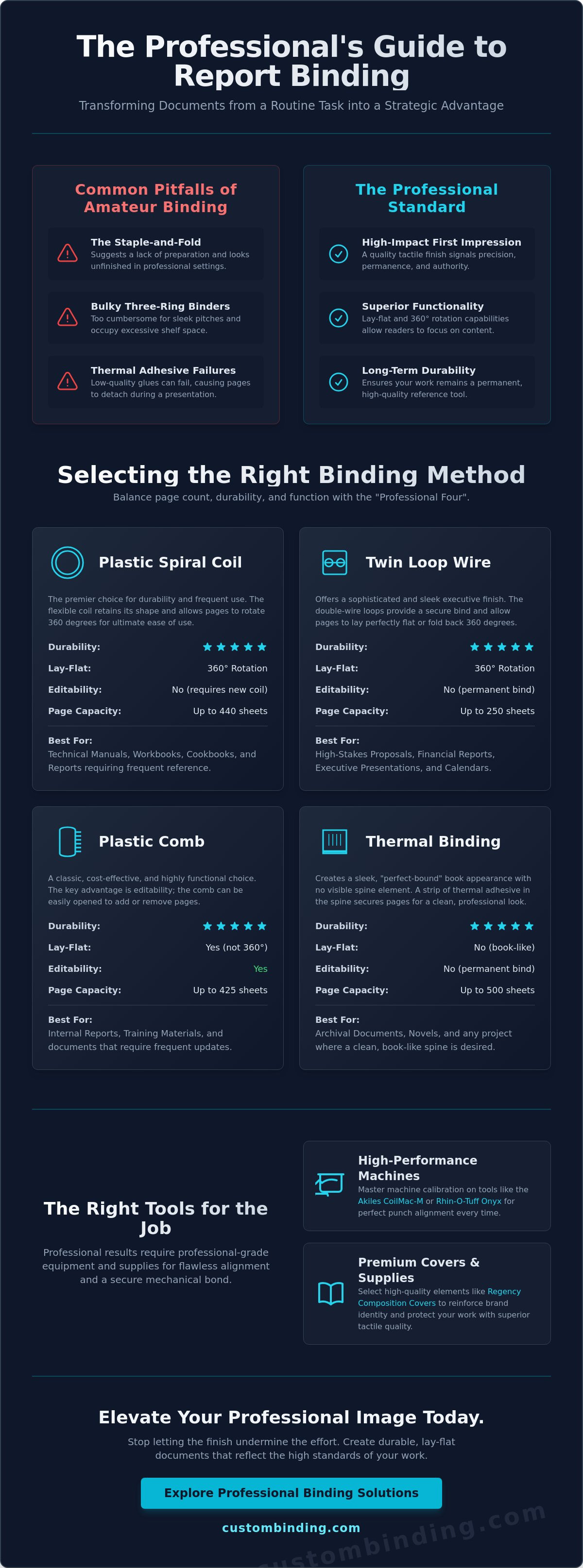
Choosing the correct mechanical finish is the first technical hurdle in learning how to professionally bind a report. You must balance the document's intended lifecycle against its aesthetic goals. The "Professional Four" (Plastic Coil, Twin Loop Wire, Plastic Comb, and Thermal) each offer distinct benefits. A 10-page executive summary requires a different structural approach than a 400-page technical manual that will be referenced daily. Your choice dictates not only how the document looks but how it functions in the hands of your client.
Functional requirements often narrow the field quickly. For manuals, workbooks, or any document meant to be used on a desk, 360-degree rotation is a non-negotiable feature. This allows the user to fold the report back on itself without damaging the spine. If your report contains data that requires frequent updates, editability becomes the priority. Conversely, high-stakes financial reports often require the security of a permanent bind that prevents page tampering. These requirements align with industry standards for library binding, which emphasize that the mechanical method must match the document's expected durability and usage frequency.
Plastic Coil and Twin Loop Wire: The Executive Standard
Plastic Spiral Coils are the premier choice for durability. They are virtually indestructible and always return to their original shape, making them ideal for documents that face heavy travel or frequent handling. Twin Loop Binding Wire, often called Wire-O, is the gold standard for high-end professional aesthetics. It provides a sophisticated, metallic finish that conveys immediate prestige. When selecting wire, pay attention to the pitch. A 3:1 pitch (three holes per inch) is standard for documents up to 9/16 inches thick, while a 2:1 pitch is utilized for thicker reports. If you are refining your office setup, exploring various professional binding supplies can help you visualize these differences in texture and scale.
Plastic Comb and Thermal Binding: Functional Utility
GBC Comb Binding remains a staple for internal reports because it's the most editable format. You can easily pop the comb open to swap pages without destroying the binding element. This makes it a cost-effective solution for draft versions or internal training materials. Thermal binding, or "perfect binding," provides a clean, book-like spine with no visible holes or coils. It's the preferred method for annual reports and high-level corporate brochures where a seamless, library-quality look is desired. While combs can handle documents up to 2 inches thick, thermal binding is typically best suited for reports under 1 inch to ensure the adhesive maintains its structural integrity.
The Finishing Touches: Professional Covers and Supplies
A professional presentation is incomplete without a cohesive cover set that protects the interior pages while framing the content. The anatomy of a high-impact document consists of three distinct layers: a protective front cover, the central binding element, and a rigid back cover. Understanding how to professionally bind a report involves selecting materials that harmonize to create a tactile signature for your brand. This selection process transforms a collection of paper into a structured business asset that feels substantial in the reader's hands.
Don't settle for generic combinations when pairing textures. Match the color of your Plastic Spiral Binding Coils to your company's primary palette or the specific material of your back cover. For example, pairing black Twin Loop Binding Wire with a navy Regency Composition Cover creates a classic, conservative look suitable for legal or financial reports. This attention to detail signals a level of care and precision that mirrors the quality of the work contained within the document.
Standardized sizes often fail when your document includes index tabs. Use oversized covers, typically 11.25" x 8.75", to provide a protective perimeter for your organizational system. Standard 11" x 8.5" covers leave tabs exposed to damage during transport, which can lead to a frayed and amateurish appearance. For reports destined for high-use environments, apply Roll Laminating Film to the title page or use Laminating Pouches for individual reference sheets. This adds a layer of wipeable durability that preserves visual clarity and prevents the degradation of your intellectual property.
Clear Acetate vs. Regency Composition Covers
Clear Acetate Covers act as a window into your work, showcasing the title page while shielding it from spills and dust. Regency Composition Covers provide a heavy, leatherette feel that grounds the back of the report and adds necessary structural rigidity. Crystal clear fronts are the best choice for vibrant, graphic-heavy title pages, while frosted covers offer a sophisticated, anti-glare finish that hides minor fingerprints and prevents pages from sticking together in humid conditions.
Specialty Supplies for San Diego Professionals
Use index tabs to organize long-form technical reports or complex legal filings, allowing readers to jump directly to critical data without searching. You can also incorporate custom-branded covers to integrate your logo directly into the binding process, reinforcing professional identity at every touchpoint. Finally, select the correct coil diameter by adding 1/8 inch to the total thickness of your document stack. This ensures a snug fit that allows pages to turn smoothly without the loose, sloppy feel of an oversized binding element. Mastering these small details is the final step in learning how to professionally bind a report that commands respect.
How to Use Professional Binding Equipment for Flawless Results
Achieving a flawless finish requires a disciplined approach to the mechanical process. You must move beyond simply feeding paper into a slot; mastering the equipment is what separates a standard document from a high-impact professional asset. Learning how to professionally bind a report involves precise machine calibration and a strict adherence to preparation protocols. When you treat the assembly process with the same level of detail as the report's content, you ensure a durable result that instills immediate confidence in your clients.
Preparation begins with a rigorous check of your document's alignment. Jog your pages thoroughly to ensure every sheet is flush. This prevents "stray" margins where holes are punched too close to the text or off-center. Machine calibration is your next priority. Adjust the side margin control to center the holes perfectly on the page length. For thicker reports, set the depth of punch deeper into the page. This provides more "meat" between the hole and the paper edge, preventing pages from tearing out under the weight of a heavy document. High-performance machines like the Rhin-O-Tuff Onyx HD7700 allow for these micro-adjustments to accommodate various scale and volume requirements.
The "Test Punch" rule is a non-negotiable standard in professional finishing. Never begin with your original document. Always use a scrap piece of the same paper stock and cover material to verify your settings. This allows you to check the hole alignment and margin depth without risking a costly reprint of your high-value presentation. If you are looking to upgrade your office capabilities, you can explore professional binding equipment designed for precision and long-term reliability.
Operating Manual and Electric Punch Machines
- Step 1: Adjust the edge guide. This physical stop ensures that every lift of paper is inserted to the exact same position, guaranteeing perfectly centered holes throughout the entire report.
- Step 2: Punch in small lifts. While industrial machines have high capacities, punching 15 to 20 pages at a time extends the life of your dies and ensures the holes are crisp and free of burrs.
- Step 3: Align the punched holes. Before inserting your binding element, ensure the entire stack is perfectly aligned so the Plastic Spiral Binding Coils or Twin Loop Binding Wire can glide through without resistance.
Expert Tips for a Clean Finish
The final mechanical movement determines the document's longevity. When using spiral coils, use specialized hand crimpers to cut and bend the end of the coil in one motion. This creates a security lock that prevents the spiral from unspinning during transit. For wire binding, ensure your wire closer is perfectly level. An uneven closer creates "gapping" in the spine, which allows pages to slip out. If you encounter misaligned holes, check for paper dust in the die throat or verify that your edge guide hasn't shifted during a long production run. Taking these extra seconds for calibration ensures a polished, professional outcome every time.
Setting Up Your In-House Binding Station in San Diego
Establishing an in-house finishing suite is the final step in mastering how to professionally bind a report with consistent, repeatable success. For San Diego businesses, the transition from outsourcing to internal production offers significant gains in organized efficiency and quality control. A dedicated station allows your team to respond to high-stakes deadlines without the friction of external lead times. By selecting professional-grade equipment, you ensure that every document leaving your office maintains a tactile signature of excellence that reflects your brand’s commitment to detail.
Managing your supply closet is a critical component of a well-oiled production process. Maintaining a strategic inventory of Plastic Spiral Binding Coils, Twin Loop Binding Wire, and Regency Composition Covers prevents project delays. We recommend stocking various sizes of clear acetate covers to accommodate different document thicknesses. This preparation ensures that your staff has the right mechanical solutions on hand to transform loose pages into high-impact professional documents at a moment's notice.
Choosing Equipment That Grows With Your Business
Selecting the right punch and binding system depends on your monthly volume and available labor. Manual machines like the Akiles CoilMac-M are excellent for small offices with moderate binding needs. However, as your volume increases, electric punch models like the Tamerica Optimus-450 or the GBC CombBind C800pro provide substantial time-savings by reducing physical fatigue. For high-volume environments and San Diego print shops, the Rhin-O-Tuff Onyx HD7700 is a preferred choice due to its heavy-duty construction and interchangeable die system. To create a complete finishing suite, consider integrating Dahle Professional Rolling Trimmers and Martin Yale Paper Folders to handle every stage of document preparation with precision.
The Custom Binding Products Advantage Since 1988
Since 1988, Custom Binding Products has served as a reliable specialist for the San Diego business community. Choosing a local partner provides a distinct advantage that generic online retailers cannot match. When equipment requires calibration or technical troubleshooting, having access to local expertise and on-site repair services minimizes downtime and protects your investment. We act as a steady hand in your professional environment, ensuring your equipment remains in peak condition so you can focus on the quality of your work. If you are ready to elevate your presentation standards, contact our San Diego experts to find your perfect binding solution for a personalized consultation tailored to your specific office needs.
Elevate Your Professional Standards Today
Mastering the mechanical finish of your documents is a strategic investment in your professional identity. You now understand that knowing how to professionally bind a report involves more than just selecting a machine; it requires a marriage of high-quality materials and precise execution. By matching the binding method to the document's purpose and utilizing premium covers like Regency leatherette, you ensure your work commands the respect it deserves. Whether you're producing a durable manual with 360-degree rotation or a sleek, book-like annual report, the right equipment removes the friction from your finishing process.
Custom Binding Products has served as a partner in professional success for the San Diego community since 1988. As an authorized dealer for industry leaders like Akiles, Rhin-O-Tuff, and Tamerica, we provide the tools and technical expertise necessary for flawless results. Our team offers on-site equipment repair and specialized technical support to keep your in-house station running with organized efficiency. Shop Professional Binding Machines and Supplies to transform your next presentation into a lasting asset. Your commitment to quality craftsmanship will leave a powerful, tactile impression on every client you serve.
Frequently Asked Questions
What is the most professional looking binding for a report?
Twin Loop Binding Wire and Thermal binding are widely considered the most prestigious options for executive presentations. Wire-O provides a sophisticated metallic finish that suggests permanence and high value. Thermal binding offers a clean, seamless spine that mimics a published book, which is ideal for annual reports or high-level corporate brochures.
How many pages can a standard spiral coil bind?
Plastic Spiral Binding Coils can accommodate documents up to 2 inches thick, which is approximately 440 sheets of standard 20lb paper. The capacity depends entirely on the coil diameter you select. Sizes range from 6mm for thin reports to 50mm for massive technical manuals, providing a versatile solution for documents of any scale.
Can I bind a report professionally without a machine?
Achieving a high-impact result without a dedicated punch and bind machine is extremely difficult. While manual slide binders exist, they often look amateurish and fail to provide the structural integrity required for executive boardrooms. Using a machine like the Akiles CoilMac-M ensures clean, aligned punches that are essential when learning how to professionally bind a report that commands respect.
What is the difference between coil binding and wire binding?
Coil binding uses a continuous plastic spiral that is durable and flexible, allowing the document to bounce back if crushed. Wire binding uses metal loops that are pressed into a circular shape for a more rigid, high-end aesthetic. While coils are better for frequently handled manuals, wire is the preferred choice for formal proposals where visual prestige is the priority.
How do I choose the right size binding element for my document?
Measure the thickness of your paper stack and add 1/8 inch to determine the correct diameter for your binding element. This extra space ensures that pages turn smoothly without catching or tearing. A snug fit prevents the document from feeling loose while avoiding the structural stress caused by an undersized coil or wire.
Where can I get binding machine repair in San Diego?
Custom Binding Products provides on-site equipment repair and technical support for businesses throughout the San Diego area. As an authorized dealer for brands like Rhin-O-Tuff and Akiles, we have the specialized expertise to keep your in-house station running efficiently. Our local presence ensures you receive a steady hand for troubleshooting without the long wait times of national shipping.
Are clear acetate covers better than frosted covers for business reports?
The choice depends on your specific lighting environment and the design of your title page. Clear Acetate Covers are excellent for vibrant, graphic-heavy title pages because they offer maximum visibility. Frosted covers are often preferred for business reports in bright offices because they reduce glare and resist the fingerprints that can accumulate during a busy presentation.
How do I prevent my bound report from falling apart over time?
Longevity depends on high-quality materials and correct mechanical finishing. Always use specialized crimping pliers to lock the ends of your plastic coils, which prevents the spiral from unspinning. For wire documents, ensure your closer is level to prevent gaps. Mastering these small mechanical details is a critical part of how to professionally bind a report that remains durable for years.